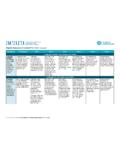
Transcription of Critical and Creative Thinking learning continuum …
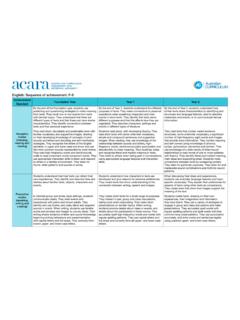
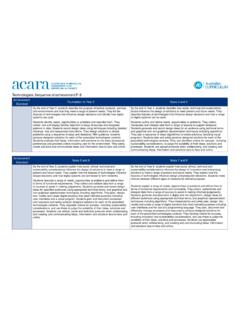
1 Critical and Creative Thinking learning continuumSub-elementLevel 1 Typically, by the end of Foundation Year, students:Level 2 Typically, by the end of Year 2, students:Level 3 Typically, by the end of Year 4, students:Level 4 Typically, by the end of Year 6, students:Level 5 Typically, by the end of Year 8, students:Level 6 Typically, by the end of Year 10, students:Inquiring identifying, exploring and organising information and ideas elementPose questionspose factual and exploratory questions based on personal interests and experiences pose questions to identify and clarify issues, and compare information in their world pose questions to expand their knowledge about the world pose questions to clarify and interpret information and probe for causes and consequences pose questions to probe assumptions and investigate complex issues pose questions to critically analyse complex issues and abstract ideas Identify and clarify information and ideasidentify and describe familiar information and ideas during a discussion or investigation identify and explore information and ideas from source materials identify main ideas and select and clarify information from a range of sources identify and clarify relevant information and prioritise ideas clarify information and ideas from texts or images when exploring challenging issues clarify complex information and ideas drawn from a range of sources Organise and process informationgather similar information or depictions from given sources organise information based on similar or relevant ideas
2 From several sources collect, compare and categorise facts and opinions found in a widening range of sources analyse, condense and combine relevant information from multiple sources critically analyse information and evidence according to criteria such as validity and relevance critically analyse independently sourced information to determine bias and reliability Generating ideas, possibilities and actions elementImagine possibilities and connect ideasuse imagination to view or create things in new ways and connect two things that seem different build on what they know to create ideas and possibilities in ways that are new to them expand on known ideas to create new and imaginative combinations combine ideas in a variety of ways and from a range of sources to create new possibilities draw parallels between known and new ideas to create new ways of achieving goals create and connect complex ideas using imagery, analogies and symbolism Consider alternativessuggest alternative and Creative ways to approach a given situation or task identify and compare Creative ideas to think broadly about a given situation or problem explore situations using Creative Thinking strategies to propose a range of alternatives identify situations where current approaches do not work, challenge existing ideas and generate alternative solutions generate alternatives and innovative solutions, and adapt ideas.
3 Including when information is limited or conflicting speculate on Creative options to modify ideas when circumstances change Seek solutions and put ideas into actionpredict what might happen in a given situation and when putting ideas into action investigate options and predict possible outcomes when putting ideas into action experiment with a range of options when seeking solutions and putting ideas into action assess and test options to identify the most effective solution and to put ideas into action predict possibilities, and identify and test consequences when seeking solutions and putting ideas into action assess risks and explain contingencies, taking account of a range of perspectives, when seeking solutions and putting complex ideas into action Critical and Creative Thinking learning continuumSub-elementLevel 1 Typically, by the end of Foundation Year, students:Level 2 Typically, by the end of Year 2, students:Level 3 Typically, by the end of Year 4, students:Level 4 Typically, by the end of Year 6, students:Level 5 Typically, by the end of Year 8, students:Level 6 Typically, by the end of Year 10, students.
4 Reflecting on Thinking and processes elementThink about Thinking (metacognition)describe what they are Thinking and give reasons why describe the Thinking strategies used in given situations and tasksreflect on, explain and check the processes used to come to conclusions reflect on assumptions made, consider reasonable criticism and adjust their Thinking if necessary assess assumptions in their Thinking and invite alternative opinions give reasons to support their Thinking , and address opposing viewpoints and possible weaknesses in their own positions Reflect on processesidentify the main elements of the steps in a Thinking process outline the details and sequence in a whole task and separate it into workable parts identify pertinent information in an investigation and separate into smaller parts or ideas identify and justify the Thinking behind choices they have made evaluate and justify the reasons behind choosing a particular problem-solving strategy balance rational and irrational components of a complex or ambiguous problem to evaluate evidence Transfer knowledge into new contextsconnect information from one setting to another use information from a previous experience to inform a new idea transfer and apply information in one setting to enrich another apply knowledge gained from one context to another unrelated context and identify new meaning justify reasons for decisions when transferring information to similar
5 And different contexts identify, plan and justify transference of knowledge to new contexts Analysing, synthesising and evaluating reasoning and procedures elementApply logic and reasoningidentify the Thinking used to solve problems in given situations identify reasoning used in choices or actions in specific situations identify and apply appropriate reasoning and Thinking strategies for particular outcomes assess whether there is adequate reasoning and evidence to justify a claim, conclusion or outcome identify gaps in reasoning and missing elements in information analyse reasoning used in finding and applying solutions, and in choice of resources Draw conclusions and design a course of actionshare their Thinking about possible courses of action identify alternative courses of action or possible conclusions when presented with new information draw on prior knowledge and use evidence when choosing a course of action or drawing a conclusion scrutinise ideas or concepts, test conclusions and modify actions when designing a course of action differentiate the components of a designed course of action and tolerate ambiguities when drawing conclusions use logical and abstract Thinking to analyse and synthesise complex information to inform a course of action Evaluate procedures and outcomescheck whether they are satisfied with the outcome of tasks or actions evaluate whether they have accomplished what they set out to achieve explain and justify ideas and outcomes evaluate the effectiveness of ideas, products, performances.
6 Methods and courses of action against given criteria explain intentions and justify ideas, methods and courses of action, and account for expected and unexpected outcomes against criteria they have identified evaluate the effectiveness of ideas, products and performances and implement courses of action to achieve desired outcomes against criteria they have identifi