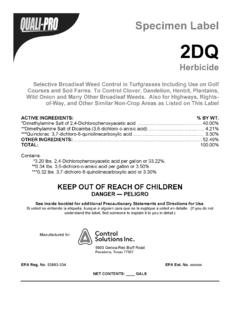
Transcription of DANGER – PELIGRO
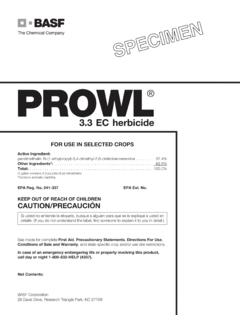
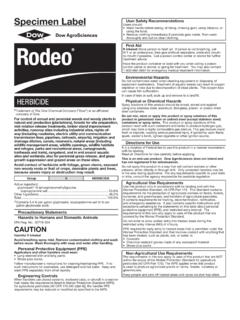
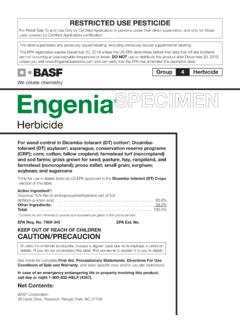
1 1 ECIMEN LABEL SPECIMEN LABEL SPECIMEN LABEL SPECIMEN LABEL SPECIMEN LABEL SPECIKEEP OUT OF REACH OF CHILDRENDANGER PELIGROSi Usted no entiende la etiqueta, busque a alguien para que se laexplique a Usted en detalle. (If you do not understand the label,find some one to explain it to you in detail.)ACTIVE INGREDIENT:Dimethylamine salt of 2,4-dichlorophenoxyacetic acid .. INGREDIENTS:.. PRODUCT lbs. 2,4-dichlorophenoxyacetic acid equivalent per gallon or Specific By AOAC THE ENTIRE LABEL ALL PRECAUTIONS ANDFOLLOW DIRECTIONS STATEMENTSH azards to Humans and Domestic AnimalsDANGER: Corrosive. Causes irreversible eye damage. Harmful if swallowed. Harmful if absorbed through the skin. Do not get in eyes oron clothing. Avoid contact with Protective Equipment (PPE)Some materials that are chemical-resistant to this product are naturalrubber, natural rubber blends and laminates. If you want more options,follow the instructions for category A on an EPA chemical-resistancecategory selection mixers, loaders, applicators, and other handlers must wear: protective eyewear (goggles or faceshield), long-sleeved shirt and long pants, shoes and socks, plus chemical-resistant gloves, chemical-resistant apron when mixing or loading, cleaning up spillsor equipment, or otherwise exposed to the engineering controls for additional Safety RequirementsDiscard clothing and other absorbent materials that have beendrenched or heavily contaminated with this product s concentrate.
2 Donot reuse them. Follow manufacturer s instructions for cleaning/maintaining PPE. If no such instructions for washables exist, use deter-gent and hot water. Keep and wash PPE separately from other Safety Recommendations Users should wash hands before eating, drinking, chewing gum,using tobacco, or using the toilet. Users should remove clothing/PPE immediately if pesticide getsinside. Then wash thoroughly and put on clean clothing. If pesticidegets on skin, wash immediately with soap and water. Users should remove PPE immediately after handling this the outside of gloves before removing. As soon as possible,wash thoroughly and change into clean AidIf in eyes: Hold eye open and rinse slowly and gently withwater for 15-20 minutes. Remove contact lenses, if present, after the first 5 minutes, then continue rinsing eye. Call a poison control center or doctor for treat-ment on skin oron clothing: Take off contaminated clothing. Rinse skin immediately with plenty of water for15-20 minutes.
3 Call a poison control center or doctor for treat-ment swallowed: Call a poison control center or doctor immediatelyfor treatment advice. Have person sip a glass of water if able toswallow. Do not induce vomiting unless told to do so by thepoison control center or doctor. Do not give anything by mouth to an inhaled: Move person to fresh air. If person is not breathing, call 911 or an ambu-lance, then give artificial respiration, preferablymouth-to-mouth if possible. Call a poison control center or doctor for treat-ment the product container or label with you when calling a poisoncontrol center or doctor or going for treatment. You may also contact1-877-800-5556 for emergency medical treatment TO PHYSICIAN:Probable mucosal damage may contraindi-cate the use of gastric lavage. Environmental HazardsThis pesticide is toxic to fish and aquatic invertebrates. Do not applydirectly to water, to areas where surface water is present, or to intertidal areas below the mean high water mark.
4 Drift and runoff maybe hazardous to aquatic organisms in water adjacent to treated not contaminate water when disposing of equipment wash watersor chemical has properties and characteristics associated withchemicals detected in groundwater. The use of this chemical in areaswhere soils are permeable, particularly where the water table is shallow, may result in groundwater contamination. Application around a cistern or well may result in contamination of drinking water FOR USEIt is a violation of Federal law to use this product in a manner inconsis-tent with its not apply this product in a way that will contact workers or otherpersons, either directly or through drift. Only protected handlers may bein the area during application. For any requirements specific to yourState or Tribe, consult the agency responsible for pesticide for use by aerial application are not included on this label,therefore this product should not be applied as an aerial use sites are not included on this label, therefore this productshould not be applied to aquatic use Use RequirementsUse this product only in accordance with its labeling and with theWorker Protection Standard, 40 CFR part standard contains requirements for the protection of agriculturalworkers on farms, forests, nurseries, and greenhouses, and handlersof agricultural pesticides.
5 It contains requirements for training, decon-tamination, notification, and emergency assistance. It also containsspecific instructions and exceptions pertaining to the statements onthis label about personal protective equipment and restricted-entryinterval. The requirements in this box only apply to uses of thisproduct that are covered by the Worker Protection not enter or allow worker entry into treated areas during therestricted-entry interval (REI) of 48 hours.(cont. on next page) 2 ECIMEN LABEL SPECIMEN LABEL SPECIMEN LABEL SPECIMEN LABEL SPECIMEN LABEL SPECIA gricultural Use Requirements (cont.)PPE required for early entry to treated areas that is permitted underthe Worker Protection Standard and that involves contact with anything that has been treated, such as plants, soil, or water is: coveralls, chemical-resistant gloves made of any water-proof material, shoes plus socks and protective eyewear. Non-Agricultural Use RequirementsThe requirements in this box apply to uses of this product that areNOT within the scope of the Worker Protection Standard for agricul-tural pesticides (40 CFR Part 170).
6 The WPS applies when thisproduct is used to produce agricultural plants on farms, forests, nurseries, or greenhouses. Do not enter or allow people (or pets) toenter the treated area until sprays have Use PrecautionsDo not apply this product through any type of irrigation system. Do notapply in tank mixtures with other 2,4-D products. Do not apply whentemperatures exceed 90 F and humidity is high. WEEDS CONTROLLEDA nnual and Biennial WeedsBeggarticksBitterweedBroomweedBull thistleBurdockCarpetweedCinquefoilCockle CockleburCoffeeweedCrotonDevil s clawFleabane (daisy)FlixweedFrenchweedGalinsogaGoatsb eardGoosefootGumweedJewelweedJimsonweedK ochiaKnotweedLambsquartersLettuce (wild)MallowMarshelderMarijuanaMorninggl ory (annual)Musk thistleMustardParsnipPennycressPeppergra ssPigweedPrickly lettucePrimrosePuncturevineRadish (wild)Ragweed (common)Russian thistleShepherd s purseSmartweedSneezeweedSowthistle (common)Spanish needleSunflowerTumbleweedVelvetleafVerva inVetchWild carrotWild parsnipWitchweedWormwoodYellow starthistle Perennial WeedsArtichokeAsterAustrian fieldcressBindweedBlackeyed SusanBlue lettuceCanada thistleCatnipChicoryClover (many types)DandelionDockDogbaneGoldenrodGroun d ivyHealallHoary cressHorsetailIronweedLocoweedNettleOran ge hawkweedPlantainPovertyweedRushesSouther n wild roseSowthistleStinging nettleStrawberry (wild)
7 Tall buttercupTanweedToadflaxVervainYellow rocketWild garlicWild onionWild sweet potato2. Spray Drift ManagementA variety of factors including weather conditions ( , wind direction,wind speed, temperature, relative humidity) and method of application( , ground) can influence pesticide drift. The applicator must evaluate all factors and make appropriate adjustments when applyingthis SizeWhen applying sprays that contain 2,4-D as the sole active ingredient,or when applying sprays that contain 2,4-D mixed with active ingredi-ents that require a Coarse or coarser spray, apply only as a Coarse orcoarser spray (ASAE standard 572) or a volume mean diameter of 385microns or greater for spinning atomizer nozzles. When applyingsprays that contain 2,4-D mixed with other active ingredients thatrequire a Medium or more fine spray, apply only as a Medium orcoarser spray (ASAE standard 572) or a volume mean diameter of 300microns or greater for spinning atomizer SpeedDo not apply at wind speeds greater than 15 mph.
8 Only apply thisproduct if the wind direction favors on-target deposition and there arenot sensitive areas (including, but not limited to, residential areas, bodies of water, known habitat for nontarget species, nontarget crops)within 250 feet downwind. If applying a Medium spray, leave one swathunsprayed at the downwind edge of the treated InversionsIf applying at wind speeds less than 3 mph, the applicator must determine if: a) conditions of temperature inversion exist, or b) stableatmospheric conditions exist at or below nozzle height. Do not makeapplications into areas of temperature inversions or stable PlantsDo not apply under circumstances where spray drift may occur to food,forage, or other plantings that might be damaged or crops thereof rendered unfit for sale, use or consumption. Susceptible crops include,but are not limited to, cotton, okra, flowers, grapes (in growing stage),fruit trees (foliage), soybeans (vegetative stage), ornamentals, sun flowers, tomatoes, beans, and other vegetables, or tobacco.
9 Smallamounts of spray drift that might not be visible may injure susceptiblebroadleaf State and Local RequirementsApplicators must follow all state and local pesticide drift requirementsregarding application of 2,4-D herbicides. Where states have morestringent regulations, they must be ground application equipment must be properly maintained and calibrated using appropriate carriers or requirements for ground boom applicationDo not apply with a nozzle height greater than 4 feet above the Pasture and RangelandApplication rates for Pasture and Rangeland such as established grasspastures, rangeland, and perennial grasslands not in agricultural pro-duction such as Conservation Reserve program (CRP).Weed TypesRate per ApplicationWhen to ApplySusceptible annual and biennial broadleaf quart/A( lb. 2,4-D ae/A)Spring or fall during susceptible biennialand perennialbroadleaf to quarts/A( to lb. 2,4-D ae/A)Spring or fall during seedlingto rosette difficult to controlweeds and woody quarts/A( lb.)
10 2,4-D ae/A)Spring or fall during bud tobloom stage. A secondapplication may be quarts/A( lb. 2,4-D ae/A)ae = Acid Equivalent. Do not use on alfalfa, clover or other legumes. Do not use on newlyseeded areas until grass is well on 2,4-D for use on pasture and rangeland (established grass pastures, rangeland, and perennial grasslands, not in agricultural production such as ConservationReserve program (CRP)).Application ScheduleMaximum Rate perApplicationMaximum Number ofApplications per YearMinimum Interval BetweenApplicationsMinimum Spray VolumePregrazingIntervalPreharvest Interval (PHI) quarts/A( lb. 2,4-D ae/A)230 Days2 Days7 Daysae = Acid Equivalent. Do not exceed the maximum seasonal rate of 1 gallon ( lb. 2,4-D ae) per acre per not apply within 30 days of the previous application. Do not cut forage for hay within 7 days of application. Ifgrass is to be cut for hay, the Agricultural Use Requirements for the Worker Protection Standard (WPS) are appli-cable. For program lands such as the Conservation Reserve Program, consult program rules to determinewhether grass or hay may be used.