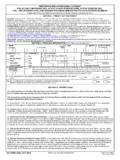
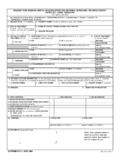
Transcription of DD Form 2216, Hearing Conservation Data, January …
1 Hearing Conservation data (This form is subject to the Privacy Act of 1974 - use Blanket PAS - DD Form 2005) 1. ZIP CODE/APO/FPO/PAS 2. DOD COMPONENT 3. SERVICE COMPONENT A - ARMY N - NAVY F - AIR FORCE M - MARINE CORPS 1 - OTHER DOD ACTIVITY R - REGULAR V - RESERVE G - NATIONAL GUARD 1 - OTHER 4. SOCIAL SECURITY NUMBER 5. NAME (Last, First, Middle Initial) 6. DATE OF BIRTH (YYYYMMDD) 7. SEX M - MALE F - FEMALE 8. PAY GRADE, UNIFORMED SERVICES 9. PAY GRADE, CIVILIAN 10. SERVICE DUTY OCCUPATION CODE 11. MAILING ADDRESS OF ASSIGNMENT 12. LOCATION - PLACE OF WORK 13. MAJOR COMMAND 14.
2 DUTY TELEPHONE (Include area code) 15. AUDIOMETRY 1 - 90 DAY 2 - ANNUAL 3 - TERMINATION AUDIOMETRIC data RE: ANSI - 1989 b. CURRENT AUDIOGRAM DATE (YYYYMMDD) LEFT RIGHT 500 1000 2000 3000 4000 6000 500 1000 2000 3000 4000 6000 h. EXAMINER NAME (Last, First, Middle Initial) i. TRAINING CERTIFICATE NO. j. SERVICE DUTY OCCUPATION CODE k. SYMBOL 1 - MANUAL 2 - SELF-RECORDING (Automatic) 3 - MICROPROCESSOR l. TYPE m. MODEL n. MANUFACTURER o. SERIAL NUMBER p. LAST ELECTROACOUSTIC CALIBRATION DATE (YYYYMMDD) 1 - SINGLE FLANGE (VS1R) 2 - TRIPLE FLANGE 3 - HAND FORMED EARPLUGS 4 - EAR CANAL CAPS 5- NOISE MUFFS 6 - OTHER a.
3 4 - OTHER c. DATE (YYYYMMDD) d. SIGNIFICANT THRESHOLD SHIFT (STS) 1 - NO 2 - YES e. THRESHOLD SHIFT g. TYPE OF PERSONAL Hearing PROTECTION USED f. REMARKS (Include exposure data ) 16. FOLLOWUP NO. 1 AUDIOMETRIC data RE: ANSI - 1989 b. CURRENT AUDIOGRAM DATE (YYYYMMDD) LEFT RIGHT 500 1000 2000 3000 4000 6000 500 1000 2000 3000 4000 6000 f. EXAMINER NAME (Last, First, Middle Initial) g. TRAINING CERTIFICATE NO. h. SERVICE DUTY OCCUPATION CODE i. SYMBOL 1 - MANUAL 2 - SELF-RECORDING (Automatic) 3 - MICROPROCESSOR j. TYPE k. l. m. SERIAL NUMBER c. DATE (YYYYMMDD) d. SIGNIFICANT THRESHOLD SHIFT (STS) 1 - NO 2 - YES e.
4 THRESHOLD SHIFT a. 14 HOURS NOISE FREE SINCE CURRENT AUDIOGRAM (See item ) 17. FOLLOWUP NO. 2 AUDIOMETRIC data RE: ANSI - 1989 LEFT RIGHT 500 1000 2000 3000 4000 6000 500 1000 2000 3000 4000 6000 f. EXAMINER NAME (Last, First, Middle Initial) g. TRAINING CERTIFICATE NO. h. SERVICE DUTY OCCUPATION CODE i. SYMBOL 1 - MANUAL 2 - SELF-RECORDING (Automatic) 3 - MICROPROCESSOR j. TYPE k. l. m. SERIAL NUMBER d. SIGNIFICANT THRESHOLD SHIFT (STS) 1 - NO 2 - YES e. THRESHOLD SHIFT a. 14 HOURS NOISE FREE SINCE CURRENT AUDIOGRAM (See item ) n. LAST ELECTROACOUSTIC CALIBRATION DATE (YYYYMMDD) b.
5 CURRENT AUDIOGRAM DATE (YYYYMMDD) c. DATE (YYYYMMDD) n. LAST ELECTROACOUSTIC CALIBRATION DATE (YYYYMMDD) OFFICE AUDIOMETER PURPOSE REFERENCE AUDIOGRAM OFFICE AUDIOMETER MODEL MANUFACTURER REFERENCE AUDIOGRAM MINIMUM OFFICE AUDIOMETER MODEL MANUFACTURER MINIMUM REFERENCE AUDIOGRAM DD FORM 2216, JAN 2000 PREVIOUS EDITION MAY BE USED. Reference Audiogram Date. Enter year, month, and day reference test results were obtained. See DD Form 2215, "Reference Audiogram," or other appropriate source. Enter threshold levels in 5 dB increments from reference audiogram. d. Significant Threshold Shift (STS).
6 Enter "1" if no STS is present; enter "2' if STS is present. STS - NO: See DoD component specific manuals for detailed guidance. STS-YES: Outlines procedures required when a significant threshold shift present: "Notify Supervisor" - Notify individual's supervisor that significant threshold shift has been found and followup audiogram must be done. "Followup No. 1 After Minimum 14 Hours Noise Free" - Schedule individual for first followup audiogram. They must be instructed to stay in a noise free environment (not to exceed 75 dBA or 120 dBP) for at least 14 hours prior to test.
7 They must be told to avoid environments in which noise levels make it necessary to use raised voice to talk at 1 meter (3 feet) distance. If examinee has obvious ear problem ( , earache, draining ear, excessive cerumen buildup), he/she should be examined by physician and followup postponed until after any necessary treatment. e. Threshold Shift. Enter difference between current and most recent reference audiogram for 1000, 2000, 3000 and 4000 Hz. Refer to DoD component manuals for established criteria. Enter "+" to indicate positive shift (poorer Hearing ) or "-" to indicate negative shift (better Hearing ) on current audiogram.
8 F. Remarks. Print any information considered pertinent. Include the individual's 8-hour TWA noise exposure, when available. g. Type of Personal Hearing Protection Used. Enter number for type of Hearing protection that is routinely used by individual. h. Examiner Name. Enter surname, given name and middle initial of individual operating audiometer. i. Training Certificate Number. Enter audiometric technician training certificate number. j. Service Duty Occupation Code. Enter examiner's service duty occupation code (see Item 10). k. Office Symbol. Enter complete office symbol where examiner is performing the test.
9 L. Audiometer Type. Enter number for type of audiometer used ( , "1" for manual type, etc.). m. Model. Enter manufacturer's designation of audiometer. n. Manufacturer. Enter name of company that produced audiometer. o. Serial Number. Enter manufacturer's serial number of audiometer. p. Last Electroacoustic Calibration Date. Enter year, month and day (see Item ) of last electroacoustic determination of this audiometer's performance specifications. 16. FOLLOWUP NO. 1. If significant threshold shift determined on periodic test, record results of first followup audiogram in this section.
10 Mark (X) box to certify "Minimum 14 Hours Noise Free Since Current Audiogram (see Item )". b., c., and e., "Current Audiogram," "Reference Audiogram," and "Threshold Shift" completed in same format as above. Note: Hearing threshold levels entered in are the same values as those used in d. "STS - NO" - If no STS noted, enter "1" in box and follow steps in "STS - NO" section. "STS - YES" - If STS remains following this examination (Followup No. 1), follow service component instructions ( , supervisor is notified for the second time, individual is scheduled for Followup No.)