Transcription of DELIBERATE RISK ASSESSMENT WORKSHEET
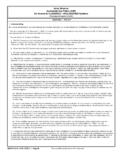
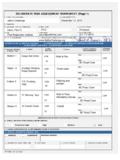
1 DELIBERATE RISK ASSESSMENT WORKSHEET 1. MISSION/TASK DESCRIPTION 2. DATE (DD/MM/YYYY) 3. PREPARED BY a. Name (Last, First, Middle Initial) b. Rank/Grade c. Duty Title/Position d. Unit e. Work Email f. Telephone (DSN/Commercial (Include Area Code)) g. UIC/CIN (as required) h. Training Support/Lesson Plan or OPORD (as required) i. Signature of Preparer Five steps of Risk Management: (1) Identify the hazards (2) Assess the hazards (3) Develop controls & make decisions (4) Implement controls (5) Supervise and evaluate (Step numbers not equal to numbered items on form) 4.
2 SUBTASK/SUBSTEP OF MISSION/TASK How: Who: How: Who: How: Who: How: Who: How: Who: Additional entries for items 5 through 9 are provided on page 2. 10. OVERALL RESIDUAL RISK LEVEL (All controls implemented):11. OVERALL SUPERVISION PLAN AND RECOMMENDED COURSE OF ACTION a. Name (Last, First, Middle Initial) b. Rank/Grade c. Duty Title/Position d. Signature of Approval Authority 12. APPROVAL OR DISAPPROVAL OF MISSION OR TASK e. Additional Guidance: DD FORM 2977, JAN 2014 APPROVE DISAPPROVE EXTREMELY HIGH HIGH MEDIUM LOW Page 1 of ____ Pages 5. HAZARD 6. INITIAL RISK 7. CONTROL 9. RESIDUAL RISK LEVEL 8.
3 HOW TO IMPLEMENT/ WHO WILL IMPLEMENT Adobe Professional X LEVEL 4. SUBTASK/SUBSTEP OF MISSION/TASK 5. HAZARD 6. INITIAL RISK LEVEL 7. CONTROL 9. RESIDUAL RISK LEVEL 8. HOW TO IMPLEMENT/ WHO WILL IMPLEMENT DELIBERATE RISK ASSESSMENT WORKSHEET How: Who: How: Who: How: Who: How: Who: How: Who: How: Who: How: Who: How: Who: How: Who: How: Who: How: Who: How: Who: How: Who: DD FORM 2977, JAN 2014 Page ____ of ____ Pages How: Who: 13. RISK ASSESSMENT REVIEW (Required when ASSESSMENT applies to ongoing operations or activities) b.
4 Last Name c. Rank/Grade d. Duty Title/Position e. Signature of Reviewer a. Date 14. FEEDBACK AND LESSONS LEARNED 15. ADDITIONAL COMMENTS OR REMARKS Risk ASSESSMENT Matrix Probability (expected frequency) Frequent: Continuous, regular, or inevitable occurrences Likely: Several or numerous occurrences Occasional: Sporadic or intermittent occurrences Seldom: Infrequent occurrences Unlikely: Possible occurrences but improbable Severity (expected consequence) Catastrophic: Death, unacceptableloss or damage, mission failure, or unit readiness eliminated I Critical: Severe injury, illness, loss, or damage; significantly degraded unit readiness or mission capability II EH L Moderate: Minor injury, illness, loss,or damage.
5 Somewhat degraded unit readiness or mission capability III L L Negligible: Minimal injury, loss, or damage; little or no impact to unit readiness or mission capability IV L L L L Legend: EH extremely high risk H high risk M medium risk L low risk DELIBERATE RISK ASSESSMENT WORKSHEET A B C D E DD FORM 2977, JAN 2014 Page ____ of ____ Pages EH EH H H H H H M M EH M M M 1. Mission/Task Description: Briefly describe the overall Mission or Task for which the DELIBERATE risk ASSESSMENT is being conducted.
6 9. Residual Risk Level: After controls are implemented, determine resulting probability, severity, and residual risk level. 2. Date (DD/MM/YYYY): Self Explanatory. 10. Overall Risk After Controls are Implemented: Assign an overall residual risk level. This is the highest residual risk level (from block 9). 3. Prepared By: Information provided by the individual conducting the DELIBERATE risk ASSESSMENT for the operation or training . Legend: UIC = Unit Identification Code; CIN = Course ID Number; OPORD = operation order; DSN = defense switched network; COMM = commercial 11. Supervision Plan and Recommended Course of Action: Completed by preparer. Identify specific tasks and levels of responsibility for supervisory personnel and provide the decision authority with a recommend course of action for approval or disapproval based upon the overall risk ASSESSMENT .
7 4. Sub-task/Sub-Step of Mission/Task: Briefly describe all subtasks or substeps that warrant risk management. 12. Approval/Disapproval of Mission/Task: Risk approval authority approves or disapproves the mission or task based on the overall risk ASSESSMENT , including controls, residual risk level, and supervision plan. Space provided for authority to provide additional guidance; use continuation page if needed. 5. Hazard: Specify hazards related to the subtask in block 4. 13. Risk ASSESSMENT Review: Should be conducted on a regular basis. Reviewers should have sufficient oversight of the mission or activity and controls to provide valid input on changes or adjustments needed.
8 If the residual risk rises above the level already approved, operations should cease until the appropriate approval authority is contacted and approves continued operations. 6. Initial Risk Level: Determine probability and severity. Using the risk ASSESSMENT matrix (page 3), determine level of risk for each hazard specified. probability, severity and associated Risk Level; enter level into column. 14. Feedback and Lessons Learned: Provide specific input on the effectiveness of risk controls and their contribution to mission success or failure. Include recommendations for new or revised controls, practicable solutions, or alternate actions.
9 Submit and brief valid lessons learned as necessary to persons affected. 7. Control: Enter risk mitigation resources/controls identified to abate or reduce risk relevant to the hazard identified in block 5. 15. Additional Comments or Remarks: Preparer provides additional comments, remarks, or information to support the risk ASSESSMENT . If block 15 is used as a continuation of block 14, strike through the block number and title. 8. How to Implement / Who Will Implement: Briefly describe the means of employment for each control ( , OPORD, briefing, rehearsal) and the name of the individual unit or office that has primary responsibility for control implementation.
10 Additional Guidance: Block 4-9 continuance page may be reproduced as necessary for processing of all subtasks/ substeps of the mission/task. If a complete page is not utilized, write NOTHING FOLLOWS on the first unused row, immediately after the final item assessed. Instructions for Completing DD Form 2977, " DELIBERATE Risk ASSESSMENT WORKSHEET " DD FORM 2977 INSTRUCTIONS, JAN 2014