Transcription of Developing a Logic Model 2 - Animating Democracy
1 Planning & Designing arts-BaseD civic engagement Projects12A r t s & C i v iC E n gA g E m E n t to o l K i t a Logic Model Developing a Logic Model the Planning cyclethe Do looP (what happens without evaluation)assess conditions and needs Plan activities evaluate outcomes implement activitiesassess conditions and needs Plan activities evaluate outcomesimplement activitiescooPerative evaluationCooperative evaluation aims for continual program improvement from within (rather than judgment of success or failure from outside) by bringing the evaluator into partnership with the program, and putting the program in charge of the evaluation.
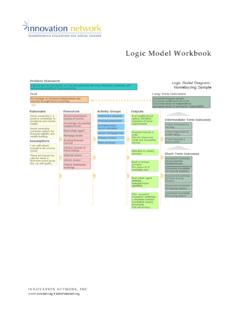
2 Program planners and staff decide the program goals, how performance will be measured, and what data they will Logic Model is a systematic and visual way to present and share understanding of the relationships among the resources you have to operate your program, the activities you plan, and the changes you hope to achieve. it is useful as a planning tool as well as a basis for program & Designing arts-BaseD civic engagement Projects22A r t s & C i v iC E n gA g E m E n t to o l K i t a Plan using a Logic moDelHere are the four basic segments of a Logic Model plan:Conditionsneeds or risks Activitiescurriculum OutcomesProducts, attitudes & Behaviors Impactlinking the stePs oF a Programthe links between each step of the program should be defined in ways that make sense.
3 These links are called the theory of change for the program. Conditions, Needs, or ProblemsActivitiesOutcomesImpactsheadach e interferes with work and daily activity take aspirin reduces Pain more Productiveless grouchythe theory of change for this headache reduction program is that headache pain causes decline in productivity and mood, therefore a pain reducer (aspirin) will result in the desired impact of increasing productivity and reducing are the needs or risk factors that the program is designed to address.
4 They might include situations such as a change in local public policy, or a lack of communication between different segments of the describe the key elements of the art-based civic dialog program itself, the method by which it is implemented, and include the preparation for activities, their frequency and duration, the number of par ticipants, qualities of the ar tists and any are changes in the participants and audience that result from the activity, either in attitudes or behaviors. Also include any product that results from the is a statement of the long-term desired effect of the program: where the program is ultimately going.
5 It should clearly relate to the initial conditions that the program is designed to a Logic Model Planning & Designing arts-BaseD civic engagement Projects32A r t s & C i v iC E n gA g E m E n t to o l K i t challenge in using a Logic Model is to expose the assumptions and logical links behind the program so that the theor y of change is clearly : the Ar t-at-Work Program (a demonstration project of the Fulton County Ar ts Council) was designed to work with children who had been adjudicated for truancy (indicating their risk for school failure and delinquency) and increase their ex-pectations for future employment.
6 The program provided high-quality instruction in ar ts disciplines, business, and entrepreneurial aspects of the arts in a positive social , Needs, or ProblemsActivitiesOutcomesImpacts high rates of truancy charges in juvenile court and limited exposure to job skills. high-quality instruction in productive arts to new work experiences. Behaviors: gain new skills and work habits in a positive group hours of adult : improved self-esteem and expectations for the bonding with peers and adults. reduce rates of : A number of youth in Atlanta who are adjudicated truant have a limited vision of their future, have experiences of academic failure, and face other risks that increase the chance of further court involvement.
7 Further, they have few opportunities to learn and master productive new skills. Consequently, they rarely experience recognition and reinforcement for their construc-tive efforts, for acting responsibly, or for contributing to the t-at-Work provided these oppor tunities, to raise the self-esteem of par ticipants and develop good work habits, which in turn improved the youths expectations for future employment, increased their school attendance, and prevented them from becoming more deeply involved with the juvenile justice system.
8 So the theory of change clearly links the activities of the program to its outcomes and a Logic Model Planning & Designing arts-BaseD civic engagement Projects42A r t s & C i v iC E n gA g E m E n t to o l K i t For constructing a Logic moDelthese exercises will help you begin to think of the basic components of your own Logic Model . Plan to collect input from the key people who will be participating in delivering the program ( , artists, collaborators, arts administrators).First, identify the conditions or needs that the program is designed to address and write a program statement.
9 Begin by answering the following questions:Program Conditions or NeedsWhat is the target audience you want to address? (neighborhood, age group, etc.)What are the problems that are likely to occur if the changes do not happen?What skills, resources, or experiences could the program audience use to reduce the chance of a negative outcome?Put the answers to the above questions together into a program statement such as:Target audience face the risk Likely problems are and they lack .. Skills, resources, or experiences : Program Conditions or NeedsTarget audienceElected officials, developers, and business, community, and neighborhood residentsLikely problemsGroups are not working together to develop plans and policies for neighborhood revitalization.
10 Neighborhood character will change. Current residents will be forced , resources, or experiencesA neutral space and creative opportunities for parties to meet and mix and have dialogue; theater presentations that can portray multiple perspectives and depict the results of various policies and a Logic Model Planning & Designing arts-BaseD civic engagement Projects52A r t s & C i v iC E n gA g E m E n t to o l K i t , list the program activities. Activities include the major elements of planning, creative work, program development, and the participatory activities, performances, and exhibitions that the audience experiences.