Transcription of Developing and Using Practical Measures of …
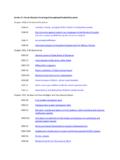
1 Student Growth Objectives Developing and Using Practical Measures of Student Learning New Jersey Department of education 2 Table of Contents Introduction .. 3 About This Guidebook .. 3 Measures of Student Growth .. 3 The Value of Student Growth Objectives .. 4 Types and Number of Student Growth Objectives .. 5 General and Specific Student Growth Objectives .. 5 General Student Growth Objectives .. 5 Specific Student Growth Objectives .. 7 The Student Growth Objective Process .. 8 Student Growth Objective Quick Start Guide .. 8 SGO Step 1: Choose or Develop Quality Assessments .. 10 Creating an Assessment .. 11 Suggested Process for Approving Quality Assessments .. 11 SGO Step 2: Determine students Starting Points .. 12 Collecting Evidence of students Starting Points .. 12 Using Student Data from Prior Years .. 13 Using Pre-Assessments.
2 13 Differentiating students by Preparedness Level .. 14 SGO Step 3: Set Ambitious and Achievable Student Growth Objectives .. 15 General Student Growth Objectives .. 15 Completing a Student Growth Objective Form .. 17 Setting Tiered Student Growth Objectives .. 18 Setting Specific Student Growth Objectives .. 20 SGO Step 4: Track Progress and Refine Instruction .. 20 SGO Step 5: Review Results and Score .. 21 Weighted Method for Calculating Tiered Student Growth Objective Scores .. 22 Calculating a Total Student Growth Objective Score .. 23 Using Student Growth Objectives to Improve Practice and Student Learning .. 23 Appendix Forms for Setting, Assessing, and Scoring Student Growth Objectives .. 24 New Jersey Department of education 3 Introduction About This Guidebook This guidebook is intended to help you, the teacher, to understand and create Student Growth Objectives (SGOs).
3 The thoughtful application of SGOs to improve student growth begins with you, and this resource is a Practical guide intended to provide clarity to a complex but worthwhile task. This guidebook may also be used by administrators as a useful resource for training and completing the SGO component of evaluations under AchieveNJ. Starting with an overview of SGOs is a useful first step before you begin to immerse yourself in the details of creating your own. Therefore, please take some time to view the short introduction to SGOs and the SGO presentation created by the Department of education . In addition, you should familiarize yourself with the complete evaluation system to understand how the different components fit together. You can find all of this information on the AchieveNJ website. At various places in this guidebook, you will see red Required text boxes.
4 These boxes contain the State requirements for SGOs, such as how many you must set and the role of your supervisor in the process. However, the majority of this guidebook contains procedures, forms, examples, and other suggested processes that are provided to help you and your supervisor develop quality SGOs; their use is not mandated by the New Jersey Department of education . This guidebook should serve as a good starting point for your work with SGOs and has been developed Using multiple sources of information1. The information found within has been revised based on feedback from educators in New Jersey to make it as useful as possible, and will continue to be updated based on feedback from educators who are Using it. Please visit the SGO Section of the AchieveNJ website for updates to this resource and to access individual forms found in the Appendix. Measures of Student Growth With the signing of the TEACHNJ Act,2 the evaluation of teachers in New Jersey must include multiple Measures of student growth.
5 The law mandates that these Measures be in place by the 2013-14 school year. In New Jersey s proposed evaluation system, AchieveNJ, all teachers set learning goals for their students and are evaluated, in part, on how well their students attain these goals. SGOs will be developed collaboratively between you and your supervisor, with the building principal providing the final approval. Teachers of Language Arts Literacy (LAL) and Mathematics in grades 4 through 8 (referred to 1 The New Jersey Department of education would like to thank the Departments of education in Indiana, Rhode Island, Louisiana, Colorado, New York, and Ohio, along with Washington DC Public Schools and the Austin Independent School District, whose materials proved very helpful in the development of this guidebook. 2 The TEACHNJ Act was signed into law on August 6, 2012, reforming the tenure process and mandating new evaluation procedures for New Jersey educators.)
6 A Student Growth Objective is a long-term academic goal that teachers set for groups of students and must be: Specific and measureable Aligned to New Jersey s curriculum standards Based on available prior student learning data A measure of what a student has learned between two points in time Ambitious and achievable New Jersey Department of education 4 as the tested grades and subjects ) receive an additional measure of student achievement in the form of a Student Growth Percentile (SGP) score, which is described on the AchieveNJ website. The Value of Student Growth Objectives As many educators know, setting long-term learning goals allows teachers to plan backward from a vision of student success. This helps ensure that every minute of instruction is moving students towards higher levels of achievement. The process of setting SGOs requires the creation of standards-aligned goals and assessments to measure student progress.
7 By implementing SGOs, AchieveNJ seeks to make these best practices a part of every teacher s planning. For some teachers, setting and evaluating SGOs will be a major shift in practice and will require the type of collaboration and use of data that might be new and, at first, challenging. However, the result will be more purposeful instruction, closer monitoring of student progress, and, ultimately, greater student achievement. When done thoughtfully and collaboratively the SGO process will lead to the following: An increase in the quality of discussions surrounding student growth and learning An opportunity for teachers to engage in the evaluation and creation of assessments Increased knowledge and focused use of New Jersey s curriculum standards Deeper understanding of the academic strengths and weaknesses of students Clearer indications of when and how to adjust instruction to meet students needs Increased opportunities to reflect on student performance and teaching practice More thoughtful professional planning for the next school year New Jersey Department of education 5 Types and Number of Student Growth Objectives This section of the guidebook provides information to help you and your evaluator decide the type and number of SGOs that are appropriate for your teaching assignment.
8 SGOs are a teacher-generated measure, but you must create SGOs in consultation with your supervisor and follow the guidance that your district provides. Specific details on how to create SGOs begin in Section General and Specific Student Growth Objectives General SGOs are broad in the scope. They include all, or a large proportion of the curriculum, and all, or most of your students . Specific SGOs focus on a particular subgroup of students , or specific content or skill. General and Specific SGOs can be subdivided as shown in Figure 1 below. More detail on these subcategories can be found in SGO Step 3: Set Ambitious and Achievable Student Growth Objectives in Section Type of SGO Definition Example General Focused on the teacher s entire student population for a given course. Includes a large proportion of curriculum standards. Includes all students in a teacher s Algebra 1 classes and is aligned with CCSS.
9 General Tiered Same as above, but with student goals tiered by student preparation levels. Same as above, but with student goals tiered by preparation levels. Specific Student Group Focused on a subgroup of students that needs specific support. Includes students in the group that scored below 45% on the pre-test. Specific Content/Skill Focused on specific skills or content that students must master. Includes CCSS related to quadratic functions and modeling. Figure 1: Types of SGOs. General Student Growth Objectives General SGOs include as many of your students as Practical and all of the course material that you teach by the time of the final assessment. What this means for you individually, will depend on your teaching assignment. However, provided below are some examples based on whether the teachers receive an SGP score or not. Required A teacher develops SGOs in consultation with his or her principal, or the principal s designee.
10 The principal makes the final determination about the SGO. All teachers who receive an SGP score must set between 1 and 2 SGOs, the district-wide number will be determined by the superintendent. Teachers who do not receive an SGP score must set 2 SGOs. New Jersey Department of education 6 Non-tested Grades and Subjects (no SGP score) If you teach in a non-tested grade and subject - all teachers other than math and LAL teachers in 4th-8th grade - you must set 2 SGOs. At least one of these should be a General SGO. The following examples provide several approaches that can guide you and your evaluator in making the right choice for your situation. In some cases, perhaps because you have multiple levels or types of classes, setting one General SGO for all students will be impractical. In this case, you will set two General SGOs, as in Example 2 that follows.