Transcription of Development Milestones Birth to Eight Years
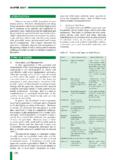
1 Find more at 2016 Hearing First, LLCD evelopment MilestonesBirth to Eight YearsChildren grow and develop at different rates. However, most pass through an identifiable skill set along the way. Called developmental Milestones , these are skills that build on each other, from simple to complex, during predictable time periods. For example, a child must babble single syllables (4-6 months) before multiple syllables (7-9 months) before speaking 2-word sentences (18-24 months). Milestone charts represent a timetable for mastery of these skills a guide to normal Development . Keep in mind, however, that children vary in their Development and that an individual child may develop more quickly in one area than in another. Below are general guidelines for hearing/auditory, cognitive, speech (sound production) and language (listening, understanding and using words) Development .
2 Most children will demonstrate these skills within six months of the times listed. In reality, these areas overlap, as Development in one area is reinforced and enhanced by growth in - 3 MonthsHearingSpeechLanguageCognitionAudi tory detection/attention: Reacts to loud sounds with startle (Moro reflex) Reacts initially to sounds that are close by; between 2-4 months begins to develop distance hearing Responds to LF sounds (vowels)better than to HF sounds (consonants) By the end of the third month, an infant recognizes his mother s voice; stops crying to listen; listens to his/her own sounds Enjoys only a few noisemakers Infants are unable to control motor movements; therefore, most actions are reflexes. The most important reflex for speech Development is the rhythmic suckswallow pattern, established three months prior to Birth .
3 Produces sounds such as fussing, crying, burping and cooing. Produces most sounds on exhalation with lengthy vowel-like sounds (back vowels) Makes single vowel sounds ah eh uh - one syllable Sustains cooing 15-20 seconds Different kinds of crying for pain and hunger Attends to speaker s mouth or eyes Moves in response to voice Expresses feelings by cooing (one syllable - ah ), gurgling (at back of throat) and crying (E) Exhibits differentiated crying (E) Vocalizes to caregiver s smile and voice and to express pleasure (E) Responds to and imitates facial expressions of others (Meltzoff & Moore, 1977) Recognizes bottle or breast Briefly looks at objects4 - 6 MonthsHearingSpeechLanguageCognition Turns eyes/head to search for sounds Enjoys hearing own sounds (gurgling, laughing and babbling)
4 , auditory feedback loop develops Enjoys sound of musical toys (rattles, bells) Responds to voices by babbling Begins differentiating between environmental and speech sounds After hearing the mother s voice, cries if the face he/she then sees is not the mother s face Recognizes familiar sounds for feeding ( a spoon in a dish) Vocalizes in self-initiated sound play Coos to music Vocalizes ma or mu Tries to repeat heard sound sequences Babbling begins Experiments and plays with sounds (yells, gurgles, blows raspberries and bubbles) Varies volume, pitch and rate (suprasegmentals) Smiles at speaker (R) Vocalizes to objects (E) Laughs Says mama/dada without meaning (E) Babbles to gain attention (E) Shows pleasure/displeasure by vocalizing (E) Explores with hands and mouth Smiles/vocalizes to mirror image; reaches out to mirror image Experiments with cause-effect: shakes rattle Reaches for objectsAbbreviations UseddBdecibelLFlow frequencyHFhigh frequencyCVconsonant-vowelRreceptiveEexp ressiveMLUMean Length of UtteranceFind more at 2016 Hearing First, LLCD evelopment Milestones - Birth to 8 yrs7 - 9 MonthsHearingSpeechLanguageCognition In sitting position, turns eye/head/body to source of sound (sound localization).
5 Has difficulty locating sounds above or behind Responds to simple requests Modifies speech to match what is heard Imitates speech and non-speech (blowing raspberries) sounds Responds to name Attends to music/singing Understands many onomatopoeias (Learning to Listen Sounds) Produces sounds in one breath Enjoys imitating sound sequences Babbles with some CV syllables ( bababa ) Uses /m/, /n/, /b/, /p/, /t/, /d/ in babbling Imitates sounds, cough, tongue clicking (increased tongue tip activity), etc. Imitates some onomatopoeias Babbling shows pitch and inflectional changes Copies (sometimes inaccurately)intonational contours Beginning of adult speech (starting to develop certain vowels, syllables, diphthongs) Recognizes names of family members (R) Responds to no most of the time (R) Attends to pictures (R) Uses gesture and vocalization to protest (E) Vocalizes during games (E)
6 Searches for partially hidden object Struggles to get objects that are out of reach Plays games like peek-a-boo Imitates simple acts, clapping, nodding Gives, points, shows Pulls rings off peg10 - 12 MonthsHearingSpeechLanguageCognition Responds physically to music Responds to questions by searching Can look for named object that is out of sight Understands some common phrases Uses variegated (non-reduplicative) babbling ( dageedagee ) Begins changing babbling to real words Continues imitating sounds Begins using more back vowels, central vowels and consonants Recognizes familiar persons or objects when named (R) Looks at named pictures with an adult (R) Attends to new words (R) Identifies 2 body parts on self (R) Gives objects upon verbal request (R) Uses social gestures (waving bye-bye ) (E) Vocalizes with intent frequently Uses onomatopoeias to refer to objects (E) Says one to two words spontaneously Tries to accomplish simple goals (seeing and then crawling to a toy) Looks for/finds objects that are out of sight (such as a spoon that falls under the table) Stacks rings on peg Begins awareness of in/out (objects/containers)
7 12 - 18 MonthsHearingSpeechLanguageCognition Shows interest in sounds of radio and television Listens to simple stories, songs and rhymes Demonstrates two item memory Uses echolalia and unintelligible speech/jargon Omits some initial consonants and almost all final consonants Continues to develop vowels and diphthongs Varies pitch when vocalizing Uses 21 different phonemes Imitates words inexactly Follows 1-step commands without a gesture/verbal cue alone (R) Uses true words within jargon-like utterances (E) Combines vocalizations and guesture to obtain a desired object (E) Identifies/points to 3+ body parts (on self or doll), clothing item or toy on verbal request Names objects on request (E) Gives objects if asked (R) By month 18, uses 20-100 meaningful words; 50% of words are nouns (E) Explores objects in many different ways (shaking, banging, throwing, dropping) Points to named pictures Begins to use objects correctly (drinking from cup, brushing hair, holds phone to ear) Laughs at silly actions (as in wearing a bowl as a hat) Solves problems by trial and error ( inverts bottle to obtain object; obtains toys with stick) Scribbles spontaneouslyFind more at 2016 Hearing First, LLCD evelopment Milestones - Birth to 8 yrs18 - 24 MonthsHearingSpeechLanguageCognition Understands when called from another room Remembers what was heard in the correct order ( Put the fish in the water and the turtle on the grass.)
8 (auditory sequencing) Follows a conversation when the topic is known Answers questions about a picture or book Jargon peaks at 18 months Correctly pronounces most vowels Uses /m/, /p/, /b/, /w/, /n/, /t/,/d/ correctly in the beginning of syllables and short words Two Years : 25%-50% intelligibility Commonly uses 25 different phonemes Uses beginning consonants Word-final consonants emerge Pitch is lower and more stable Follows 2-step related commands without visual cues (R) Points to 4+ body parts (on self or doll) (R) Uses question intonation to ask yes/no questions (E) Uses 2-word phrases/sentences frequently by 24 months ( more milk, a doggie, read book ); MLU (E) Names most common objects (E) Understands questions Where? and What s that? (R) Begins using pronouns like my, me, mine, ; refers to self by name (E) Uses 200+ words (E) Finds objects even when hidden under 2-3 covers Likes to take things apart Stacks rings on peg in order of size; builds higher towers Turns one page at a time Activates mechanical toy Pretends plays about familiar situations2 - 2 Ye a r sHearingSpeechLanguageCognition Answers questions about a story 60% of speech is intelligible by 30 months of age Continues to develop front consonants Responds appropriately to location phrases ( in, on ) (R) Recognizes family member names (R) Uses and ( mommy and daddy ) (E) Uses 3-word sentences frequently.
9 MLU (E) Begins using verb endings (-ing) ( Mommy pushing ) (E) Refers to self as me rather than by name (E) Asks simple questions ( Where ball? What Daddy doing? What color? ) (E) Uses number + noun ( two doggie ) (E) Begins to sort by shapes and colors Names one color Begins make-believe play; dramatizes mother and baby Begins to understand functional concepts of familiar objects and part/whole concepts Shares toys2 - 3 YearsHearingSpeechLanguageCognition Begins making cognitive judgements about what was heard, Tell me about your trip to Disney World. (auditory processing) Answers questions about an undisclosed but familiar topic Continues use of echolalia when difficulties in speech are encountered Exhibits repetitions, especially starters ( I and first syllables) Speaks with a loud voice Increases range of pitch Consistently uses initial consonants (some are misarticulated); frequently omits or substitutes final consonants Answers questions with yes or no (E) Understands the concepts of one and all (R) Uses subject pronoun: he (E) Asks What happened?
10 (E) Uses gonna and wanna (E) Uses 3-4 word sentences; converses with self; MLU (E) Shows interest in why and how explanations (R) Matches an object in hand or in the room to a picture in a book Completes 5+ piece puzzle Counts 2-3 objects; knows more numbers (but not always in the right order) Remembers what happened yesterday Knows where things usually belongFind more at 2016 Hearing First, LLCD evelopment Milestones - Birth to 8 yrs2 - 3 Years - continuedHearingSpeechLanguageCognition By age 3, 90% of children produce the following consonants in conversation: /p/, /m/, /n/, /h/, /w/ Accurately pronounces all vowels and diphthongs (except those with an r, such as in the word bird ) Uses approximately 27 phonemes Three Years : 75-80% intelligibility Masters of the adult speech sounds Expands use of verb endings (-ing), plurals/possessives ( eat cookies ), contractions (E) Begins the why guestion stage; asks wh -questions ( What s that?)