Transcription of DISHWASHING LIQUID LEMON FRESH Safety Data …
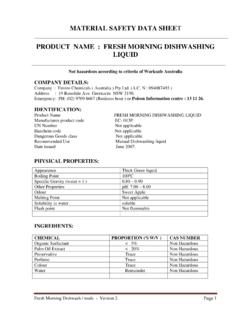
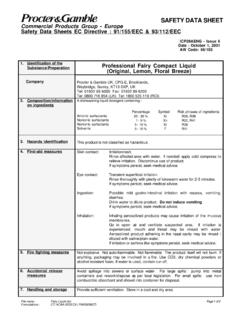
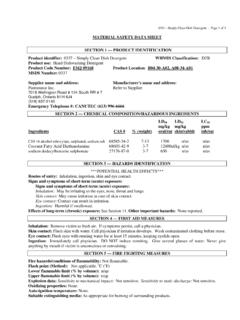
1 DISHWASHING LIQUID LEMON FRESH Safety Data Sheet Page 1 of 4 1. IDENTIFICATION OF THE MATERIAL AND SUPPLIER Product name: DISHWASHING LIQUID LEMON FRESH Synonyms Product Code DISHWASHING LIQUID LEMON FRESH 116 Recommended use: Detergent for manual DISHWASHING Supplier Name CLEAN PLUS CHEMICALS PTY LTD Address 16 George Young Street AUBURN NSW 2144 Telephone 02 9738 7444 Fax 02 9644 1777 Emergency 1800 201 700 Email Web Site SDS Date 22 September 2016 Version 2. HAZARDS IDENTIFICATION THIS MATERIAL IS NON HAZARDOUS ACCORDING TO HEALTH CRITERIA OF SAFE WORK AUSTRALIA. NOT CLASSIFIED AS A DANGEROUS GOODS BY THE CRITERIA OF THE ADG CODE UN No. None Allocated DG Class None Allocated Subsidiary Risk(s) None Allocated Packing Group None Allocated Hazchem Code None Allocated EPG None Allocated 3.
2 COMPOSITION/ INFORMATION ON INGREDIENTS Ingredient Formula CAS No. Content TRIETHANOLAMINE DODECYLBENZENE SULPHONATE 27323-41-7 10-30% ETHYLENE DIAMINE TETRACETATE Not Available 64-02-8 1-10% COCONUT ALKANOLAMINE Not Available 8051-30-7 1-10% ETHANOL Not Available 64-17-5 <1% NON HAZARDOUS INGREDIENTS Not Available Not Available Remainder 4. FIRST AID MEASURES Eye If in eyes, hold eyelids apart and flush the eye continuously with running water. Continue flushing until advised to stop by the Poison Information Centre or a doctor, or for at least 15 minutes. Skin If skin or hair contact occurs, remove contaminated clothing and flush skin and hair with running water. Continue flushing with water until advised to stop by the Poisons Information Centre or a doctor.
3 Inhalation If inhaled, remove from contaminated area. Apply artificial respiration if not breathing. Ingestion For advice, contact a Poison Information Centre on 13 11 26 (Australia Wide) or a doctor (at once). If swallowed, do not induce vomiting. Advice to Doctor Treat symptomatically DISHWASHING LIQUID LEMON FRESH Safety Data Sheet Page 2 of 4 5. FIRE FIGHTING MEASURES Flammability Non flammable. May evolve toxic gases if strongly heated. Fire and Explosion Non flammable. No fire or explosion hazard exists. Extinguishing Non flammable. Prevent contamination of drains or waterways. Hazchem Code None Allocated 6. ACCIDENTAL RELEASE MEASURES Spillage If spilt (bulk), wear splash-proof goggles and PVC/rubber gloves.
4 Absorb spill with sand or similar and place in sealed containers for disposal. Wash spill site down with water. For small amounts, dilute with water and flush to sewer. Caution: surfaces may be slippery. 7. STORAGE AND HANDLING Storage Store in cool, dry, well ventilated area, removed from acids, combustible materials and foodstuffs. Ensure containers are adequately labeled, protected from physical damage and sealed when not in use. Check regularly for leaks or spills. Handling No special handling requirements are necessary. 8. EXPOSURE CONTROLS/ PERSONAL PROTECTION Exposure Stds Ingredient Reference TWA STEL Ethanol ASSCC(AUS) 1000 ppm 1880 mg/m3 - - Biological Limits No biological limit allocated.
5 Engineering Controls Ensure adequate natural ventilation. PPE Wear splash-proof goggles and PVC or rubber gloves. 9. PHYSICAL AND CHEMICAL PROPERTIES Appearance VISCOUS GREEN LIQUID Solubility (Water) SOLUBLE Odour LEMON FRAGRANCE Specific Gravity - Ph Volatiles NOT AVAILABLE Vapour Pressure NOT AVAILABLE Flammability NON FLAMMABLE Vapour Density NOT AVAILABLE Flash Point NOT RELEVANT Boiling Point 100 C (Approximately) Upper Explosion Limit NOT RELEVANT Melting Point NOT AVAILABLE Lower Explosion Limit NOT RELEVANT Evaporation Rate NOT AVAILABLE 10. STABILITY AND REACTIVITY Chemical Stability Stable under recommended conditions of storage. Conditions to Avoid Avoid heat, sparks, open flames and other ignition sources.
6 DISHWASHING LIQUID LEMON FRESH Safety Data Sheet Page 3 of 4 Material to Avoid Compatible with most commonly used materials. Incompatible with acids (eg. Hydrochloric acid) and combustible/flammable materials. Decomposition May evolve toxic gas if heated to decomposition. Hazardous Reactions Polymerization is not expected to occur. 11. TOXICOLOGICAL INFORMATION Health Hazard Low irritant - low toxicity. No adverse health effects are anticipated with normal use of this product. Eye Irritant. Due to product form and nature of use, an eye hazard is not anticipated. However, direct contact may result in irritation, lacrimation and conjunctivitis. Inhalation Due to the low vapour pressure of this product, an inhalation hazard is not anticipated with normal use.
7 Skin Low irritant. Prolonged or repeated contact may result in mild irritation. Ingestion Low toxicity. Ingestion of large quantities may result in nausea, vomiting and gastrointestinal irritation. Toxicity Data TRIETHANOLAMINE DODECYLBENZENE SULPHONATE (27323-41-7) LD50(Ingestion):>10800mg/kg(rat) LD50(skin):23220mg/kg(rabbit) ETHANOL (64-17-5) LC50 (Inhalation): 20000 ppm/10hours (rat) LCLo (Inhalation): 21900 (guinea pig) LD50 (Ingestion): 3450 mg/kg (mouse) LD50 (Intraperitoneal):3600 ug/kg (rat) LD50 (Intravenous): 1440 mg/kg (rat) LD50 (Subcutaneous): 8285 mg/kg (mouse) LDLo (Ingestion): 1400 mg/kg (human) LDLo (Intraperitoneal): 3000 (dog) LDLo (Intravenous): 1600 mg/kg (dog) LDLo (Skin): 20 g/kg (rabbit) LDLo (Subcutaneous): 19440 (infant) TCLo (Inhalation): 20000 ppm/7 hours (1-22 days pregnant rat reproductive) TDLo (Ingestion): 50 mg/kg (Human) 12.
8 ECOLOGICAL INFORMATION Environment This product is not anticipated to cause adverse effects to animal or plant life if released to the environment in small quantities. Not expected to bioaccomulate. Persistence/ Degradability This product is readily biodegradable. 13. DISPOSAL CONSIDERATIONS Waste Disposal No special precautions are required for the disposal of this product. However, re-use where possible or return to manufacturer. If bulk quantities are required to be disposed of, contact the manufacturer for additional information. Legislation Dispose of in accordance with relevant local legislation. 14. TRANSPORT INFORMATION NOT CLASSIFIED AS A DANGEROUS GOODS BY THE CRITERIA OF THE ADG CODE Shipping Name None Allocated UN No.
9 None allocated DG Class None Allocated Subsidiary Risk(s) None Allocated Packing Group None Allocated Hazchem Code None Allocated EPG None Allocated DISHWASHING LIQUID LEMON FRESH Safety Data Sheet Page 4 of 4 15. REGULATORY INFORMATION Poison Schedule A poison schedule number has not been allocated to this product using the criteria in the Standard for the Uniform Scheduling of Drugs and Poisons (SUSDP). AICS All chemicals listed on the Australian Inventory of Chemical Substances (AICS). 16. OTHER INFORMATION Additional Information ABBREVIATIONS: ADB - Air-Dry Basis. BEI - Biological Exposure Indice(s) CAS# - Chemical Abstract Service number - used to uniquely identify chemical compounds.
10 CNS - Central Nervous System. EINECS - European Inventory of Existing Commercial Substances. GHS Globally Harmonized System IARC - International Agency for Research on Cancer. M - moles per litre, a unit of concentration. mg/m3 - Milligrams per cubic meter. NOS - Not Otherwise Specified. NTP - National Toxicology Program. OSHA - Occupational Safety and Health Administration. pH - relates to hydrogen ion concentration using a scale of 0 (high acidic) to 14 (highly alkaline). ppm - Parts Per Million. RTECS - Registry of Toxic Effects of Chemical Substances. TWA/ES - Time Weighted Average or Exposure Standard. HEALTH EFFECTS FROM EXPOSURE: It should be noted that the effects from exposure to this product will depend on several factors including: frequency and duration of use; quantity used; effectiveness of control measures; protective equipment used and method of application.