Transcription of DOSAGE FORMS AND STRENGTHS------------------- …
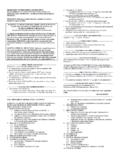
1 Page 1 of 28 HIGHLIGHTS OF PRESCRIBING INFORMATION These highlights do not include all the information needed to use MIRAPEX safely and effectively. See full prescribing information for MIRAPEX. MIRAPEX (pramipexole dihydrochloride) tablets, for oral use Initial Approval: 1997 ---------------------------RECENT MAJOR CHANGES--------------------------- Warnings and Precautions, Postural Deformity ( ) 5/2018 Warnings and Precautions, Rhabdomyolysis ( ) 5/2018 Warnings and Precautions, Events Reported with Dopaminergic Therapy ( ); Melanoma Removed 5/2018 ----------------------------INDICATIONS AND USAGE--------------------------- MIRAPEX is a non-ergot dopamine agonist indicated for the treatment of.
2 Parkinson s disease (PD) ( ) Moderate-to-severe primary Restless Legs Syndrome (RLS) ( ) ---------------------- DOSAGE AND ADMINISTRATION----------------------- Parkinson s Disease-Normal Renal Function* ( ) Week DOSAGE (mg) Total Daily Dose (mg) 1 TID 2 TID 3 TID 4
3 TID 5 1 TID 3 6 TID 7 TID * Doses should not be increased more frequently than every 5-7 days.
4 Titrate to effective dose. If used with levodopa, may need to reduce levodopa dose. Parkinson s Disease-Impaired Renal Function ( ) Creatinine Clearance Starting Dose (mg) Maximum Dose (mg) >50 mL/min TID TID 30 to 50 mL/min BID TID 15 to 30 mL/min QD QD <15 mL/min and hemodialysis patients Data not available Restless Legs Syndrome* ( ) Titration Step Dose (mg) 2-3 hours before bedtime 1 2 (if needed) 3 (if needed) * Dosing interval is 4-7 days (14 days in patients with CrCl 20-60 mL/min)
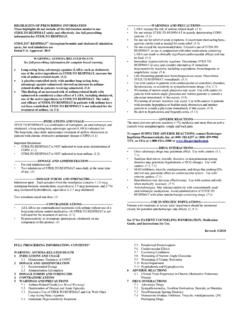
5 --------------------- DOSAGE FORMS AND STRENGTHS---------------------- Tablets: mg, mg, mg, mg, 1 mg, and mg (3) -------------------------------CONTRAIND ICATIONS--------------------------None (4) -----------------------WARNINGS AND PRECAUTIONS------------------------ Falling asleep during activities of daily living: Sudden onset of sleep may occur without warning; advise patients to report symptoms ( ) Symptomatic orthostatic hypotension: Monitor during dose escalation ( ) Impulse control/Compulsive behaviors: Patients may experience compulsive behaviors and other intense urges ( ) Hallucinations and Psychotic-like Behavior: May occur.
6 Risk increases with age ( ) Dyskinesia: May be caused or exacerbated by MIRAPEX ( ) Postural Deformity: Consider reducing the dose or discontinuing MIRAPEX if postural deformity occurs ( ) ------------------------------ADVERSE REACTIONS------------------------------- Most common adverse reactions (incidence >5% and greater than placebo): Early PD without levodopa: nausea, dizziness, somnolence, insomnia, constipation, asthenia, and hallucinations ( ) Advanced PD with levodopa: postural (orthostatic) hypotension, dyskinesia, extrapyramidal syndrome, insomnia, dizziness, hallucinations, accidental injury, dream abnormalities, confusion, constipation, asthenia, somnolence, dystonia, gait abnormality, hypertonia, dry mouth, amnesia, and urinary frequency ( ) RLS: nausea, somnolence, fatigue, and headache ( ) To report SUSPECTED ADVERSE REACTIONS, contact Boehringer Ingelheim Pharmaceuticals, Inc.
7 At (800) 542-6257 or (800) 459-9906 TTY or FDA at 1-800-FDA-1088 or ------------------------------DRUG INTERACTIONS---------------------------- --- Dopamine antagonists: May diminish the effectiveness of pramipexole ( ) -----------------------USE IN SPECIFIC POPULATIONS------------------------ Pregnancy: Based on animal data, may cause fetal harm ( ) See 17 for PATIENT COUNSELING INFORMATION and FDA-approved patient labeling. Revised: 5/2018 _____ FULL PRESCRIBING INFORMATION: CONTENTS* 1 INDICATIONS AND USAGE Parkinson's Disease Restless Legs Syndrome 2 DOSAGE AND ADMINISTRATION General Dosing Considerations Dosing for Parkinson's Disease Dosing for Restless Legs Syndrome 3 DOSAGE FORMS AND STRENGTHS 4 CONTRAINDICATIONS 5 WARNINGS AND PRECAUTIONS Falling Asleep During Activities of Daily Living and Somnolence Symptomatic Orthostatic Hypotension Impulse Control/Compulsive Behaviors Hallucinations and Psychotic-like Behavior Dyskinesia Postural Deformity Renal Impairment Rhabdomyolysis Retinal Pathology
8 Events Reported with Dopaminergic Therapy 6 ADVERSE REACTIONS Clinical Trials Experience Post Marketing Experience 7 DRUG INTERACTIONS Dopamine Antagonists 8 USE IN SPECIFIC POPULATIONS Pregnancy Lactation Pediatric Use Geriatric Use Renal Impairment 10 OVERDOSAGE 11 DESCRIPTION 12 CLINICAL PHARMACOLOGY Mechanism of Action Pharmacodynamics Pharmacokinetics 13 NONCLINICAL TOXICOLOGY Carcinogenesis, Mutagenesis, Impairment of Fertility Animal Toxicology and/or Pharmacology 14 CLINICAL STUDIES Parkinson's Disease Restless Legs Syndrome 16 HOW SUPPLIED/STORAGE AND HANDLING How Supplied Storage and Handling 17 PATIENT COUNSELING INFORMATION *Sections or subsections omitted from the Full Prescribing Information are not listed Page 2 of 28 FULL PRESCRIBING INFORMATION 1 INDICATIONS AND USAGE Parkinson's Disease MIRAPEX tablets are indicated for the treatment of Parkinson's disease.
9 Restless Legs Syndrome MIRAPEX tablets are indicated for the treatment of moderate-to-severe primary Restless Legs Syndrome (RLS). 2 DOSAGE AND ADMINISTRATION General Dosing Considerations MIRAPEX tablets are taken orally, with or without food. If a significant interruption in therapy with MIRAPEX tablets has occurred, re-titration of therapy may be warranted. Dosing for Parkinson's Disease In all clinical studies, DOSAGE was initiated at a subtherapeutic level to avoid intolerable adverse effects and orthostatic hypotension. MIRAPEX tablets should be titrated gradually in all patients.
10 The dose should be increased to achieve a maximum therapeutic effect, balanced against the principal side effects of dyskinesia, hallucinations, somnolence, and dry mouth. Dosing in Patients with Normal Renal Function Initial Treatment Doses should be increased gradually from a starting dose of mg/day given in three divided doses and should not be increased more frequently than every 5 to 7 days. A suggested ascending DOSAGE schedule that was used in clinical studies is shown in Table 1: Table 1 Ascending DOSAGE Schedule of MIRAPEX tablets for Parkinson's Disease Week DOSAGE (mg) Total Daily Dose (mg) 1 three times a day 2 three times a day 3 three times a day 4 three times a day 5 1 three times a day 6 three times a day 7 three times a day Maintenance Treatment MIRAPEX tablets were effective and well tolerated over a DOSAGE range of to mg/day administered in equally divided doses three times per day with or without concomitant levodopa (approximately 800 mg/day).