Transcription of Drinking Water Problems: Corrosion - Texas A&M …
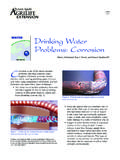
1 Drinking Water Problems: Corrosion Mark L. McFarland, Professor and Extension Water Quality Coordinator Tony L. Provin, Professor and Extension Water testing Laboratory Director Diane E. Boellstorff, Assistant Professor and Extension Water Resources Specialist Texas AgriLife Extension Service, Department of Soil and Crop Sciences, College Station, Texas One of the most common problems affecting domestic Water supplies is Corrosion , a chemical process that slowly dissolves metal, resulting in deterioration and failure of plumbing pipes, fixtures and Water -using equipment. One type of Corrosion attacks and gradually thins the entire metal surface, often causing red-colored stains in iron or steel plumbing systems or blue-green stains in copper and brass plumbing systems (Figure 1). Another type of Corrosion attacks small areas where deep pits can develop and penetrate pipe or tank walls.
2 This type of Corrosion may not add significant amounts of iron or copper to the Water , but can create small holes in a pipe or tank that destroy its usefulness, cause Water leaks, and result in major Water damage to a home or business (Figure 2). A third type of Corrosion caused by the oxidation of metals involves conversion of copper or other base metal to an oxidized form in a process similar to the rusting of steel. It often results in reduced Water flow through supply lines and destruction of Water valves and other machined Water flow control surfaces, thus resulting in internal and external leaks at valves and faucets. This type of Corrosion does not necessarily occur due to the Water chemistry, but is caused by exposure of the outside surface of the plumbing supply lines to soil or other corrosive environments. Especially in older installations and very new homes, two potentially toxic metals, copper and lead, may occur in tap Water almost entirely because of leaching caused by Corrosion .
3 Elevated levels of copper can cause gastrointestinal problems and with long-term exposure result in liver and kidney damage. Elevated levels of lead can result in physical and mental development problems in children, and high blood pressure and kidney problems in adults. The US Environmental Protection Agency has established Primary Drinking Water Standards ( ) for both copper (maximum contaminant level = milligrams/liter) and lead (maximum contaminant level = milligrams/liter). In addition, two other metals (iron and zinc) usually present because of Corrosion can cause Water to have a metallic taste. Laboratories and publications may report concentrations using units of milligrams/liter (mg/L) or parts per million (ppm), which are the same. What are the causes of Corrosion ? Corrosion is a natural process that occurs when metals are in contact with oxygen and react to form metal oxides. All Water is corrosive to some degree as it contains some amount of dissolved oxygen.
4 The rate of Corrosion depends on a number of factors including acidity or low pH, electrical conductivity, oxygen concentration and Water temperature. Each of these factors is explained in more detail in the next sections. In addition to Corrosion , dissolution of metals occurs when the Water is extremely low in dissolved salts or in the presence of certain Water -borne ions. All materials have a particular level of solubility and in the case of corroded plumbing, the concentration of the copper or other plumbing material metal is lower in the Water than that material s solubility. As a result, the plumbing material is gradually dissolved. While this process is usually very slow, certain Water -borne ions can react with and bind the recently dissolved metal allowing more rapid loss. While Corrosion and dissolution are fundamentally different, the end result is similar and so both are often discussed together under the general term Corrosion .
5 Acidity or Low pH The pH value is used to measure acidic and alkaline materials in Water . The pH scale ranges from 0 to 14, with a pH of representing the neutral point where acid and alkaline materials are in balance. Water with pH values below is dominated by acidic materials, while Water with pH values above is alkaline. The terms alkalinity and pH often are confused. Total alkalinity is a measure of the total bases in Water that can neutralize acid. This includes bicarbonates, carbonates, hydroxides, and even some phosphates and silicates. Alkalinity is reported in units of milligrams per liter (mg/L) of calcium carbonate. Groundwater can be acid or alkaline in pH depending on several factors. Rainfall is typically acidic because it picks up carbon dioxide as it falls to the earth, forming carbonic acid. As Water percolates through the soil, it also can come in contact with other acid-forming materials such as decaying organic matter (vegetation).
6 In areas where underground strata contain limestone or dolomite, the acid is neutralized and the Water is usually alkaline and hard with pH values between 7 and 8. Where limestone or dolomite is not present underground, the percolating Water will retain its acidity and groundwater will typically have pH values between 6 and 7. For ideal Corrosion control, Water should have moderate alkalinity (40 to 70 mg/L) and a pH between and Water with pH values below will be corrosive, especially if alkalinity also is low. However, Water with pH values above also can be corrosive when alkalinity is low. High dissolved solids (electrical conductivity) The ability of Water to conduct electricity is affected by its ionic concentration. Dissolved soil minerals in Water separate into charged particles called ions that can conduct electricity. Pure Water does not conduct electricity. Thus, electrical conductivity is only a problem when Water has a high mineral concentration.
7 Water containing sodium salts (soft Water ) is more corrosive than Water containing calcium or magnesium salts (hard Water ), because hard Water minerals tend to coat the inside of pipes and reduce the potential for Corrosion . Several different types of metals are often used in a plumbing system. When two different metals are in contact with each other and a solution that conducts electricity, a galvanic cell is created. The cell generates electricity and one metal dissolves or corrodes in proportion to the electricity produced. Galvanic Corrosion occurs at or very near the joint between the two metals. Plumbing systems using galvanized pipe often have brass values. Likewise, copper plumbing often has solder joints and valves made of a different metal alloy. Any dissimilar metal connections such as these represent potential sites for galvanic Corrosion if the Water has high amounts of dissolved minerals. Dissolved Oxygen and Other Gasses Oxygen dissolved in Water is one of the most common and important corrosive agents.
8 When Water is exposed to air, some of the oxygen in the air is absorbed. Oxygen dissolved in rain and surface Water is usually consumed as Water seeps into the ground. As a result, deep wells usually are free of dissolved oxygen. In contrast, shallow wells and surface Water often have a higher dissolved oxygen concentration. Dissolved oxygen also may be introduced into Water when a pneumatic pressure tank is used. In addition to oxygen, the presence of hydrogen sulfide also can result in significant Corrosion of metals. The presence of high levels of dissolved gasses can be observed by dispensing Water into a clear glass. In extreme cases, the Water may initially have a pale white (milky) appearance due to the presence of very small air bubbles. Water Temperature Corrosion is more likely and more rapid at higher Water temperatures. The rate of Corrosion increases by a factor of three to four as Water temperature rises from 60oF to 140oF.
9 Above 140oF, the rate of Corrosion doubles for every 20oF increase in Water temperature. How do I know if there is a Corrosion problem ? Most people first realize they have corrosive Water because of its negative effects. The most common symptoms are: The cold Water has a bitter taste when you first draw it in the morning, and flushing the line by running the Water for a few seconds improves taste. Blue-green stains in sinks and/or at the joints of copper piping. Water leaks in floor, wall or ceiling areas as a result of pin-size or larger holes in metal pipes. Many Water - testing laboratories, including the Texas AgriLife Extension Service Soil, Water and Forage testing Laboratory in College Station, Texas , offer routine tests for irrigation and/or livestock Water uses. Results showing elevated levels of copper, iron or zinc can be an indication of on-going Corrosion in a Water system. However, these tests are only indicators of a potential problem , and more detailed testing is often needed to confirm that Corrosion is occurring and why.
10 Special laboratory testing is needed to more specifically determine the causes and severity of Corrosion potential. The Langelier Saturation Index (LSI) is one method for predicting if Water is likely to be corrosive. In order to use the index, a laboratory must measure pH, electrical conductivity, total dissolved solids, alkalinity and total hardness. The LSI typically is either negative or positive and only rarely zero. An LSI value of 0 indicates that the Water is balanced and unlikely to be corrosive, values above 0 indicate the Water will tend to form a carbonate scale, while negative values indicate that the Water has a greater corrosive potential. A typical reporting range for the LSI is -1=Mild Corrosion Potential to -5=Severe Corrosion Potential. Another common index is the Ryzner Stability Index (RSI). An RSI greater than about indicates Water that is probably corrosive, with higher values being increasingly corrosive.