Transcription of Dyscalculia Toolkit - Mathematics Shed
1 Dyscalculia Toolkit : How Singing, Playing Games and Other Fun Activities Can Help Defeat Dyslexia 2 Copyright Linda Silbert, PhD & Alvin J. Silbert, EdD., Strong Learning, Inc. A STRONG Learning Centers Handbook for Parents Dyscalculia Toolkit How Singing, Playing Games and Other Fun Activities Can Help Defeat Math Disabilities Elementary Grades by Linda Silbert, PhD and Alvin J. Silbert, EdD Dyscalculia Toolkit ISBN 0-89544-471-2 (print version) Copyright Linda & Al Silbert. All rights reserved.
2 STRONG Learning Centers Trademark Registered Patent Office For Information, write or call Strong Learning, Inc. tel: 1-888-3 STRONG or 845-628-7910 email: ALL RIGHTS RESERVED. No part of this publication may be reproduced or transmitted in any form whatsoever, electronic or mechanical, including photocopying, recording, or by any informational storage or retrieval system without express written, dated, and signed permission from the authors. WAIVER: You agree to take full responsibility for your own well-being and that of your child(ren) or students.
3 You agree to hold harmless Dr. Linda Silbert and Dr. Al Silbert (herein referred to as the authors) or Strong Learning, Inc. for any side effects or results from the use of this information. DISCLAIMER AND/OR LEGAL NOTICES: The information presented herein represents the view of the authors as of the date of publication. Because of the rate with which conditions change, the authors reserve the right to alter and update their opinions based on the new conditions. This publication is for informational purposes only.
4 While every attempt has been made to verify the information provided herein, neither the authors nor their affiliates/partners assume any responsibility for errors, inaccuracies, or omissions. Any slights of people or organizations are unintentional. If advice concerning legal or related matters is needed, the services of a fully qualified professional should be sought. This handout is not intended to be used as a source of legal, medical or accounting advice. You should be aware of any laws, which govern business transactions or other business practices in your country and state.
5 Any reference to any person or business whether living or dead is purely coincidental. Dyscalculia Toolkit : How Singing, Playing Games and Other Fun Activities Can Help Defeat Dyslexia 3 Copyright Linda Silbert, PhD & Alvin J. Silbert, EdD., Strong Learning, Inc. Learning Math Math can be a frustrating subject for many children, especially if they have Mathematics Disorder, a math disability sometimes called Dyscalculia . Either they can t remember the number facts or multiplication tables, or they memorize them in a flash and can t understand the concepts.
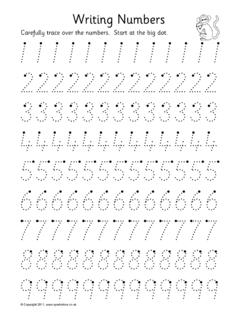
6 Many children experience difficulty with both computation and application. Case Study: Ben, age 10 This a question from my weekly newspaper Q&A column. Dear Dr. Linda, My fourth grader does well in school, except for math. This has been since first grade. He had trouble writing numbers and when he finally learned them he could never keep them in the right columns. I m confused because he seems to understand math, but when he takes a test, he always makes these careless mistakes. For example, he could be doing a page of subtraction and forgets and starts to add the numbers.
7 He has a terrible time with regrouping and forget the times table. No matter how many times we go over them, he can t remember them. What can I do to help him? This is a typical pattern caused by a math disorder commonly referred to as Dyscalculia . Since math becomes more complex in third grade, the symptoms typically begin to appear around the third or fourth grade. The following is a more detailed response than appeared in the column. Dyscalculia Toolkit : How Singing, Playing Games and Other Fun Activities Can Help Defeat Dyslexia 4 Copyright Linda Silbert, PhD & Alvin J.
8 Silbert, EdD., Strong Learning, Inc. Some Symptoms of Math Disabilities: Avoids math work. Cannot keep numbers in columns. Becomes confused with math concepts. Has trouble with word problems. Math homework ends up in tears. Will add one column of numbers, forget what she is doing, then subtract the next column. Has difficulty with regrouping. For example, he carries a number into the next column and forgets to add it on. Has difficulty remembering addition facts and the multiplication tables. Has difficulty remembering math steps.
9 For example, cannot remember how to carry or borrow numbers, the steps in long division or how to add, subtract multiply and divide fractions. Changes the order of numerals when copying them. Strategies: Here are some of the top strategies. If your child has trouble keeping numbers in their appropriate column, turn lined paper sideways and write the numbers in columns or use graph paper. Have your child cover up all columns except those he is working on. If your child is being tested for concepts and understanding and has difficulty with computation, have him use a calculator for those tests or assignments.
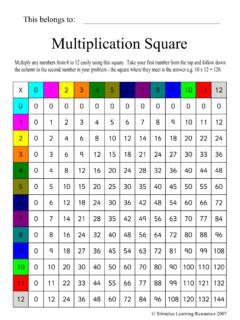
10 Dyscalculia Toolkit : How Singing, Playing Games and Other Fun Activities Can Help Defeat Dyslexia 5 Copyright Linda Silbert, PhD & Alvin J. Silbert, EdD., Strong Learning, Inc. Suggest that your child circle the + or - sign before computing the problem. Color code fact families and multiplication facts for your young child. For example, you could color 2+3=5, 3+2=5, 5-2=3, 5-3=2 in green, and 3+4=7, 4+3=7, 7-3=4, 7-4=3 in blue. Show your child how to use one or more of these similar strategies to help remain focused.