Transcription of Early Childhood Screening Assessment Background
1 ECSA version 05/05/09 Early Childhood Screening Assessment Background : The Early Childhood Screening Assessment (ECSA (1)) is a Screening tool developed to facilitate primary care pediatrician s identification of young children (1 -5 years old) who need of further Assessment of their emotional and behavioral development. Nearly 10% of preschool children in primary care setting have severe, impairing psychiatric disorders (2). These disorders can cause significant impairment and increase risk for future disorders and failures, but tend to be under-recognized. Structured Screening tools have been shown to increase pediatrician s recognition of children who need mental health assistance (3). Existing parent report questionnaires for this age group have limited utility in the primary care office because of length, scoring system, or limited age range.
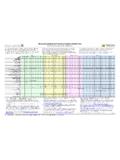
2 The ECSA is a parent-report questionnaire designed specifically for use in busy primary care settings. It is short and clear for parents to complete, can be visually scanned, does not require any technology to score, and takes less than 30 seconds to score. In addition to identifying child symptoms, the ECSA also identifies parental distress and depression, which are related to emotional and behavioral problems in young children (4). Parents provide information about the symptoms in 2 ways on the ECSA. First, parents are asked to circle a 0 , 1 , or 2 to indicate the frequency of the behaviors described in the item. 0 represents never or rarely , 1 indicates sometimes/somewhat and 2 reflects always or almost always.
3 Secondly, parents are asked to circle a + if they are concerned about a behavior and want help with it . The ECSA is written at a 5th grade reading level. Scoring and interpretation: Interpretation of this and any other measure should be while considering the child s individual clinical presentation. Screening tests are not diagnostic. Child professionals (medical, mental health, or educational) with training in interpreting structured measures should interpret scores and provide feedback to parents. Child score: The ECSA child score is the sum of the circled numbers of items 1-36, with a maximum score of 72. The cut-off score is 18, suggesting that further Assessment is necessary because of elevated risk of having an impairing psychiatric diagnosis.
4 (See below for justification of cut-off and psychometric properties). Not every child who has a score >= 18 will require specialty Assessment . This decision depends on the clinical context. However, a thorough emotional & behavioral history, a review of family history, and close follow-up are recommended to ensure timely intervention when ECSA version 05/05/09 appropriate for children whose score is at least 18. Approximately of children with a score >= 18 meet criteria for a psychiatric diagnosis with functional impairment (5). Parent score The last 4 questions, items 37-40, are maternal distress items. The last two Items 39 and 40 are the 2 question depression screen developed by the Preventive Health Task Force to identify depression in adult primary care settings.
5 A score of 1 or 2 on either of these items indicate a 3 times risk of depression (6). Items 37 and 38 are a measure of maternal distress and they reflect a parent s negative experiences with her child. They have not been empirically validated, but they have strong face validity. Scores higher than 0 on items 37 and 38 should be further investigated. + Regardless of the total score, any items with a + circled should be explored further. These + s correlate with a child emotional or behavioral problems, although in some cases, parental reassurance is all that is necessary. Psychometric properties of the ECSA: Psychometric properties of the ECSA have been tested in 2 pediatric populations in New Orleans, Louisiana and Providence RI, with a total of 279 children from diverse racial and economic backgrounds.
6 279 mothers completed the ECSA, the CBCL, and either the Brief Infant Toddler Social Emotional Assessment (BITSEA) (ages 18-36 months) Pediatric Symptom Checklist (PSC) (ages 48-60 months). A subset of 69 parents oversampled for symptoms (CBCL total scores T>55 and randomly selected parents) completed those instruments as well as the Diagnostic Infant and Preschool Structured Interview (DIPSI). A second validation study is ongoing in Bucharest, Romania, with a sample of 998 children, using similar methodology. Convergent Validity In the US pediatric populations, ECSA scores correlated strongly and significantly with other parent report questionnaires including the CBCL (spearman s rho = , p < ), BITSEA (spearman s rho = p < ), and the PSC (spearman s rho = , p < )).
7 In the Romanian sample, ECSA scores correlated strongly with CBCL Total Problem score and moderately with internalizing and externalizing scales (Spearman s rho = , , respectively; p< ). A score > 18 is considered positive, based upon receiver operating characteristics analysis weighted at for predicting a diagnosis on the DIPSI. ECSA version 05/05/09 Association between Early Childhood Screening Assessment (ECSA) clinical status with Diagnostic Infant Preschool Structured Interview (DIPSI) diagnosis No DIPSI Diagnosis DIPSI Diagnosis Total Sensitivity (%) Specificity (%) PPV (%) NPV (%) Negative ECSA* 34 4 38 Positive ECSA* 7 24 31 Total 41 28 69 86 83 77 90 * Using cut-off score of 18 In the US population, using a cut-off of 18, the ECSA has an 86% sensitivity in predicting a psychiatric diagnosis based upon the Diagnostic Infant Preschool Structured Interview, meaning that a positive ECSA identifies 86% of children who have a diagnosis on a structured, parent-report interview about the child s symptoms.
8 The specificity is 83%. The positive predictive value of the ECSA in these studies was 77%- that is, if a child scored above 18, there is a 3/4 chance that he or she has a diagnosis. If a child scored below 18, there is an 83% chance that he or she does not have a psychiatric diagnosis (specificity). If a child has a score > 18, AND the parent circles a + indicating s/he wants help, AND the parent says that he or she is concerned about the child s emotional or behavioral development (question at the bottom of the page), the ECSA identifies 93% of children with a diagnosis (7). Follow-up: As with any Screening measure, it is important to develop a system of responding to positive screens before implementing the screens in practice.
9 Such a system would include an identified referral site or consultation resource for children or parents who screen positive. Handouts from sources including the Bright Futures Website ( ) or the Zero to Three ( ) can also be useful resources for parents. Use of the ECSA: The ECSA may be photocopied for use in pediatric offices. It is important to know that the ECSA is a new measure and Assessment of the measure is ongoing. For updates or questions, please contact: Mary Margaret Gleason, MD, FAAP, (504) 988 4653. ECSA version 05/05/09 REFERENCES 1. Gleason MM, Dickstein S, Zeanah CH (in preparation) Recognizing young children in need of mental health Assessment : Development and preliminary validity of the Early Childhood Screening 2.
10 Lavigne J., Gibbons R., Christoffel , Arend, R., Rosenbaum, D., Binns, H., et al. (1996), Prevalence rates and correlates of psychiatric disorders among preschool children. Journal of the American Academy of Child and Adolescent Psychiatry 35:2: 204-214 3. Murphy J et al (1992) Screening for psychosocial dysfunction in pediatric practice: a naturalistic study of the pediatric symptom checklist. Clinical Pediatrics 31: 660-667 4. Friedlander, S., Weiss, , Traylor, J. (1986) Assessing the influence of maternal depression on the validity of the Child Behavior Checklist. Journal of Abnormal Child Psychology 14(1): 123-33 5. Gleason MM, Dickstein S, Zeanah CH (2006) Further Validation of the Early Childhood Screening Assessment .