Transcription of Education & Staff Development Program eCircle of …
1 Education & Staff Development ProgrameCircleof SafetyHandling Cleaning Chemicals Safely in the Work PlaceWe all use cleaning chemicals; both at work and at home. It is important that we all understand the potential risks, and where to find information, and how we use this information in everyday practices. Education & Staff Development ProgrameCircleof SafetyABOUT THIS PROGRAMBy the end of this Program you should have a basic understanding of the potential hazards that chemicals may present. Be able to demonstrate the ability to locate, interpret and act on the appropriate chemical safety information for your working environment. Key sources of information that we will look at are labels and Material safety Data Sheets/ safety Data Sheets, commonly called MSDS and SDS.
2 NoteEducation & Staff Development ProgrameCircleof SafetyRESPONSIBILITIESWho is responsible for your safety ?WE ARE ALL RESPONSIBLE FOR safety !Each individual has a responsibility to create and maintain a safe working environment. We all have an important part to play in ensuring this takes place. Education & Staff Development ProgrameCircleof SafetyEMPLOYERS' RESPONSIBILITIESW hile we are all responsible for safety , employers have some specific legal employers must: Identify any Hazardous Substances used; Set up a Register of Hazardous Substances; Ensure all Material safety Data Sheets (MSDS/SDS) are on hand for all employees; Ensure correct labellingof all products and containers; Conduct risk assessments; Minimisethe risks identified; Consult with employees and provide safety training.
3 NoteEducation & Staff Development ProgrameCircleof SafetyHOW COULD CHEMICALS AFFECT YOUR HEALTHT here are three categories that we will examine today. Depending on the chemical they can be classified as: TOXICWith toxic substances there is a likely risk of seriously damaging your health with continuous exposure above the recommended limits. Exposure can be via ingestion, contact with the skin or through chemicals are irritants and may result in skin inflammation, eye irritation, serious eye effects, and irritation of respiratory chemicals that are classified as corrosive include dish-machine powders. Corrosive chemicals can burn the skin, eyes and other living tissue. NoteEducation & Staff Development ProgrameCircleof SafetyEXPOSURET here are three ways you can be exposed to over the sections of the body to find out more information on these three levels of exposure.
4 Education & Staff Development ProgrameCircleof SafetyNoteDANGEROUS GOODS CLASSIFICATIONSSome cleaning chemicals have specific classifications. Three you need to be aware of are:CorrosivesWith incorrect use of corrosive substances there is the possibility of severe damage to living substances can also cause damage to metal surfaces and they may react with other liquidsSubstances labelled as flammable liquids are likely to catch fire easily, or with incorrect handling or usage may agentsThese substances can react with combustible material, such as paper or sawdust, so particular care needs to be taken when containing or cleaning up a spill. Education & Staff Development ProgrameCircleof SafetyIDENTIFYING RISKSNow that you know about some of the potential risks, where do you go to find out about the risks for a product?
5 Manufacturer's LabelsThese labels give you all the basic information you require. You should always read the label before using a product. You should never remove the you cannot find or read a label, or suspect it is incorrect, tell your supervisor, and do not use the safety Data Sheets (MSDS / SDS)MSDSs/SDSs give you more detailed information. They contain information necessary to use a chemical product safely. You should always read the MSDS/SDS to familiariseyourself before using a Your SupervisorIf you have more questions, or suspect anything is amiss, you should ask your supervisor. You should never use a product you are not sure about. Education & Staff Development ProgrameCircleof SafetyTipMANUFACTURER S LABELSL abels contain information about the product.
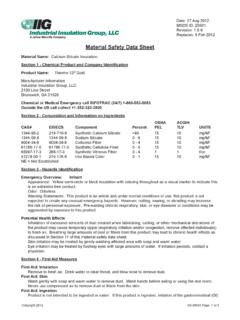
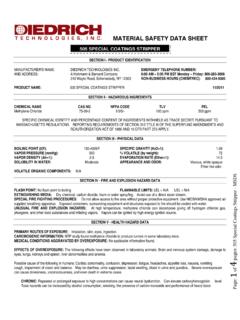
6 These include the : The product s trade name The manufacturer s contact details A list of any hazardous ingredients The possible harmful effects. Look for key words such as Hazardous , any risk /hazard phrases and dangerous goods labels or diamonds Safe usage directions Basic first aid information Basic emergency information Note 1 Note 2 Education & Staff Development ProgrameCircleof SafetyMATERIAL safety DATA SHEETS / safety DATA SHEETS A MSDS/SDS contains additional information that you need to familiarise yourself with before using a MSDS/SDS has more detail than a label, and includes information on : Product identification The ingredients and properties of the product Known potential health and physical hazards First aid and emergency actions Precautions you need to take when handling theproduct Proper storage, clean up and disposal NoteTipEducation & Staff Development ProgrameCircleof SafetyMSDS/SDSAll MSDS/SDS should have 16 sections containing detailed information that you need to know before using a product.
7 Some of the key sections are: Hazard identification Toxicological and ecological information Handling and storage information Accidental release measures and considerations Education & Staff Development ProgrameCircleof SafetyMSDS/SDS IN FOCUS: VivaSection 1: Identification of the material and supplierThis section includes the product name, its uses, supplier contact details and emergency contact 2: Hazards IdentificationWarning information and hazardous statements including risk and safety 3: Composition/ information on ingredientsContains information on any ingredients which are classified as hazardous. Education & Staff Development ProgrameCircleof SafetyMSDS/SDS IN FOCUS: VivaSection 4: First aid measuresHas information on the need and urgency for medical attention, and what measures to take for eye contact, skin contact, inhalation and ingestion Section 5: Fire-fighting measuresContains information for use in an emergency situation, including any special protective equipment for fire fighters Education & Staff Development ProgrameCircleof SafetyMSDS/SDS IN FOCUS: Viva Section 6: Accidental release measuresList the appropriate responses to spills including personal precautions, environmental precautions and methods to clean up spillsSection 7.
8 Handling and storageHas information on safe handling and storage practices, including compatibility (if appropriate), to minimise potential hazards Education & Staff Development ProgrameCircleof SafetyMSDS/SDS IN FOCUS: Viva Section 8: Exposure controls/ personal protectionContains measures to take to minimise any potential risks, occupational exposure limits and recommended Personal Protective Equipment (PPE)Section 9: Physical and chemical propertiesIncludes information on the physical state and colour of the product, along with other properties such as boiling points, and pH NoteEducation & Staff Development ProgrameCircleof SafetyNoteMSDS/SDS IN FOCUS: Viva Section 10: Stability and reactivityTo understand under what conditions this product is stable, what conditions to avoid and information on any hazardous reactions that could be expectedSection 11: Toxicological informationHas information on potential acuteand chronichealth effects and their symptoms Education & Staff Development ProgrameCircleof SafetyNote 1 Note 2 MSDS/SDS IN FOCUS: Viva Section 12: Ecological informationLists any specific ecological statements about environmental hazardsSection 13.
9 Disposal considerationsContains recommended methods of dispose of the product or any by-products, including a cleaning solution, unused material and disposal of empty containers Section 14 Transport informationHas codes used in preparing the product for shipping or transportation Education & Staff Development ProgrameCircleof SafetyMSDS/SDS IN FOCUS: Viva Section 15 &16: Regulatory information; Other informationAll information on an MSDS/SDS is standardised and controlled. These sections refer to additional regulatory codes and references 15 shows regulatory status of the product under relevant health, safety and environmental legislationSection 16 shows the date of the previous MSDS/SDS (which this current MSDS/SDS replaces) along with what information was changed, references and disclaimers Education & Staff Development ProgrameCircleof SafetyWHERE DO YOU FIND AN MSDS / SDS?
10 Now that you know how to read an MSDS/SDS, you need to know where to find s are usually located near the area in which products are used or stored. There should also be a central register within the need to know where to locate MSDS/SDS s, as you need to know this information before using a you cannot find an MSDS/SDS, ask your & Staff Development ProgrameCircleof SafetyDOING IT THE RIGHT WAYWhen working with cleaning products or any chemicals, there are some basic safety steps we all must take. They include ALWAYS: Knowing what you are handing Reading the label and MSDS/SDS Knowing what to do in an emergency Wearing the appropriate PPE, as shownon the MSDS/SDS Washing your hands after using cleaning products Adding product to water, (NOT water to product) to avoid concentrated splashes; and Always storing, dispensing and disposing of chemicals safely and correctly Education & Staff Development ProgrameCircleof SafetyDOING IT THE RIGHT WAYWhen working with cleaning products or any chemicals, there are some basic safety steps we all must take.