Transcription of Education for Values in Schools – A Framework
1 DEPFE, NCERT Education for Values in Schools A Framework DEPARTMENT OF EDUCATIONAL PSYCHOLOGY AND FOUNDATIONS OF Education NATIONAL COUNCIL OF EDUCATIONAL RESEARCH AND TRAINING Sri Aurobindo Marg, New Delhi - 110016 DEPFE, NCERTW rittenWrittenWrittenWritten and Compiled byand Compiled byand Compiled byand Compiled by Prof. Sushma Gulati, Former Head, DEPFE Prof. Daya Pant, Head, DEPFE Editorial AssociatesEditorial AssociatesEditorial AssociatesEditorial Associates Prof. Lawrence Surendra Dr. Ameeta Mullah Wattal Consultation GroupsConsultation GroupsConsultation GroupsConsultation Groups Prof. R. C. Tripathi, Ex-Director, Pant Social Science, Institute, Allahabad Prof. Suman Karandikar (Retd.), University of Pune, Pune Prof. Muley (Retd.), NCERT, New Delhi Prof. Lawrence Surendra, University of Mysore, Mysore Prof. Rajeev Sharma, IIM, Ahmedabad Prof. Veenita Kaul, Ambedkar University, New Delhi.
2 CBSCBSCBSCBSE Partners E Partners E Partners E Partners Shri Vineet Joshi, Chairman Mrs. Sadhana Parashar Ms. Sugandh Sharma Ms. Ameeta Mullah Wattal, Principal, Springdales school New Delhi Ms. Asha Nair, Principal (Retd.), Amritya Vidyalayam, New Delhi Shri Ranga Rao, Kendriya Vidyalaya Sangthan, New Delhi. Shri Sagar, Navodaya Vidyalaya Samiti, New Delhi Mrs. Poonam Tandon, Principal, Sarvodaya school , New Delhi Ms. Chitra Nakra, Principal, Ved Vyas DAV Public school , New Delhi. Dr. Latesh Choudhary, Lancers Convent school , Delhi Prof. Akhtarul Wasey, Jamia Millia Islamia, New Delhi Mr. Peeyush Arya, Vichar value Edu. , Mumbai Ms. Anjali Gogia, Prabhaav Learners, New Delhi Dr. Sangeeta Bhatia, Principal, KIIT World school , New Delhi Mrs. Neeta Rastogi, Sadhu Vasvani International school for Girls, New Delhi. Ms. Sharda Taneja, Directorate of Education , Delhi Ms. Nilam Katara, Education Officer, Kendriya Vidyalaya Sangathan.
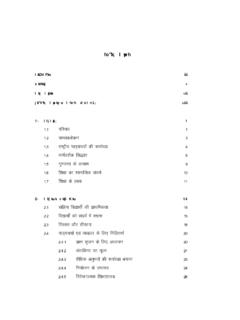
3 Ms. Samhita Nehru, Sathya Sai Organization, New Delhi Mr. Swapan Niyogi, Central Tibetan school Administration, New Delhi Mr. Sadashiv Dumbre, Bhartiya Jain Sangathan, Pune DEPFE, NCERT CONTENTS Foreword Preface Acknowledgements Summary I Concepts and Concerns Introduction Why Education for Values Values and the Contemporary Realities What value Education Aims at Renewing the Purpose of Schooling What are Values How Values are Acquired value Concerns at school Stage II Approaches and Strategies The Whole school Approach Pedagogy of Values Some General Strategies The Stage Specific Focus III Key Dimensions for Mapping value Contexts in Schools Leadership school Ethos, Policies and Practices school Activities and Programmes Relationship and Modeling Teacher and Classroom Practices value Contexts in Teaching of subjects Evaluation system Home- school -Community Partnership Teacher Development and Staff Orientation DEPFE, NCERT IV Guidelines for Implementation and Evaluation The Five Cs Preparing and Implementing the school Plan The Process of Planning The Evaluation Process Self Appraisal Overall school Appraisal Epilogue DEPFE, NCERTF orewordForewordForewordForeword The whole enterprise of Education is extricably linked with the development of Values .
4 Devoid of the potential to nurture Values , Education losses its heart and soul. No one who attempts to depict the spirit of age in which we live can possibly overlook the importance of Education for Values . Peace and security are facing new challenges that could have negative implications if we do not address them positively. The malleable years of youth in Schools are crucial. Whatever is learnt and imbibed will determine to how students would live out their lives in future. The concern about value degradation is not new to this era. Even before independence such concern were pronounced in policy documents. Policy makers and educators have all along seriously mediated on this concern and have been trying to discern the potential of schooling, pinning their hopes on Education to fulfill the aspirations and expectations of the public and the society. Responding to this urgent need, NCERT has brought out Framework for Schools on Education of Values which articulates a comprehensive and pragmatic approach to value Education in Schools .
5 The Framework has been written in response to the need expressed by academics and public alike across the country. It includes vision, expectations, strategies and benchmarks for implementation and assessment of value Education in Schools . The Framework is suggestive and not prescriptive to allow scope to customize the some suited to the varied needs, contexts and resource of the Schools . Grounded on a holistic Framework , it makes striking attempts to relate to the contemporary issues and realities. It offers precisely the kind of reflection that is required for a subject like value Education . The Framework therefore requires careful and detailed reading of the text, commitment and persistent efforts, special inputs and concrete actions to build upon or reorienting existing practices. I do hope that school practitioners will find this Framework informative and thought provoking.
6 DEPFE, NCERT Preface This document is placed in the hands of educators, school administrators and teachers who have been asking for a workable Framework that contains a clear picture of how to carry out Education for Values in Schools . The Framework serves a blue print to help school personnel improve their understanding and practices in providing Education for holistic development of students in a more systematic and focused way. The Framework presents the whole school approach to Education for Values . The fundamental assumption is that Values inhere in Education . It is not possible to impart value Education separately from the processes and orientations of other parts of the school system. The more integrated it is to the educational process as a whole, the better will be the outcome of imparting Values . The Framework subsumes that value Education has to be a planned effort by the school to nurture core universal Values held upmost by our Constitution.
7 value Education helps to provide a road map to guide children and youth along a route to live a life based on moral principles which are important both in the individual as well as collective context. It is true that family is the prime agency for development of value but efforts must also be focused at the school site. How effectively the objectives are fulfilled depends on how various systems, resources and processes are organized and managed in the school . The Framework also proceeds from the fundamental recognition that a single model is not justifiable in a multi-cultural society like ours. The Indian school system is one of the most diverse not only in the teaching and accreditation systems but more importantly in the vast cultural diversity of the nation itself. The varied cultural socio-economic and political settings in which teaching and learning of students of our DEPFE, NCERT country takes place, needs to be kept in the forefront in preparing the local specific Framework .
8 The Framework also entails the view that there can not be one single perspective or approach to value Education in Schools . Hence, this document must be viewed as an on-going dialogue between and among the personnel working in Schools so as to evolve the specific Framework suited to their own conditions and contexts. The preparation of this Framework has undergone wide and intensive consultation with inputs and feedback from experts, educational practitioners and school administrators. The work commenced by outlining basic concerns and issues and holding consultations with a group of school principals and teachers and experts. A minimum base line consensus about the core Values and the approach was arrived at. Such consultations continued over a period of two months seeking suggestions and the practical ideas which could be made part of the document. The draft document was written followed by meeting with experts engaged in issue of Values in Education as well as principals and school administrators from different types of Schools .
9 Intensive discussion were held on each aspect of the draft document. Their valuable suggestions and insights helped in improving the contents, filling up gaps etc. One of the most important aspects of this process was seeking feedback from the CBSE Schools located across the country including Kendriya Vidyalayas and Navodaya Vidyalayas as well as the Schools under SCERTs located in different States. The comments and feedback received reinforced the value of the contents and the approach adopted in the Framework . Their suggestions have been duly considered and acknowledged at appropriate places in the Framework . The document has been organized in different sections. It opens with an introduction giving brief historical perspective about the major policy landmarks. In the section on Concepts and Concerns , the need for value Education is made clear in the light of contemporary concerns DEPFE, NCERTand realities.
10 Certain conceptual clarities have been provided about the meaning of Values and how these are acquired which have implications for not only knowing the significance of Values but its true internalization. This section also describes five major Core Values Concerns along with the rationale and the importance of associated attitudes and skills under each of the core value concerns. The proposed core areas can serve as reference points for Schools to evolve their own priority of value concerns suited to their own needs and contexts. Section II on Approaches and Strategies begins with the need for paradigm shift for nurturing Values through whole school approach. It offers certain basic assumptions underlying the integrated and whole school approach. Stage specific focus has been emphasized in planning pedagogical strategies in line with the expected attitudes and behaviours.