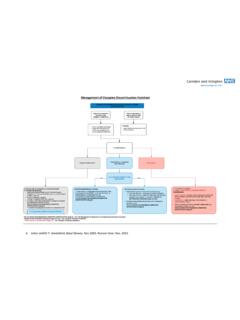
Transcription of EMOTIONALLY UNSTABLE PERSONALITY DISORDER (EUPD) …
1 prescribing guidance for Treating People with EMOTIONALLY UNSTABLE PERSONALITY DISORDER (EUPD) May 2020 EMOTIONALLY UNSTABLE PERSONALITY DISORDER (EUPD) GOOD prescribing PRACTICE MAY 2020 i EMOTIONALLY UNSTABLE PERSONALITY DISORDER (EUPD) GOOD prescribing PRACTICE MAY 2020 Policy title prescribing guidance for Treating People with EMOTIONALLY UNSTABLE PERSONALITY DISORDER (EUPD) Policy reference Policy category Clinical - Medicines Relevant to All Trust Staff involved in Treating People with EMOTIONALLY UNSTABLE PERSONALITY DISORDER (EUPD) Date published May 2020. Implementation date May 2020. Date last reviewed May 2020 Next review date May 2023. Policy lead Lucy Reeves, Chief Pharmacist. Contact details Email: Telephone: 020 7288 5093. Accountable director Dr Vincent Kirchner, Medical Director. Approved by (Group): Drugs and Therapeutics Committee. Approved by (Committee): Quality Committee. Document history Date Version Summary of amendments Mar 2020 1 New Guidelines Membership of the policy development/ review team Dr Victoria Barker, Consultant Psychiatrist and Medical Psychotherapist, Dr Lisle Scott, Consultant Psychiatrist, PERSONALITY DISORDER service Consultation Dr Chris Curtis, Consultant Psychiatrist, Clinical Director, Community Mental Health Division Audrey Coker, Lead Pharmacist for Clinical Services, David Rogalski, Lead Pharmacist Primary care, Dr Dimitris Chartonas, Consultant Psychiatrist, Primary Care Mental Health Team Consultants, Drugs and Therapeutics Committee Members DO NOT AMEND THIS DOCUMENT Further copies of this document can be found on the Trust intranet.
2 Ii EMOTIONALLY UNSTABLE PERSONALITY DISORDER (EUPD) GOOD prescribing PRACTICE MAY 2020 Contents Page 1 Introduction 1 2 Aims and objectives 1 3 Scope of the policy 1 4 Background 1 5 Main prescribing principles 2 6 The management of crises 4 7 Specific medication guidance - Antidepressants - Mood Stabilisers - Antipsychotics - Benzodiazepines and related drugs 5 8 References 6 Appendix 1: Equality impact assessment tool 7 1 EMOTIONALLY UNSTABLE PERSONALITY DISORDER (EUPD) GOOD prescribing PRACTICE MAY 2020 1. Introduction This guideline makes recommendations for prescribing in people with EMOTIONALLY UNSTABLE PERSONALITY DISORDER (EUPD). Psychotropic drugs have been shown to have only modest and inconsistent positive effects and there is no evidence that they change the course of EUPD. No drug has UK marketing authorisation for the treatment of EUPD. This guideline contains recommendations about prescribing to manage crises, comorbid conditions and insomnia.
3 2. Aims and objectives To provide guidance to prescribers on the safe, effective and appropriate use of drug treatment in EUPD. 3. Scope of guideline This guidance relates to prescribing in adult patients with a diagnosis of EUPD in primary and secondary care. Borderline PERSONALITY DISORDER (BPD) is also known as EUPD and is used interchangeably in this guidance . 4. Background - NICE Guideline on the treatment of EUPD states that drug treatment should not be used specifically for borderline PERSONALITY DISORDER (BPD) or for the individual symptoms or behaviour associated with the DISORDER (for example, repeated self-harm, marked emotional instability, risk-taking behaviour and transient psychotic symptoms). Antipsychotic drugs should not be used for the medium- and long-term treatment of BPD. - Short-term use of sedative medication may be considered cautiously as part of the overall treatment plan for people with BPD in a crisis. The duration of treatment should be agreed with them, but should be no longer than 1 week - prescribing for EUPD is common and often patients are maintained on psychotropic medications for long periods with limited benefit and a potential burden of side effects.
4 - The majority of studies of drug treatment in EUPD last for only 6 weeks and a large number of different outcome measures have been used, making it difficult to evaluate and compare studies. The placebo response rate in RCTs of BPD is uniformly high. In the context of there being a very limited and inconsistent evidence base for the use of medication in EUPD, prescribing practice may be disproportionately influenced by even small RCT's, case series, and single case reports published in widely read journals. - With patients and carers anxiety and frustration that something needs to be done to help them there may be an experience of pressure to prescribe for a clinician and sometimes there is a need for something to be done concretely for these patients to feel that they are being cared for. 2 EMOTIONALLY UNSTABLE PERSONALITY DISORDER (EUPD) GOOD prescribing PRACTICE MAY 2020 - In those individuals with severe presentations of EUPD who experience disturbed and distressing states of mind and challenging behaviors and are unable for various reasons to engage with evidence-based interventions and psychological therapies there can be pressure on clinicians to prescribe psychotropic medication.
5 Often it is in these cases that polypharmacy is found. In these instances as in all cases there should be clarity around the rational for and potential efficacy when prescribing and there should be a discussion where patients are given clear information regarding this. - There is an understanding that symptoms that are sub-threshold for the diagnosis of a co-morbid psychiatric DISORDER show a poor response to medication. - Treatment concordance is often inconsistent and can lead to accumulation of unsafe stockpiles of medication given the risk of overdose in some patients with EUPD. - Consideration should be given to the psychological meaning of prescribing for the patient and prescriber in addition to the potential impact changes in prescribing may have on the therapeutic relationships and treatment strategies longer-term. - Prior to prescribing , patients should be given clear, detailed and understandable information about the rational for, potential efficacy and possible side effects of the medication and treatment alternatives such as psychotherapy, so that they can make an informed decision and to enable them to manage their expectations appropriately.
6 5. Main prescribing principles This guidance has been compiled with reference to POMH-UK 2012, relevant NICE guidance on Borderline PERSONALITY DISORDER , Maudsley Guideline and updated research evidence. 1. Psychotropic drugs have been shown to have only modest and inconsistent positive effects and there is no evidence that they change the course of EUPD. Overall the evidence base for prescribing in EUPD is limited due to small samples with a wide range of drugs, short treatment duration, diverse outcome measures and infrequent replication of findings. 2. In the UK there are no psychotropic drugs licensed for the treatment of EUPD. Psychotropic drugs are most appropriately prescribed for the treatment of co-morbid psychiatric disorders in accordance with specific relevant guidance and should not be used routinely to treat symptoms intrinsic to EUPD. Note however that a diagnosis of BPD predicts a poorer outcome from treatment of depression with antidepressants and ECT. Symptoms of OCD in BPD may be less responsive to clomipramine (Maudsley Guidelines) 3.
7 If psychotropic drugs are prescribed in the absence of a clear co-morbid psychiatric DISORDER , it should be considered an adjunct to appropriate evidence-based psychological interventions to manage specific symptoms and not instead of. The prescription should be time-limited with a clear plan to review its efficacy and discontinue if there is no response. 4. In prescribing in EUPD polypharmacy should be avoided. 5. Due consideration should be given to the medication s potential lethality in overdose, risk of dependency and any interactions with alcohol and other psychoactive substances before a decision to prescribe is made. 3 EMOTIONALLY UNSTABLE PERSONALITY DISORDER (EUPD) GOOD prescribing PRACTICE MAY 2020 6. In making decisions about commencing a psychotropic medication where possible collaboration with other professionals involved in the ongoing or longer -term care of the patient should be undertaken and consensus reached about the prescription with the main prescriber identified before prescription commences.
8 7. prescribing decisions and plans should be clearly documented in a readily accessible area of the patient's health record and should be consistent with the patient's agreed care plan. Required physical health monitoring should be considered and included in this documentation. 8. Psychotropic drugs may be considered in acute crises situations where psychological interventions are not deemed sufficient. However these should be withdrawn as soon as the crisis has resolved. 9. A collaborative crisis plan should be agreed with the patient and carer (if appropriate) which indicates clearly if and which medication prescription should be considered during a crisis. 10. If prescribing is considered appropriate in the longer-term for a co-morbid condition, then it is reasonable to ask the GP to continue this, (unless a secondary care only drug is being used). 6. The management of crises Short-term use of drug treatments may be helpful for people with EUPD during a crisis.
9 Use a single drug and avoid polypharmacy whenever possible. Choose a drug (such as a sedative antihistamine, promethazine) that has a low side-effect profile, low addictive properties, minimum potential for misuse and relative safety in overdose. Anticipated side-effect profile and potential toxicity in overdose should guide choice. For example, benzodiazepines (particularly short-acting drugs) can cause disinhibition in this group of patients, potentially compounding problems; sedative antipsychotics can cause EPS and/or considerable weight gain, and tricyclic antidepressants are particularly toxic in overdose. A thoughtful, joint crisis plan should help people with EUPD, as well as carers and the clinical team, manage during difficult times. This crisis plan should be easily accessible and make specific mention of whether or not medication is indicated at such times, and if so, what medication should be considered. Discontinue a drug after a trial period if the target symptoms do not improve.
10 Consider alternative treatments, such as psychological treatments, if target symptoms do not improve or the level of risk does not diminish. Review after the crisis has subsided. Plan to stop drug treatment begun during a crisis, usually within 1 week. If drug treatment started during a crisis cannot be stopped within 1 week, there should be a regular review of the drug to monitor effectiveness, side effects, misuse and dependency. When patients with EUPD present in crisis it is not an advisable time to review response to and make changes to regular prescribed medication such as anti-depressants or mood stabilisers. This should be reviewed after the period of crisis has subsided with a view to exploring the efficacy of the treatment over the longer term including periods of greater 4 EMOTIONALLY UNSTABLE PERSONALITY DISORDER (EUPD) GOOD prescribing PRACTICE MAY 2020 stability and crisis and then considering making changes or discontinuing medications that aren t effective. 7. Specific medication guidance Current practice and evidence for prescribing in EUPD, in the absence of co-morbid psychiatric DISORDER , tends to be organised around treatment of prominent symptom domains including affective symptoms or affect dysregulation, cognitive perceptual symptoms, impulsivity and aggression.