Transcription of EMPA-REG Trial Summary - RxFiles
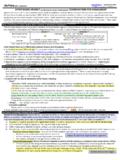
1 RxFiles Trial Summary APR 2016 Page 1 of 3 EMPA-REG : CV Outcomes Trial Summary Empagliflozin: Cardiovascular (CV) Outcomes and Mortality in Patients with Type 2 Diabetes Mellitus (T2DM) In patients with T2DM and at high risk of CV events, does empagliflozin reduce CV risk compared to placebo when added to standard care? BOTTOM LINE 1 Empaglifozin compared to placebo in a high CV risk population: o Benefit: reduced risk of composite cardiovascular events (NNT=63/3yrs) and all cause death (NNT=38/3yrs) The 10mg daily dose provided virtually the same benefit as the 25mg dose. Cost about $300/100days.
2 Benefit realized despite A1C not reaching target (A1C= ); mean change was approximately o Harm: increased risk of genital infections in both males (NNH=29/3yrs) and females (NNH=14/3yrs). Urosepsis, although rare, was also increased with empagliflozin (~ vs ). Overall serious adverse events (SAE) were less with empaglifozin than placebo (NNT=24). However see also uncertainties section for concerns raised previously. Of interest: o Empaglifozin also lowered BP (SBP 3-4mm Hg; DBP 1-2 mm Hg) and weight ( 1-2kg) more than seen in placebo group. Given the lack of CV benefits in other shorter term trials with glucose lowering agents, the benefit seen in EMPA-REG , if true, may relate to a non-glucose related mechanism. o Average A1C achieved in the empaglifozin group was The only other short-term Trial (<5 years) in T2DM that found a mortality difference was ACCORD (aggressive vs standard glycemic control), which was stopped early due to a lower risk of mortality in the less aggressive control group (A1C mean ~ ).
3 Remember usual care for T2DM with CVD: lifestyle, risk reduction with antihypertensive treatment, statins, ASA, & metformin. BACKGROUND 1 Empagliflozin (JARDIANCE ) is a sodium-glucose cotransporter 2 inhibitor (SGLT2-I) approved in 2015 for use in patients with type 2 diabetes as monotherapy or as an add-on to metformin alone, metformin + SU, pioglitazone +/- metformin, or insulin +/- metformin. Evidence that glucose lowering agents decrease the risk of CV events has not been convincingly shown in any study to Also, some glucose lowering agents ( thiazolidinediones) may increase the risk of CV events, heart failure, & other serious adverse events. Trial BACKGROUND DESIGN: Randomized, double-blind, placebo-controlled Trial ; allocation concealed; international, multisite; 2 week open-label run-in INTERVENTION: Empagliflozin 10mg or 25mg once daily vs.
4 Placebo, added to existing therapy. (Phase 3, noninferiority design) INCLUSION: T2DM, Age 18yrs, BMI 45, eGFR 30mL/ , established CVD, no glucose-lowering tx for 12wks before randomization + A1C of 7-9%, or received stable glucose-lowering tx for 12wks before randomization + A1C of 7-10% EXCLUSION: Uncontrolled hyperglycemia (FPG >13mmol/L), liver dx, eGFR <30mL/ , steroid tx, change in thyroid hormones within 6wks of informed consent, hx of cancer, ACS/TIA/stroke within prior 2 months, planned cardiac surgery within prior 3 months, bariatric surgery within the past 2 years or any GI surgery that induces chronic malabsorption, tx with anti-obesity medications 3 months prior, pre-menopausal women not practicing acceptable birth control, alcohol or drug abuse within 3 months of informed consent.
5 POPULATION at baseline .. n= 7,020: age 63 ; ~71% ; eGFR ~74 21(mL/ ) Presence of CV Risk Factors .. (includes: CAD 76%, hx MI 47%, CABG 25%, hx stroke 23%, PAD, single/multi-vessel CAD 57%, HF 10%): ~99% A1C; BMI; Weight: .. ~ ; BMI (kg/m2): ; Weight (kg): ~86 19 Time Since Diagnosis of T2DM: .. 1yr ~ ; >1-5yr ~ ; >5-10yr ~ ; >10yr ~ Race/Ethnicity: .. White ~72%; Asian ~22%; African-American/Black ~ ; Other ~ Other Glucose Lowering Tx: .. Metformin ~74%; Insulin ~48% (median daily dose~53 IU); SU~42%; DPP4-I~11%; TZD ~4%; GLP1-A~3%; monotx~30% vs dual tx~49% Anti-HTN Tx: .. Total ~95% {ACEI/ARB~80%; BB~65%; Diuretics~43%; CCBs~33%} Lipid-Lowering Tx: .. Total ~81% {Statins~77%; Fibrates~9%; Ezetimibe~4%} Other.
6 ASA~83%; SBP ~ 17mmHg; DBP~ 10 RESULTS follow-up: Mean 3yrs/Median TABLE 1: EFFICACY & SAFETY NON-INFERIORITY DATA SUPERIORITY DATA {NNT/H = number needed to Treat for Benefit / Harm} CLINICAL ENDPOINTS ITT ANALYSIS EMPAGLIFLOZIN (10MG & 25MG) n=4687 PLACEBO n=2333 HR (95% CI) P VALUE ARR/ARI NNT/NNH COMMENTS PRIMARY ENDPOINT Death from CV causes, non-fatal MI, or non-fatal stroke (n=490) (n=282) ( ) < 63 SECONDARY ENDPOINTS 1 endpoint plus hospitalization for unstable angina (n=599) (n=333) ( ) < 67 All-cause Death (n=269) (n=194) ( ) < 38 CV Death (n=172) (n=137) ( ) < 45 Hospitalization for HF (n=126) (n=95) ( ) 71 Consistent benefit on HF endpoints whether HF pre-existent or not.
7 Hospitalization for HF or death from CV causes excluding fatal stroke (n=265) (n=198) ( ) < 36 Non-significant 2 outcomes; Trend for better outcome on empagliflozin: fatal or non-fatal MI excluding silent MI, non-fatal MI, silent MI, hospitalization for unstable angina, coronary revascularization procedure, and TIA. Trend for worse on empagliflozin: fatal or nonfatal stroke, silent MI. A1C by or less. Systolic BP by 3-4mmHg Weight by 1-2 kg RxFiles Trial Summary APR 2016 Page 2 of 3 TABLE 2: ADVERSE EVENTS (AE) CLINICAL ENDPOINTS EMPAGLIFLOZIN POOLED n=4687 EMPAGLIFLOZIN PLACEBO n=2333 P VALUE ARR/ARI (POOLED) NNT/NNH COMMENTS 10MG n=2345 25MG n=2342 Severe AE (n=1100) (n=536) (n=564) (n=592) < 53 Proportion of patients with confirmed hypoglycemic events, acute renal failure, diabetic ketoacidosis, thromboembolic events, bone fracture and volume depletion were similar in the two study groups Urosepsis greater in empagliflozin group ( vs ) FDA warning NOTE: AE due to placebo should take into account differences in usual care in placebo group, ie.
8 Higher rate of insulin use, gliclazide use, etc. Serious AE (Any) (n=1789) (n=876) (n=913) (n=988) < 24 Serious AE (Death) (n=176) (n=97) (n=79) (n=119) < 77 AE leading to D/C of study drug (n=813) (n=416) (n=397) (n=453) < 48 UTI ( ) (n=492) (n=246) (n=246) (n=265) < 24 UTI ( ) (n=350) (n=180) (n=170) (n=158) Genital Infection ( ) (n=135) (n=64) (n=71) (n=17) < 14 Genital Infection ( ) (n=166) (n=89) (n=77) (n=25) < 29 Acute Renal Failure (n=246) (n=121) (n=125) (n=155) < 71 Acute Kidney Injury (n=45) (n=26) (n=19) (n=37) < 167 Non-significant AE include: confirmed hypoglycemic AE, complicated UTI, volume depletion, diabetic ketoacidosis, thromboembolic event, bone fracture STRENGTHS, LIMITATIONS, & UNCERTAINTIES STRENGTHS: Important Trial examining SGLT2-I and CV efficacy & safety outcomes.
9 Trial size fairly large. Baseline demographics were well balanced between placebo and empagliflozin groups. Primary outcome and death from CV were largely consistent (homogeneity) within subgroups. However, some pts age <65, A1C > , on TZD did worse with empa vs. placebo for primary outcome. Those with Black/African-American ancestry also did worse with empa vs. placebo for primary outcome. >99% of patients had established CVD and were treated in regards to lipid-lowering therapy and antihypertensive Few patients lost to follow-up: 97% completed study & 99% had known vital status. LIMITATIONS: of patients prematurely discontinued a study drug1 ( in empagliflozin vs. in placebo); this is despite the 2 week open-label run-in which would eliminate most who do not tolerate the drug acutely.
10 Lack of a dose-response curve (10mg arm and 25mg had equivalent outcomes). Funded by Boehringer Ingelheim & Eli Lilly; employees had active role on steering committee, & in analysis of data & writing. UNCERTAINTIES: Trials with other glucose-lowering agents have shown neutral or poor CV outcomes ( SAVOR-TIMI 53, EXAMINE, TECOS, ELIXA); why would this Trial have better results? (Is the difference real or due to chance?) If the benefit found represents a true benefit, was the mechanism possibly related to the reduction in BP? Benefit appeared earlier in Trial than would be expected if attributable to glycemic control alone. In addition, the achieved A1C in the empagliflozin group was around - only about lower than the placebo group, and much higher than generally recommended in current diabetes guidelines.