Transcription of Exercise testing: why, which and how to interpret
1 Key points An Exercise test should be performed: ifthere is impaired Exercise tolerance; tofind out which system is limiting Exercise ;to establish which organ systems have anabnormal response during or after exer-cise; to investigate how much Exercise isappropriate/safe in a patient; and todetermine the response to treatment. Prediction of Exercise performance basedsolely on resting pulmonary function testsis inaccurate. The gold standard in Exercise testing isthe incremental Exercise test. Two types of ergometers can be selectedfor incremental Exercise testing: a tread-mill or a cycle ergometer. More musclemass is put to work using a treadmillwhen compared with cycling.
2 Incremental Exercise testing and fieldtesting have complementary value in, forexample, pulmonary rehabilitation. Exercise laboratories should be encour-aged to test some healthy control sub-jects in the age span of interest to evalu-ate which normal values best suit theirlaboratory setting. Is Exercise testinguseful?When deciding to carry out an Exercise test, thereason(s) for doing it should be specified and,in addition, the appropriate type of Exercise testand protocol should be chosen. Exercise tests are performed in patients inorder to establish whether Exercise capacity isimpaired, to investigate the underlying cause ofthe limitation and to establish the risks of exer-cise.
3 In addition, dyspnoea during Exercise is afrequent reason to perform an Exercise suggests that symptoms such as dys-pnoea, impaired Exercise tolerance andreduced quality of life, common experiences inpatients with chronic respiratory disease, haveonly a weak correlation with lung functionimpairment (figure 1) [1], and that predictionof Exercise performance based solely on restingpulmonary function tests is inaccurate [3 5]. Exercise testing can be performed in orderto obtain a specific diagnosis ( aimsTo address some questions that often arise when Exercise testing is performed in the clinical routine: What are the indications to perform an Exercise test?)
4 which test should be used for which situation? How should the test be carried out in practice? How should the results of the test be interpreted?REVIEWE xercise testing: why, whichand how to interpret121 Breathe | December 2004 | Volume 1 | No 2 R. GosselinkT. TroostersM. DecramerRespiratory Rehabilitation andRespiratory Division, UniversityHospitals, and Faculty ofPhysical Education andPhysiotherapy, KatholiekeUniversiteit Leuven, Leuven,Belgium. Correspondence: R. GosselinkProfessor of RespiratoryRehabilitationRespiratory RehabilitationDivisionUniversity Hospital GasthuisbergHerestraat 49B-3000 LeuvenBelgiumFax: 32 Exercise testing is widely applied in clinical practice.
5 The aim of this article is to addresssome questions that often arise when Exercise testing is performed in clinical complementary tests will be discussed in more detail: the maximal incrementalergometer test and the timed walk test. First, the indication to perform Exercise testing is discussed. The second question is whichtest to apply and how to carry out the test in practice. Finally, the interpretation of theresults of the tests are discussed. 140120100806040200020406080 FEV1 % predV'O2,max % predFigure 1 Relationship between pulmonaryfunction (forced expiratoryvolume in one second (FEV1))and Exercise capacity (maximaloxygen uptake (V O2,max)) inpatients with chronic obstructivepulmonary disease.
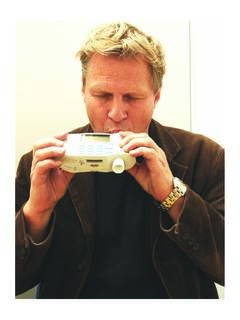
6 Figuremodified from [2].Photo: Jan Turnbullinduced asthma), to answer particular questionsconcerning working capacity (employment) or toa predict a level of risk ( for lungresection, survival). In many diseases, includingchronic obstructive pulmonary disease (COPD),primary pulmonary hypertension and cystic fibro-sis, Exercise tolerance has been shown to be oneof the most important predictors of mortality ormorbidity. Finally, Exercise testing can be used toquantify objective gains after interventions, forexample after medication, surgical procedures orrehabilitation. If a specific question is being asked, cliniciansmay use complex Exercise tests that can accur-ately measure pulmonary gas exchange andaspects of the cardiocirculatory and muscular sys-tems, or they may prefer more simple, yet useful,tests to answer clinical questions.
7 Maximal incre-mental Exercise tests may be required in the firstcase, whereas field walking tests may suffice inthe latter. which tests areavailable and howshould theappropriate test bechosen?Incremental Exercise testingThe gold standard in Exercise testing is the incre-mental Exercise test. Incremental Exercise testingis the first choice for the following: assessingimpaired Exercise capacity, investigating factorslimiting Exercise performance, or assessing therisks of participating in Exercise programmes orprescribing Exercise training. For all these indica-tions, incremental Exercise testing is needed toprovide clinicians with key data that cannot beobtained from resting measures of pulmonaryfunction, cardiac function, blood gases or otherexercise tests.
8 The introduction of computerisedbreath-by-breath equipment has made incremen-tal Exercise testing available in most clinicalsettings [6], and, subsequently, standardisedmaximal Exercise tests have been developed[7 9]. In addition, the estimation of peak exerciseresponses based upon submaximal Exercise data(mainly heart rate (HR)) is inappropriate in COPD patients, since these patients often do not reachtheir maximal types of ergometer can be used for incremental Exercise testing: a treadmill or a cycleergometer. When a motor-driven treadmill is used,increasing the speed and/or inclination imposesthe external workload, and this workload isdependent on body weight.
9 Factors such as walk-ing efficiency (depending on footwear, length ofthe lower limb and training status on treadmills)and the use of arm support may have an unpred-ictable influence on the oxygen uptake (V O2)profile during treadmill testing. However, com-pared with cycling, walking is a more naturalmovement and less lactate is produced at iso-V O2. Treadmill walking is generally advised forpaediatric Exercise testing. When a cycle ergo-meter is used, the workload is better controlledand the external work needed is less dependenton body weight as compared with the unloaded cycling V O2is dependent on theweight of the lower limbs; however, when a loadis added, the V O2will increase further, independ-ent of body weight ( 10 mL min-1 W-1).
10 In addition,cycle ergometry, unlike treadmill ergometry,allows the investigator to compare patients responses to iso-submaximal work and permits amore clear insight into mechanical efficiency. Thestability of the patient on a bicycle results in lessnoise on electrocardiography (ECG) and bloodpressure recordings. Arterial and venous catheterscan also be accessed more easily on a cycleergometer when compared with a treadmill. If acycle ergometer is going to be used for exercisetesting, it should be electromagnetically brakedand the workload should be adjustable in steps of5 10 W. Field testsField tests, such as the 6- or 12-minute walk test(6- or 12 MWT), shuttle walk test (SWT) or con-stant workload endurance test, are used toinvestigate the effects of interventions that altersubmaximal or endurance Exercise capacity, forexample in respiratory rehabilitation [6].