Transcription of FEMA Form ICS-213 - Scott ARES
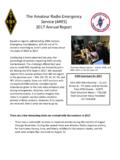
1 FEMA Form ICS-213 Scott County ARES Accurate Rapid communications for our Served Agencies Bob Reid EC March, 2010 Scott County ARES FEMA ICS213 General Message Form 16 Mar10 page 2 Contents Introduction and Background Info 3 Form 213 Description 4 Completing the 213 Preamble 6 Text 7 Sample Message 8 Ready to send 9 Listing the traffic 10 Transmitting the message 10 Reply Message 11 Transmitting the reply 14 Final Comments 15
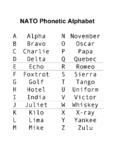
2 FEMA Form ICS 213 16 ITU Phonetic Alphabet 17 Scott County ARES FEMA ICS213 General Message Form 16 Mar10 page 3 The ICS 213 General Message Form Background The ICS 213 General Message Form began as a multipart self0copying form for use as an interoffice memo. The layout and use of the 213 form has changed significantly since its inception. The 213 has become the basic written communications document between all areas of emergency response. Users are often located at separate locations and use the 213 form to communicate real time events.
3 Messages originate at one location, are transmitted to another site, and a response may be returned to the originator. The reply message can be combined with the original message for the convenience of the originator. The format of the 213 message form is specified by the served agency. Just as the Incident Command System is adaptable to various incidents, the methods of communications are matched to the situation. The 213 message form may be transmitted by voice, digital, or even hand carried to get the job done.
4 The form 213 can be found at the FEMA ICS Resource Center website at: The form 213 is specified by the Served Agency. ARES Role The ARES communications volunteer is committed to accurately, rapidly handling information for the benefit of the served agency. ARES operators rely on their equipment, training, and ingenuity in meeting the demands of served agency communications. ARES members must keep abreast of new applications and techniques in emergency communications. ARES role in emergency communications is to move information from point A to point B at the request of the Served Agency.
5 ARES volunteers perform this task using communications procedures developed to provide accurate rapid emergency communications. Scott County ARES FEMA ICS213 General Message Form 16 Mar10 page 4 The 213 Form The 213 consists of five areas that are familiar to everyone who has handled NTS format traffic. HEADER TO: line FR: line SUBJECT DATE TIME MESSAGE TEXT SIGNATURE Message originator REPLY 0 Optional SIGNATURE Reply originator Let s take a closer look at each of the message elements.
6 HEADER The information in both the TO: and FROM: lines must contain sufficient information to deliver the message. Obviously this will include the Name, Location, and Title or Position, for each party. An example TO: line would look like this: TO: Ralph Schmitz Shelter East Shelter Manager Likewise the FROM: line would look like this: FROM: Carl Flackscheid EOC Commander The subject line is a concise title for the message that highlights the important point of the message. A SUBJECT might read as follows: SUBJECT: SITREP Request The person originating the message will complete the HEADER information and the MESSAGE TEXT.
7 You may be given verbal instructions to Send a message to X telling them .. You will then fill out the 213 form, get the message okayed by the originator and send the message. Scott County ARES FEMA ICS213 General Message Form 16 Mar10 page 5 MESSAGE TEXT The message text area contains the information to be transmitted. The message should be concise with non0essential words eliminated. Be direct and to the point. Punctuation in the message is indicated with the word X0 Ray. Punctuation, such as commas, parens, question marks are generally not essential to the information and should not be used.
8 Do not end the message text with an X0 Ray. Each word or group of numbers in the text is counted as one word. The sending station can do many things to clarify the words in the text when sending the message. We will look at these techniques when sending a sample message. The message text area is defined during message transmission by the proword BREAK immediately before the first word of the text and immediately following the last word of the text. SIGNATURE This identifies the sender of the message (or reply) and should contain enough information to locate the sender if a reply is received.
9 REPLY The reply message follows the same guidelines as the Message Text. Note: The reply message should reference the message number of the original message. This allows the receiving station to match the reply with the original message. Scott County ARES FEMA ICS213 General Message Form 16 Mar10 page 6 Completing The 213 PREAMBLE The basic 213 form does not contain the pre0printed Radiogram format for the preamble. The trained ARES operator writes the preamble items on the top margin of the 213 form.
10 Sending the 213 form begins with the same preamble used in the NTS format. The preamble contains the following elements: Block #1 - Message Number: This is the serial number assigned by the station that first puts the message into written format. Essentially a message serial number for that station. Block #2 - Precedence: The precedence tells everyone the relative urgency of a message. There are four levels of precedence: Routine, Welfare, Priority, and EMERGENCY. Routine -0 abbreviated with the letter R. Most Amateur traffic is handled using this precedence it is for all traffic that does not meet the requirements for a higher precedence.