Transcription of Flow-Through Cell Apparatus (USP Apparatus 4): …
1 dissolution Technologies | NOVEMBER 201146e-mail: Flow-Through Cell Apparatus (USP Apparatus 4): Operation and FeaturesNikoletta Fotaki Department of Pharmacy & Pharmacology, University of Bath, Claverton Down, BA2 7AY, Bath, UKINTRODUCTIOND issolution testing plays an important role in several areas during drug development. It can be used as a quality control tool to monitor batch-to-batch consistency of drug release from a dosage form and as an in vitro surrogate for in vivo performance that can guide formulation development and ascertain the need for bioequivalence tests. Several Apparatus (compendial and noncompendial) are used for the study of dissolution of compounds and dosage Flow-Through cell method for the study of dissolu-tion first appeared in 1957 as a flowing medium dissolu-tion Apparatus developed by FDA (1). The method was adapted by USP, the European Pharmacopoeia (Ph.)
2 Eur.), and the Japanese Pharmacopoiea (JP), and the Flow-Through cell became an official Apparatus ( Apparatus 4 for the USP and Ph. Eur., Apparatus 3 for JP). Specifications and methodology are described in the relevant chapters of the pharmacopeias USP Chapter <711> dissolution (2), Ph. Eur. (3), and JP XV, dissolution Test (4) and there is good harmonization among AND OPERATION OF THE SYSTEMThe system consists of a reservoir containing the dissolution /release medium, a pump that forces the medium upwards through the vertically positioned flow-cell, and a water bath to control the temperature in the cell. dissolution and Release MediaConventional buffers, media proposed by the pharma-copeias, and biorelevant media can be used. Media can be changed during the experiment (a medium selector can be used). dissolution media may need to be CellDifferent types of cells are available for testing tablets, powders, suppositories, hard- and soft-gelatin capsules, implants, semisolids, suppositories, and drug-eluting stents.
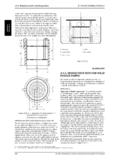
3 For orally administered solid dosage forms, two different cells are described (Figure 1): the large cell ( ) and the small cell (12-mm ) that provide approximate volumes of 19 mL and 8 mL, respectively, for dissolution (cell volumes without glass beads). Usually the bottom cone of the cell is filled with small glass beads (about 1-mm diameter), and one bead (about 5-mm diameter) is positioned at the apex to prevent material from descending into the inlet tubing. Different amounts of small glass beads can be used according to the experimental setup. The sample can be placed upon a holder but also can be placed on or within the glass-bead bed. For dispersed systems ( , suspensions, powders), mixing of the sample within the glass-bead bed has also been reported. Pump and Flow PatternsPeristaltic and pulsating piston pumps can be used; the latter is more common.
4 Usually a sinusoidal pulse rate of 120 10 pulses per minute is used. The pulse rate remains constant independent of the selected flow rate, and the need for further stirring is eliminated due to the pulsating pattern of the pump. USP, Ph. Eur., and JP have harmonized on the possibility that the pump is pulseless (USP 33). Linear flow velocity defines the hydrodynamics in the cell; different cell diameters are associated with axial velocities, which correspond to the flow rate (5). Flow rates over a wide range can be used (according to the specifications of the pump). Typical flow rates are 4, 8, and 16 mL/min, and usually flow should be maintained at 5% of the nominal value (regular calibration of the pump is recommended).The pattern is described as turbulent when operated without glass beads in the entry cone (usually required for samples that need a higher agitation rate to release its active, , implants), and laminar when glass beads are used.
5 A laminar flow is characterized by fluid particles moving in parallel to one other in the flow direction, and a turbulent flow is characterized by the rapid movement of fluid particles in all direction within the flow direction (6). Recently, characterization of the flow pattern inside the cell with the use of magnetic resonance imaging (MRI) revealed that the flow field inside the cell is mainly heterogeneous rather than fully developed laminar flow and is characterized by recirculation and backward flow (7). The use of 1-mm beads distributes the flow but does not ensure a fully developed laminar flow profile. It has been proposed to label the operational modes in the Flow-Through cell in terms of their physical configurations. The designation open column and packed column instead of turbulent mode and laminar mode of operation have been suggested (6).
6 Open and Closed ModeThe Flow-Through cell Apparatus can operate in two different modes: (1) as an open system with fresh solvent from the reservoir continuously passing through the cell 4611/29/2011 6:49:59 PM11/29/2011 6:49:59 Technologies | NOVEMBER 201147(Figure 2) and (2) as a closed system (Figure 3) where a fixed volume of liquid is recycled. The open system is selected for samples that require high volume of media ( , low solubility compounds), and the closed system is selected when a low volume of medium is required. FiltrationA filter is positioned at the inner top of the cell to retain undissolved material (5). Usually glass fiber filters are used (single or combination of different pore sizes). The use of glass wool is sometimes suggested for dosage forms with insoluble and/or sticky particles. Appropriate selection of the filter is required for efficient filtration and to avoid backpressure created by filter resistance.
7 SamplingThe collected samples can be analyzed directly by a UV-vis spectrophotometer or a fiber-optic probe, or they can be collected in fractions and analyzed by HPLC or other appropriate method. Sample collection can be automated to ensure consistency. On-line automation, in which the sample is measured by UV, or off-line automation, in which the sample is collected automatically and analyzed afterwards with an appropriate method, can be CollectionWhen the system operates in the open mode, the data collected represents the amount dissolved/released at specific time intervals (estimate of release rate) and is in noncumulative form (8). Data can be transformed to the cumulative form; in this case, any mistakes associated with the estimation of the total drug released during a specific time interval will be transferred to the next time interval. If a model is to be fitted to the data, by converting them to the cumulative form, the fundamental assumption of independence of errors is violated (5).
8 An example of data collected during a dissolution /release experiment in noncumulative form and then transformed to cumulative form when the system operates in the open mode is presented in Figure 4. Data collected when the system operates in the closed mode is in cumulative OF THE Flow-Through CELL SYSTEMThe Flow-Through cell system has several characteristics that can offer important information for the study of compounds and dosage forms (5): Medium and/or flow rate can be changed within a single run. Study of formulation release patterns ( , release from controlled-release formulations), targeted delivery, and study of release under fasted- or fed-state conditions are facilitated. Carry-over effects during the experiment can be determined, and testing of formulation robustness is 1. (A) Large and (B) small Flow-Through cell for orally administered solid dosage forms.
9 Reprinted from ref 2. Copyright 2011 The United States Pharmacopeial 2. Schematic diagram of the open-loop configuration for the Flow-Through cell 3. Schematic diagram of the closed-loop configuration for the Flow-Through cell 4. dissolution /release data collected using the Flow-Through cell Apparatus in noncumulative form and transformed to cumulative 4711/29/2011 6:50:00 PM11/29/2011 6:50:00 PMDissolution Technologies | NOVEMBER 201148 Sink conditions can be maintained, due to the continu-ous flow of fresh medium, when the system operates in the open-loop configuration. This feature is important for the study of poorly soluble drugs, in cases where traditional closed systems do not allow the provision of sink conditions for these drugs. The dissolution rate reflects the behavior of the sample and not the solubility of the substance, as in the closed systems.
10 Study of samples with low drug loading is feasible when the system operates in the closed-loop configuration, as small volume of medium can be used. The system can be used for the characterization of apparent dissolution , as samples (powder) can be placed in the cell without application of mechanical forces ( , compression). Release from dosage forms over extended periods can be studied, as this setup eliminates the evaporation issue that can be observed with other Apparatus . The Flow-Through cell offers a controlled hydrodynamic environment, and intralumenal hydrodynamics are more efficiently simulated compared with other in vitro setups. The hydrodynamics inside the cell are not affected by media change and sampling, as can occur in traditional closed systems ( , rotating paddle Apparatus , rotating basket Apparatus ). Development of in vitro in vivo correlations can be easier as a single profile corresponding to the release of the drug in the entire gastrointestinal tract can be obtained when the media change is applied.