Transcription of Guide #5 Cleaning a Fuel Tank
1 This Guide provides general information needed to clean a fuel tank. It is assumed that this is a tank that hasshown some or many of the typical symptoms of contamination, such as: Visibly dark or black fuel Signs of floating debris in the fuel fuel filters covered with black and/or slime Unusually short fuel filter life Sludge in the tank Water in the tank Smoke coming from engine exhaustAll storage tanks naturally accumulate water, solids and sludgeresulting from condensation and the degradation of fuel and oil. Themore fuel we turn over through a tank, the more debris and waterwill accumulate in the bottom. TheAXI Mobile Tank Cleaning ( MTC ) Systemis compact, easy to operate and extremelyversatile. It is ideal for use: in marinas, to clean tanks on board all types of vessels at construction sites in remote areas with on-site fuel storage for heavy equipment in service trucks maintaining standby generators in truck/vehicle depots in hydraulic oil tanksAXI fuel Conditioning and Filtration Systemseliminate the need forcostly, periodic manual tank Cleaning , while stabilizing and extending theshelf life of fuel .
2 This is extremely important for all applications of long-term fuel storage, especially emergency power has a range of mobile tank Cleaning systems to address every sizetank. Although the process may vary slightly between very small tanksand very large tanks , this Guide will describe the problem and the processs o t h a t a p r o f e s s i o n a lcommercial tank cleaningenterprise as well as a do-it-yourselfer will benefit fromunderstanding the process AXI systems can be dividedinto categories based on two determining factors:1. Use the proper system for the size tank(s) to be cleaned:a. Use the TK-240 Portable Tank Cleaning ( PTC )System to clean tanks up to 1,000 #5 Cleaning a fuel TankDistributed By:Pecuniary, , NCToll Free: 877-826-7645 Email: Afterb.
3 Use one of the Mobil Tank Cleaning ( MTC ) Systemsto clean tanks over 1,000 gallons up to 10,000 gallonsc. Use one of the High Capacity ( HC ) Systems for tanksover 10,000 Use the proper system based on the time you have to perform thejob:a. The PTC System operates at 4 Gallons Per Minute( GPM ).b. The MTC System, with 3 different cart mounted systemsto choose from, operates at 8, 15 or 26 GPM. If youhave a lot of time, you can use the 8 GPM System for alltanks between 1,000 gallons and 10,000 gallons. But ifyou must put an employee to work treating many tanks ,or your time is valuable, you may wish to use a higherflow rate system. Note, however, that sometimes thetank limits your choice. Using the 26 GPM system willwork on a 1,000 gallon tank, but some smaller tankshave small openings for inserting the hoses (both thesuction hose and return hose often goes into the same tank opening) and the larger 26 GPM MTCS ystem requires a six inch opening for both The HC Systems operate at 50, 90 or 150 GPM, and are only appropriate for larger theTK-240 PTC Systemdoes an excellent job of occasionally Cleaning a severely contaminated tank upto 1,000 gallons, it should mostly be used for preventative maintenance that is performed intermittently.
4 Dailysever service will shorten the operational life of the pump, being a 12 volt unit. This system is good forindividuals, farms, and repair shops requiring fuel circulation and fuel transfer sever service performed on tanks larger than 1,000 gallons is better suitedto theMobil Tank Cleaning (MTC) cart mounted systems, especially when coupledwith aPF-10 or PF-30 Pre-Filter System(sold separately) for constant severservice in Cleaning a wide range of known contaminated tanks , such as a tankservicing company would encounter. The several different MTC systems eachperform on a range of tank sizes and some allow for variable flow rates to provideflexibility in performing jobs of varying size. These systems are ideal for marinasthat service many vessels, servicing back up power generators in far-ranginglocations, construction companies with equipment operating under dirty anddifficult conditions, train locomotives, industrial complexes with varying tankcleaning needs, High Capacity (HC) pallet mounted systems provide variable high volumeflow rates and are recommended for the larger tanks found at service stations,industrial facilities, facilities with large fuel storage capacity for emergency power(data centers, hospitals, etc.)
5 , and fuel distribution facilities. TheHC TankCleaning Systemshave a PF-30 Pre-Filter standard. The HC System is ideal for atank Cleaning service that must quickly service many tanks over a wide region, andthe high flow rates allow for greatly reduced labor the rate and speed of the fuel treatment process may vary greatly, theprocess and steps to be followed are very nearly the same. The PTC System hasonly one inlet and one outlet, the MTC Systems have two possible outlets, and theHC Systems have three outlets. The multiple outlets provide for great flexibility during different phases of thetank Cleaning process. As you read more about the process, keep this in mind that, if you are considering a PTCS ystem, read past the references to changing the outlet port being Portable TankCleaning System (PTC)Mobil Tank CleaningSystem (MTC) 2 Having the right supplies available makes any job easier.
6 Thefollowing is a list of materials that you may need. Although eachmay not be mentioned in the following description of procedures,you will understand the need for each as you read on. Keep in mindthat you will be working with fuel and safety procedures should befollowed. If you are not sure what safety procedures are required,please use a professional to perform your tank Cleaning needs. White buckets Funnels Oil absorbing sheets for clean up Tank opening torque wrench Spare filters for your tank Cleaning system Clear intake/suction hose and black pressure dischargehose Suction pump for taking fuel samples Clear plastic bottles or jars for fuel samples AXI AFC-705 Diesel fuel Catalyst Kolor Kut Water Finding Paste Liqui-Cult fuel Test Kits Power cord extension Filter wrench Filter gasket creme Containers (slop tank) of a size necessary to properly dispose of water, sludge, debris, and fuel not beingre-circulated (check local regulations for what is needed to properly dispose of such waste materials) The Water EliminatorPreparationEvaluate the characteristics of the tank to be cleaned so you know how to approach the task at is the capacity of the tank?
7 Is the depth of the tank? determines the suction pipe length the tank divided into sections? is the lowest point of the tank and can it be accessed?--May permit draining water and sludgefrom the bottom of the is the type of fuel and age? weather is threatening rain, a tent or canopy may be the tank less that full? calculate amount of contents. May be advisable to fill the tank to accomplish acleaning of the entire inside surface area of the operating manuals for the tank Cleaning systems contain numerous warnings, operating tips and cautionarystatements that must be followed to assure safe operation. You should not operate this equipment without firstthoroughly reviewing the operating manual that is included with each unit and also is available at theLiteraturepage at web BeginningDetermining the severity and extent of the problem is the first step.
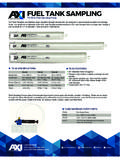
8 Using theFluid Sampling suction pump (theFS-100 at ), pump fuel up the tubing line into a sample bottle, ideally taking the sample of fuelfrom the center of the tank (if the tubing will not stay straight, run the tubing through a piece of 1/2 inch PVC pipeand use tape to hold it in place place the pipe down to the depth necessary for the end of the tube to be at thedesired level of the tank, whether the mid point or the bottom for larger tanks , use aAXI TS Fluid Sampler three sizes are offered on the web site). Label the sample bottle as the before fuel the fuel condition and label the sample bottle. Is it dark and hazy? Hazy fuel indicates water hasemulsified or mixed in the fuel . Dark fuel indicates older fuel that has degraded and its combustibility has Capacity TankCleaning System (HC) 3 If the tank has a fuel fill that allows for access to the contents and you are able to reach to the bottom of the tank,use a measuring stick or rod with someKolor Kut Water Finding Paste(available through )to determine how much water has separated from the fuel and is in the bottom of the tank.
9 Spread a small amountof the paste on the side of the rod and run the end of the stick down to the bottom of the tank, then remove the stickand inspect the paste. If it has changed colors, it has touched water. If the bottom two inches of the paste changedcolors, than you have two inches of water in your an accumulation of debris is suspected, this can be confirmed by using a length of inch tubing (PVC orelectrical conduit tubing), cut to a manageable length. Using the tubing like a soda straw, place your thumb overone end of the tubing to hold in air. Put the other end down into the tank to the very bottom. Then remove yourthumb from the top end to allow whatever liquid or debris that is in the bottom of the tank to fill the tube. Againplace your thumb over the end of the tube, remove the tube from the tank, and then empty the contents of the tubeinto a two litre plastic soda bottle (preferably clear) placed inside a five-gallon bucket (to catch any spillage).
10 Dothis several times inspecting the contents of the soda bottle. Are you removing fuel or water? Are there signs ofsludge or debris in the liquid? Is the fuel hasy? Deposit a sample of the bottom material removed into a samplecontainer and label as the before bottom the above information on the amount of water and sludge to be removed, determine the size of the slop tank,time required for removal, whether a pre-filter is required to deal with a badly contaminated situation, number ofcycles required to return the fuel to a clear and bright condition, filter type to start with, and how many and type offilter elements will be needed for the theTK 240to the systems are equipped with either a 12 V DC or 24 V DC motor. Connect the positive pole of yourbattery with the red wire connector of the TK first and then the black wire to the negative battery the initial hook up check system operation to insure the pump is running in the right the motor is running in the opposite direction or is not running at all, reverse the two electrical the pump and marine applications, the TK system can be used in connectionwith the existing onboard primary filter/water separator.