Transcription of GUIDELINES FOR THE COMPLEX LITIGATION PROGRAM
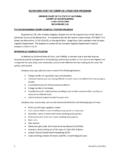
1 Page 1 of 8 Updated May 2, 2022 GUIDELINES FOR THE COMPLEX LITIGATION PROGRAM SUPERIOR COURT OF THE STATE OF CALIFORNIA COUNTY OF SAN bernardino JUDGE DAVID COHN DEPARTMENT S-26 JUDGE JANET FRANGIE DEPARTMENT S-29 THE SAN bernardino COUNTY COMPLEX LITIGATION PROGRAM The COMPLEX LITIGATION Department for the Superior Court of the State of California, County of San bernardino , is located at the San bernardino Justice Center, 247 West Third Street, San bernardino , CA 92415-0210. The COMPLEX LITIGATION judges are Judge David Cohn, Department S-26, and Judge Janet Frangie, Department S-29. Telephone numbers for Department S-26 are 909-521-3519 (judicial assistant) and 909-708-8866 (court attendant). Telephone numbers for Department S-29 are 909-521-3461 (judicial assistant) and 909-521-3467 (court attendant).
2 These GUIDELINES govern COMPLEX LITIGATION only in Departments S-26 and S-29. When COMPLEX cases are assigned to other Departments, the judges may or may not choose to follow all or some of these GUIDELINES . DEFINITION OF COMPLEX LITIGATION As defined by California Rules of Court, rule (a), a COMPLEX case is one that requires exceptional judicial management to avoid placing unnecessary burdens on the court or the litigants and to expedite the case, keep costs reasonable, and promote effective decision making by the court, the parties, and counsel. Page 2 of 8 Updated May 2, 2022 COMPLEX cases typically have one or more of the following features: A large number of separately represented parties. Extensive motion practice raising difficult or novel issues that will be time-consuming to resolve.
3 A substantial amount of documentary evidence. A large number of witnesses. Coordination with related actions pending in one or more courts in other counties or states or in a federal court. Substantial post-judgment judicial supervision. COMPLEX cases may include, but are not necessarily limited to, the following types of cases: Antitrust and trade regulation claims. Construction defect claims involving many parties or structures. Securities claims or investment losses involving many parties. Environmental or toxic tort claims involving many parties. Mass torts. Class actions. Claims brought under the Private Attorney General Act (PAGA). Insurance claims arising out of the types of claims listed above. Judicial Council Coordinated Proceedings (JCCP). Cases involving COMPLEX financial, scientific, or technological issues.
4 CASES ASSIGNED TO THE COMPLEX LITIGATION DEPARTMENT A. Cases Designated by a Plaintiff as COMPLEX or Provisionally COMPLEX All cases designated by a plaintiff as COMPLEX or provisionally COMPLEX on the Civil Case Cover Sheet (Judicial Council Form CM-100) will be assigned initially to the COMPLEX LITIGATION Department. The Court will issue an Initial Case Management Conference Order and schedule an Initial Case Management Conference as provided by California Rules of Court, rule , for the earliest practicable date, generally within approximately seventy-five days of the filing of the complaint. A plaintiff designating the case as COMPLEX or provisionally COMPLEX must serve the Initial Case Management Conference Order and a copy of these GUIDELINES on all parties at the earliest opportunity before the conference, and must file proof of service of the summons and complaint and proof of service of the Initial Case Management Conference Order with the court.
5 A defendant who agrees that the case is COMPLEX or provisionally COMPLEX may indicate a "Joinder" on the Civil Case Cover Sheet (Form CM- 100). Page 3 of 8 Updated May 2, 2022 A defendant who disagrees that the case is COMPLEX or provisionally COMPLEX may raise the issue with the court at the Initial Case Management Conference. B. Cases Counter-Designated By a Defendant as COMPLEX or Provisionally COMPLEX All cases which were not designated by a plaintiff as COMPLEX or provisionally COMPLEX , but which are counter-designated by a defendant (or cross-defendant) as COMPLEX or provisionally COMPLEX on the Civil Case Cover Sheet (Judicial Council Form CM-100), will be re-assigned to the COMPLEX LITIGATION Department. At such time, the Court will schedule an Initial Case Management Conference for the earliest practicable date, generally within approximately forty-five days.
6 A defendant (or cross-defendant) counter-designating the case as COMPLEX or provisionally COMPLEX must serve a copy of these GUIDELINES on all parties at the earliest opportunity. A plaintiff or other party who disagrees with the counter-designation may raise the issue with the court at the Initial Case Management Conference. C. Other Cases Assigned to the COMPLEX LITIGATION Department Whether or not the parties designate the case as COMPLEX or provisionally COMPLEX , the following cases will be initially assigned to the COMPLEX LITIGATION Department: All Construction Defect Cases. All Class Actions. All Cases Involving Private Attorney General Act (PAGA) Judicial Council Coordinated Proceedings (JCCP) if so assigned by the Chair of the Judicial Council. REFERRAL TO THE COMPLEX LITIGATION DEPARTMENT BY OTHER DEPARTMENTS A judge who is assigned to a case may, but is not required to, refer the case to the COMPLEX LITIGATION Department to be considered for treatment as a COMPLEX case if (1) the case was previously designated by a party as COMPLEX or provisionally COMPLEX , or (2) the referring judge deems the case to involve issues of considerable legal, evidentiary, or logistical complexity, such that the case would be best served by assignment to the COMPLEX LITIGATION Department.
7 Such a referral is not a re-assignment, but is a referral for consideration. In any case referred by another judge to the COMPLEX LITIGATION Department, the COMPLEX LITIGATION Department will schedule an Initial Case Management Conference, generally within thirty days, and will provide notice to all parties along with a copy of these GUIDELINES . If the case is determined by the COMPLEX LITIGATION Department to be appropriate for treatment as a COMPLEX case, the case will be re-assigned to the COMPLEX LITIGATION Department at that time. If the case is determined by the COMPLEX LITIGATION Department not to be COMPLEX , it will be returned to the referring judge. 1 The Civil Case cover Sheet (Judicial Council Form CM-100) may not reflect the presence of a PAGA claim.
8 PAGA claims erroneously assigned to non- COMPLEX departments are subject to re-assignment to the COMPLEX LITIGATION Department by the assigned judge. Page 4 of 8 Updated May 2, 2022 RESPONSIVE PLEADINGS AND MOTIONS Unless otherwise agreed by the parties, responsive pleadings are due as provided by statute. There is no stay on the pleadings or motions pending the initial CMC. If, however, counsel agree to stay formal proceedings to facilitate settlement discussions or for other reasons, each defendant is directed to file either a Notice of General Appearance or a Notice of Special Appearance (if counsel intends to challenge personal jurisdiction). The notices are for purposes of identification of counsel and preparation of a service list. The filing of a Notice of General Appearance is without prejudice to any substantive or procedural challenges to the complaint (including subject matter jurisdiction), without prejudice to any denial or affirmative defense, and without prejudice to the filing of any cross-complaint.
9 The filing of a Notice of Special Appearance is without prejudice to any challenge to the court s exercise of personal jurisdiction. For cases referred by other departments in which defendant has already made a general or special appearance, no further Notice of General Appearance or Notice of Special Appearance is required. STAY OF DISCOVERY PENDING THE INITIAL CASE MANAGEMENT CONFERENCE For cases that are assigned to the COMPLEX LITIGATION Department, discovery is automatically stayed pending the Initial Case Management Conference, unless the parties agree otherwise. If the parties agree to conduct discovery in advance of the Initial Case Management Conference, commencement of discovery is governed by statute. For cases referred to the COMPLEX LITIGATION Department by other judges, discovery is not stayed pending the Initial Case Management Conference.
10 OBLIGATION TO MEET AND CONFER BEFORE THE INITIAL CASE MANAGEMENT CONFERENCE Prior to the Initial Case Management Conference, all parties are required to meet and confer to discuss the items specified in California Rules of Court, rule (b) , and they are required to prepare a Joint Statement specifying the following: Whether additional parties are likely to be added, and a proposed date by which any such parties must be served. Each party's position whether the case should or should not be treated as a COMPLEX . Whether there are applicable arbitration agreements. Whether there is related LITIGATION pending in state or federal court. A description of the major legal and factual issues involved in the case. Any discovery or trial preparation procedures on which the parties agree.