Transcription of Hazardous Materials Training Module 8 - …
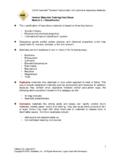
1 CCAR HazmatU Surface Transportation of Automotive Hazardous Materials 1 Edition , April 2017 Copyright 2017, ShipMate, Inc., All Rights Reserved, Logos Used with Permission Hazardous Materials Training Module 8 - Emergency Response Never attempt to clean up a Hazardous Materials release or chemical spill without: Appropriate Training Personal protective equipment Making the necessary notifications first Never attempt to mitigate a major chemical spill or Hazardous Materials release without professional assistance. A major chemical release or Hazardous Materials incident is one which is not an incidental release. Incidental chemical releases are small releases of chemicals or Hazardous Materials for which the properties are well known (a gallon of paint spilled at paint and body shops, for example) and for which there is no immediate threat to persons, property, or the environment.
2 In addition, incidental chemical releases do not require specialized Training or equipment other than the personal protection normally associated with handling, use, and disposal. Major chemical releases are releases of chemicals or Hazardous Materials that either: Exceed the thresholds for incidental releases (refer to the Table of Spill Response Recommendations); Result in injury or potential threat of serious injury; Involve fire or imminent threat of fire or explosion; Cause or threaten environmental harm ( , waterways or soil contamination); Require facility evacuation or shelter-in-place operations; or Are reportable to any federal, state, or local agency The Table of Spill Response Recommendations provides some guidance regarding major spill responses that may require reporting or professional assistance to mitigate.
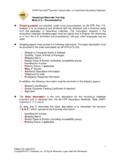
3 Any chemical spill or Hazardous Materials release that results in, or has a potential to result in, fire, explosion, injury, or environmental damage must be reported to the appropriate agencies. Please note: this Table provides guidance only. Requirements may vary by state, county, parish, or city. You should consult your state or local emergency response or regulatory agencies for specific reporting or response requirements. CCAR HazmatU Surface Transportation of Automotive Hazardous Materials 2 Edition , April 2017 Copyright 2017, ShipMate, Inc., All Rights Reserved, Logos Used with Permission When a Hazardous Materials emergency is first discovered, move away from the incident, notify others in the area to stay away, and call for assistance.
4 The best course of action in any chemical emergency or Hazardous Materials incident is to: Stay Away Report & Notify Get Help If possible, and without risk of injury to yourself or others, obtain as much information as possible regarding the release, including: Size, type, and description of the spill Location of the incident Any injuries or potential threat of injury, fire, or explosion Description of the packaging ( , type, size) Description of the marks and labels on the packages This information should be reported immediately to your facility management or safety supervisor. Before your facility management or safety supervisor can make an appropriate determination, your facility should gather all relevant & available information, including: SDS Shipping papers & declarations Product literature & specification sheets Waste profiles & manifests Emergency Response Guides Other references CCAR HazmatU Surface Transportation of Automotive Hazardous Materials 3 Edition , April 2017 Copyright 2017, ShipMate, Inc.
5 , All Rights Reserved, Logos Used with Permission Facility management will then make a determination as to whether the emergency requires professional assistance or it is an incidental release. Facility management or your safety supervisor will determine the appropriate spill response actions, taking into account: Size & type of spill Physical & chemical properties Ability to control & mitigate the release Available equipment & resources Response team experience level Additional risks ( , fire, injury) Other safety considerations Control ( , isolation, valve closure) If directed to do so by facility management or your safety supervisor, without risk of injury to yourself or others, you may take appropriate actions to control the incidental spill or release using any of the following methods.
6 Containment ( , within the original package) Confinement ( , within a bermed area) Diversion ( , move away from sensitive areas) Incidental spills and releases may be mitigated and remediated using any of the following treatment methods to clean-up the spill and decontaminate the area Biological ( , bioremediation) Chemical ( , neutralization) Physical ( , absorption) Detailed instructions and procedures for mitigating an incidental spill or release may be found in the SDS for the substance, or in your facility's Emergency Response Plan. Most importantly, follow all appropriate safety precautions, including the use of appropriate personal protective equipment (PPE). Also, consider the following: Site safety ( , maintaining appropriate zones of control) Equipment safety ( , preventing equipment contamination) Personnel safety ( , preventing exposure or fatigue) CCAR HazmatU Surface Transportation of Automotive Hazardous Materials 4 Edition , April 2017 Copyright 2017, ShipMate, Inc.
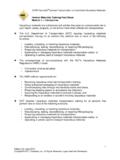
7 , All Rights Reserved, Logos Used with Permission Chemical & oil spill response supplies located throughout your facility should include at a minimum: Absorbent material ( , speedy dry) Sorbent booms/pads Spill mats for covering floor and storm drains Protective gloves & suits Safety glasses, goggles, gloves, and aprons Caution tape for isolating the spill area Non-sparking tools ( shovels, brooms) Collection receptacles ( , drums, pails) Major chemical releases or Hazardous Materials incidents may require reporting an notification to federal, state, or local emergency response agencies including, but not limited to: National Response Center Environmental Protection Agency Department of Transportation State Environmental Protection Agency State Emergency Response Commission Local Emergency Planning Committee Fire Department Health Department Emergency response contractor(s) Federal, state, and local emergency response contacts and emergency response telephone numbers should be prominently posted throughout the facility, such as near: Tanks Waste collection areas Chemical storage areas Employee safety bulletin boards Emergency response contacts and telephone numbers should also be included in your facility Emergency Response Plan.
8 It is important to review these numbers periodically ( , at least annually) to ensure that they are still valid. Your state environmental protection agency or health and safety administration may have additional or more specific reporting requirements. Consult your state response agencies for more information. CCAR HazmatU Surface Transportation of Automotive Hazardous Materials 5 Edition , April 2017 Copyright 2017, ShipMate, Inc., All Rights Reserved, Logos Used with Permission When making reports and notifications to federal, state, or local emergency response or regulatory agencies, be sure to include the following information: Name, address, & telephone number Nature of the emergency ( , spill, fire, injury, environmental damage) Location of the incident ( , facility address, route, cross streets) Description of the incident ( , cause, size, type, chemical) Emergency response actions taken Other relevant information ( , weather, vehicle type) Some Hazardous Materials incidents may require an initial report followed by a detailed written report submitted to the agency.
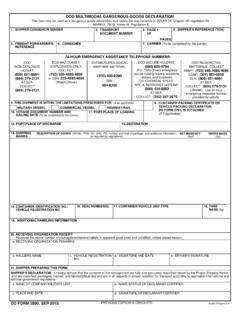
9 The Department of Transportation's Pipeline and Hazardous Materials Safety Administration (PHMSA) requires a Hazardous Materials incident to be reported in writing on DOT Form if the incident results in: Death of one or more persons; Closure of a transportation route for more than 1 hour; Re-routing of aircraft flight patterns; or More than $50,000 property damage In most states, facilities that employ 10 or more people must have a written emergency response plan that includes appropriate response and reporting procedures for the following: Fire or explosion Medical emergencies Workplace violence Chemical spills or releases Bomb threats Earthquakes, if applicable Heavy weather ( , tornado, floods), if applicable CCAR HazmatU Surface Transportation of Automotive Hazardous Materials 6 Edition , April 2017 Copyright 2017, ShipMate, Inc.
10 , All Rights Reserved, Logos Used with Permission A well-written Emergency Response Plan will include detailed instructions for reporting and responding to chemical emergencies and Hazardous Materials incidents and will address, at a minimum: Regulatory & Training requirements Emergency response contacts and phone numbers Chemical inventory ( , size, location, packaging type) Chemical spill and release history Definitions of incidental releases and major chemical releases Appropriate reporting and notification requirements Equipment inventory ( , type, location) Response, control, mitigation, decontamination, & disposal procedures Each employee should receive Training regarding the location and content of the facility Emergency Response Plan.