Transcription of Hepatitis B Foundation Cause for a Cure
1 Living With Hepatitis B What is Hepatitis B? Hepatitis B is the world s most common liver infection. It is caused by the Hepatitis B virus (HBV), which can attack and injure the liver. HBV is transmitted through blood and infected bodily fluids. This can occur through direct blood-to-blood contact, unprotected sex, unsterile needles, and from an infected woman to her newborn during pregnancy or delivery. What happens if I am infected? Hepatitis B is known as a "silent infection because most people do not have any symptoms when they are infected. Approximately 90% of healthy adults who are infected will get rid of the virus and develop protective antibodies against HBV this can take up to six months. People who recover are no longer contagious to others after they recover and they cannot be infected by HBV again. However, 10% of infected adults for some reason are unable to get rid of the virus and develop chronic HBV infections this means that they test positive for the virus in their blood for more than six months.
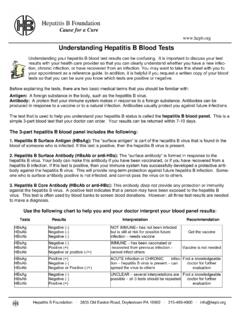
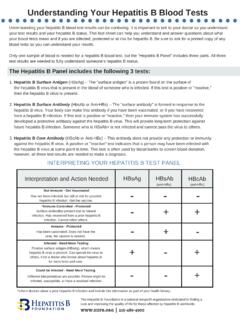
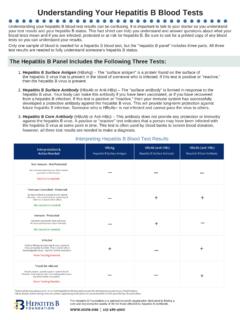
2 These people need further evaluation by a liver specialist or doctor knowledgeable about HBV. How does one know if they have recovered or become chronically infected? There is a simple blood test that a doctor can order to determine if one is "recovering" from a Hepatitis B infection or has become chronically infected with Hepatitis B. In order for one to have a clear picture of their Hepatitis B status, they should request that their doctor order the 3-part Hepatitis B blood panel. A copy of the written test results should also be requested. Please refer to our web-site at for more information. The 3-part Hepatitis B panel includes the following: 1. Hepatitis B Surface Antigen (HBsAg): The surface antigen is part of the Hepatitis B virus that is found in the blood of someone who is infected. If this test is positive, the Hepatitis B virus is present. 2. Hepatitis B Surface Antibody (HBsAb or anti-HBs): The surface antibody is formed in response to the Hepatitis B virus.
3 Your body can make this antibody if you have been vaccinated, or if you have recov-ered from a Hepatitis B infection. If this test is positive, then your immune system has successfully developed a protective antibody against the Hepatitis B virus. This will provide long-term protection against future Hepatitis B infection. Someone who is surface antibody positive is not infected, and cannot pass the virus on to others. 3. Hepatitis B Core Antibody (HBcAb or anti-HBc): This antibody does not provide any protection or immunity against the Hepatitis B virus. A positive test only indicates that a person may have been exposed to the Hepatitis B virus. This test is often used by blood banks to screen blood donations. However, all three blood test results must be available for the doctor to make an accurate diagnosis. How is a chronic infection diagnosed? A person with a chronic infection is "diagnosed" when they test positive for the Hepatitis B surface antigen (HBsAg+) for more than six months.
4 This means that a person s immune system has not been able to get rid of the virus. It can stay in the liver for a long time, possibly even a lifetime. Although those with chronic Hepatitis B infection live with an increased risk of developing liver disease later in life, many should expect to live long and healthy lives. Someone with chronic Hepatitis B should be seen by a liver specialist every six months, or more often as needed. Hepatitis B Foundation Cause for a Cure Hepatitis B Foundation 3805 Old Easton Road, Doylestown PA 18902 215-489-4900 How can I prevent spreading Hepatitis B to others? If you are infected, you can pass the virus on to others and it is important to take certain precautions to prevent this from happen-ing. Sexual partners and those living in close household contact should be tested for Hepatitis B and receive the Hepatitis B vaccine, which can protect them for a lifetime!
5 Babies born to women who are infected with Hepatitis B must be vaccinated in the delivery room or within the first 12 hours of life. In addition, it is important to keep all cuts covered and avoid sharing any sharp instruments such as razors, toothbrushes or earrings, etc., since small amounts of blood can be exchanged through these items. Hepatitis B is not transmitted casually and it cannot be spread through sneezing, coughing, hugging or eat-ing food prepared by someone who is infected with HBV. Is there any treatment for chronic Hepatitis B? The future looks very bright for those living with chronic Hepatitis B. Although there is no complete cure for Hepatitis B, there are promising new treatments that could be of benefit to some patients. Currently, there are seven FDA ap-proved drugs in the to treat chronic HBV: Intron A (Interferon Alpha), Pegasys (Pegylated Interferon), Epivir HBV (Lamivudine), Hepsera (Adefovir), Baraclude (Entecavir), Tyzeka (Telbivudine), and Viread (Tenofovir).
6 These drugs have been shown to help decrease the risk of liver dam-age from the Hepatitis B virus. There are also many new drugs in development and in clinical trials. Please visit our Drug Watch chart at for the latest information about drugs in develop-ment for Hepatitis B, or visit the National Institutes of Health at for additional clinical trial information. How can I live a healthy lifestyle as someone with chronic Hepatitis B? Fortunately, there are things people with chronic Hepatitis B can do to help keep their liver healthy. The most important thing one can do is to have regular check-ups with either a liver specialist or a doctor knowledgeable about Hepatitis B at least once or twice a year. Usually this includes blood tests, physical exam and ultrasound imaging of the liver to detect liver damage, cirrhosis or liver cancer. If the liver is being damaged by the Hepatitis B virus, the doctor wants to detect it as early as possible in order to recommend possible treatment options.
7 Other things one can do to maintain a healthy liver is to strictly limit or avoid alcohol. Chronic Hepatitis B and alcohol is a dangerous mixture. Studies have shown that even small amounts of alcohol can Cause damage to an already weakened liver. Avoiding alcohol is one decision that will greatly reduce the risk of further liver disease. Eating a balanced diet is another simple way to maintain a healthy liver. Although there is no diet specific for chronic Hepatitis B, studies show that eating green and yellow vegetables is good for the liver. These tend to protect the liver against harsh chemicals. The American Cancer Society s diet, which includes low fat, low cholesterol, and high fiber foods is beneficial as well. Shellfish is not recommended for anyone with Hepatitis B because of the risk of eating contaminated shellfish. Raw or undercooked shellfish can contain a bacteria called Vibrio vulnificus, which is very toxic to the liver.
8 Talk to your doctor about getting the Hepatitis A vaccine. A person with chronic Hepatitis B is already infected with one liver virus, so it is important to protect against another Hepatitis virus. Be sure your pharmacist and health care provider recommend medications that are not harmful to the liver. This includes both over-the-counter and prescribed medications and herbal supplements, since many of these are processed in the liver. Also, avoid inhaling fumes from paint, paint thinners, glue and household cleaning products, which may contain chemicals that could damage the liver. To find a physician in your area who is familiar with Hepatitis B, visit our Liver Specialist Directory at For an online, well-supervised support group, visit the Hepatitis B Information and Support list at Hepatitis B Foundation 3805 Old Easton Road, Doylestown PA 18902 215-489-4900 8/08