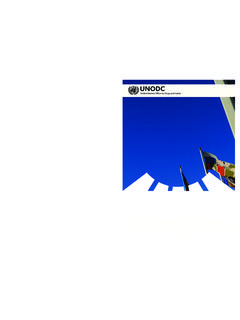
Transcription of HIGHLIGHTS - OECD.org - OECD
1 Development Co-operation Report 2017: DATA FOR DEVELOPMENTHIGHLIGHTS2 HIGHLIGHTS OECD 2017 This work is published under the responsibility of the Secretary-General of the OECD. The opinions expressed and arguments employed herein do not necessarily reflect the official views of OECD member document and any map included herein are without prejudice to the status of or sovereignty over any territory, to the delimitation of international frontiers and boundaries and to the name of any territory, city or of the graphic elements in the infographic were adapted from Co-operation Report 2017: DATA FOR DEVELOPMENTFOREWORDData and statistics are part of the OECD s DNA.
2 They underpin, shape and inform our policy advice to promote better policies for better lives in all the countries we work with, numbering over 100, across all regions and levels of an era of fake news and alternative facts, good data are even more vital. All citizens have the right to true, reliable and accessible information. This is particularly important in the development field, since world leaders adopted the transformative 2030 Agenda for Sustainable Development in September 2015. Achieving the Sustainable Development Goals (SDGs) will require informed choices about priorities and strategies, and for this we will need a better evidence base than we have continued lack of basic data along with weak statistical systems remain major stumbling blocks to achieving the SDGs.
3 For example, there are no data for about two-thirds of the 232 SDG indicators, and 88 indicators have neither an agreed methodology nor data for measuring them. Even when data are available, they are often insufficiently disaggregated, making it difficult for policy makers to track or compare the situations of different population groups or key reason for this poor capacity is that official statistics in developing countries do not get the resources they need. Aid for building statistical systems was about of total official development assistance over the past three years, equivalent to USD 600 million per year.
4 This is why the OECD decided to focus its annual Development Co-operation Report on data for development. The good news is that conditions have never been riper for developing countries to harness the data revolution. The global push for evidence-based policy making and the centrality of data to deliver the SDGs, combined with new technology, make it easier, faster and cheaper to produce and use the data we need. This report not only provides a comprehensive and in-depth analysis of the political and structural constraints faced by countries; it also formulates concrete options for policy makers to build on the new opportunities and make data work for sustainable development.
5 It shows how governments, national statistical offices, citizens, and public and private development partners can work together to fill data gaps, generating and using better data, for better development policies for better Gurr a OECD Secretary-General4 HIGHLIGHTSEDITORIAL: WITH GREAT DATA COMES GREAT RESPONSIBILITYby Charlotte Petri Gornitzka, Chair, Development Assistance Committee and Jorge Moreira da Silva, Director, Development Co-operation Directorate, OECDIf USD billion falls in the forest of development and no one hears it, does it matter? That depends on who you are. While mothers in Afghanistan or South Sudan can tell you how their families lives have been transformed by effective development programmes every single day, strong data are needed to communicate how these billions of dollars improve the human condition and create more stable societies for 2016 official development assistance (ODA) to support development goals represented of gross national income, an all-time high.
6 However, aid to those who need it most, including least developed countries (LDCs), is declining. The June 2017 report card on the 2030 Development Agenda the world s roadmap to end poverty, inequality and injustice for all by 2030 through a set of 17 goals and 232 indicators tells us progress is slow and data are , more than ever, we need to tell the 360-degree story of how development investment touches lives and supports a more secure, stable and prosperous world. Data on development have the ability to amplify human stories beyond the borders of fragile and least developed states. The future of development co-operation depends on hard evidence about the impact that ODA has and can have with increased and well-targeted investments.
7 We can t afford not to get a clear picture and turn up the , we have better tools than ever to get the data on development results right. Big data are now being used to tell us how to respond to an e-mail and what news we should read. We know that big data are being used by corporations to predict customers behaviour, suppliers performance, equipment failures and planning preventive maintenance. But big data also offer significant impact on energy, environment and healthcare. The combination of big data with genomics has the potential to uncover diseases that prevail in localised geographical areas. The data revolution has tremendous potential to inform innovative development policies and open new doors for individuals in developing countries.
8 However, a dangerous data gap is leaving some of the most vulnerable groups of people invisible while others are propelled us take a look at the data on the development data gap. Just over half of all countries fully register when babies are born and when people die. Only 37 countries have statistical laws that meet UN standards. Not surprising, then, that no data whatsoever exist for two-thirds of the Sustainable Development Goal (SDG) development co-operation community has a responsibility to translate the ever-accelerating developments in data to on-the-ground development results by supporting sophisticated country-led systems, especially in LDCs.
9 Strong systems require human brainpower and heart if they are to collect quality, timely and disaggregated data, especially for those most at risk of being left behind. The 2017 Development Co-operation Report HIGHLIGHTS six immediate recommendations for existing and future investments in will these actions take? Simply increasing the quantity of aid will not guarantee success. The quality of financing for statistics needs to improve to reduce duplication and better target and co-ordinate investments where the impact is greatest. It requires political will to make data a strategic cross-cutting priority in development co-operation policies .
10 If current levels of ODA spent on statistics increased by USD 200 million annually it would fill the funding gap for producing data for the SDGs in developing countries. Talk about bang-for-buck: less than 1% of total assistance to maintain the credibility of the other 99% and its delivery to those who need it most. That s the development win-win: investing in data for development gives voice to those who feel its impact, helps target aid to where it is needed most, while presenting a higher definition picture of results to taxpayers in countries that provide development Co-operation Report 2017: DATA FOR DEVELOPMENTWhy it mattersGood data for development are lackingInfographic.