Transcription of HIPAA Privacy and Security Operational Guide
1 Ensign Services, Inc. HIPAA Privacy and Security Operational Guide This Guide has been created for Ensign-affiliated facilities and entities to serve as an overview of the daily operating policies and procedures with regard to maintaining compliance with the Health Insurance Portability and Accountability Act ( HIPAA ). This Operational Guide is intended to represent a simplified version of the company s detailed policies and procedures and is to be used by workforce members and management as a quick reference to answer many of the daily questions that arise concerning HIPAA . The HIPAA Privacy Rule creates national standards to protect a patient s or resident s medical record and other personal health information. As healthcare providers we use and disclose sensitive individually identifiable information daily and it is our duty to protect that information.
2 It is important we understand a few important concepts related to our handling of patient or resident information in order to protect their Privacy rights afforded under the HIPAA Privacy rule. An understanding of these concepts will also serve in implementation of policies and procedures. Protected Health Information (PHI) is defined as individually identifiable health information that is transmitted or maintained by a facility/entity in any form or medium. Individually Identifiable Information is defined as a subset of health information including demographic information collected from a patient or resident and is created or received by us and relates to the past, present, or future physical or mental health or condition of a patient or resident and can be used to identify the patient or resident. What Information Is Protected?
3 - Information doctors, nurses, therapists, consultants, and other health care providers document in the medical record; both on paper and electronically - Conversations about patient or resident care with others - Billing and financial information - Contact information including email address - Photographs - Most other health information that includes individually identifiable information It is best to assume every piece of information is protected and to inquire as to whether or not it can be used or disclosed for your intended purpose. When in doubt, please ask. HIPAA Privacy and Security Operational Guide /August, 2016 CUSTOMER SECOND-ACCOUNTABILITY-PASSION FOR LEARNING-LOVE ONE ANOTHER-INTELLIGENT RISK TAKING-CELEBRATE-OWNERSHIP USING PATIENT/RESIDENT INFORMATION When we USE PHI we share, utilize, examine, and analyze information that remains WITHIN our facility/entity.
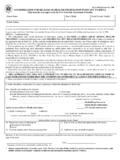
4 Examples of use include; TREATMENT: discussing patient or resident care with physicians, during care conferences, with nurses/therapists PAYMENT: billing for services provided, collecting payment, verifying benefits HEALTHCARE OPERATIONS: collecting data for quality improvement activities, monitoring, and training activities. These are all permissible (allowed) uses of a patient s or resident s health information. Are we allowed to include patient/resident information in facility directories and post their name on the door of their room? Patients and residents receiving care in a SNF or ALF should be afforded the right to determine; Whether or not their name is posted outside their room If their information is shared with family and friends and identify those we may share information (also applies to hospice and home health) Whether or not callers may be given information Whether or not clergy may be given information At admission, ask the patient or resident to complete the Communication Method Request form as part of the Notice of Privacy Practices.
5 Ensure staff are knowledgeable of the patient s or resident s preferred methods for communication. The following situations are NOT permitted when using PHI: - Discussing patient or resident care in open, public areas or with others that should not have the information - Sharing more information than necessary to provide treatment or bill for services - Accessing or copying records without a specific treatment, payment, or Operational purpose What can you do to protect information while using it to care for our patients and residents? Limit information to the minimum necessary to accomplish the intended purpose of the use Discuss patient and resident care in private areas when a private area is not available lower voice and be aware of those that may overhear When discussing care with the patient or resident in a shared room ask the patient or resident if they object to the discussion - find a private location if an objection is expressed Secure documents from public view Access only those records/documents needed to accomplish the task of providing treatment, billing for services, or other Operational functions HIPAA Privacy and Security Operational Guide /August.
6 2016 CUSTOMER SECOND-ACCOUNTABILITY-PASSION FOR LEARNING-LOVE ONE ANOTHER-INTELLIGENT RISK TAKING-CELEBRATE-OWNERSHIP DISCLOSING PATIENT/RESIDENT INORMATION We also DISCLOSE protected health information for treatment and payment purposes. Disclosure is the release, transfer, provision of access to, or divulging of PHI OUTSIDE the facility/entity in order for others to provide treatment or bill for services. These disclosures are permitted under the HIPAA rule and include; sending records with the patient or resident to the hospital or to an appointment, faxing PHI to a physician, and transmitting claims for payment. When disclosing PHI we must follow the Minimum Necessary standard. This standard is defined as making reasonable efforts to limit the use or disclosure of, and requests for, protected health information to the minimum necessary to accomplish the intended purpose.
7 Using or disclosing an entire medical record is not justified unless releasing it is reasonably necessary to accomplish the purpose of the use or disclosure. An example of reasonably necessary would be to release the entire record pursuant to a subpoena. How do we account for these disclosures? Use the Accounting of Disclosure log to document all disclosures of protected health information except those for; - For treatment, payment, and healthcare operations - To the patient/resident (or personal representative) - Pursuant to the patient s/resident s authorization - For the facility/entity directory - To persons involved in the patient s/resident s care - For national Security or intelligence purposes - To correctional institutions or in law enforcement custodial situations When does Minimum Necessary NOT apply? You may disclose required PHI; To healthcare providers for treatment purposes To the patient or resident Pursuant to a valid authorization To the Secretary of the Department of Health and Human Services (DHHS) As required by law There are times when, with good intention, we inadvertently disclose information to the wrong person.
8 Examples of inadvertent disclosures to other HIPAA covered parties include; Faxing PHI to the wrong physician Sending one patient s or resident s PHI with another patient or resident to the hospital or to an appointment HIPAA Privacy and Security Operational Guide /August, 2016 CUSTOMER SECOND-ACCOUNTABILITY-PASSION FOR LEARNING-LOVE ONE ANOTHER-INTELLIGENT RISK TAKING-CELEBRATE-OWNERSHIP What do we do when these inadvertent disclosures occur? Notify Privacy Officer or contact the Compliance Hotline Secure the PHI by contacting the person/entity to which the PHI was faxed or sent and inform them of the mistake Notify the patient or resident, typically by writing and delivering a letter of apology assuring them the PHI was secured and procedures were implemented to prevent another mistake When is a disclosure NOT permitted?
9 Sharing information with family and/or friends Posting any patient and resident information, including photographs, on social media sites Sending PHI to others that do not have authorization to receive that information Removing PHI from the facility/entity without it being secure and for a specific treatment or billing purpose _____ When you become aware of any disclosure resulting in a compromise of patient or resident health or financial information report it immediately to the Privacy Officer or contact the Compliance Hotline. _____ Breaches of PHI What is a breach? The everyday definition of breach is an infraction or violation of a law, obligation, or standard. HIPAA defines breach as the acquisition, access, use, or disclosure of protected health information which compromises the Security or Privacy of the PHI.
10 Examples of possible breaches; - Lost or stolen mobile device, including computers - Sending/faxing/emailing PHI to someone other than a healthcare provider or authorized patient/resident representative - Stolen patient or resident documents from a home or car - Posting PHI, including pictures, on a social media site - Unsecured documents (not shredded, left open/unlocked) - Texting PHI - Discussing protected information with those that do not have a need to know HIPAA Privacy and Security Operational Guide /August, 2016 CUSTOMER SECOND-ACCOUNTABILITY-PASSION FOR LEARNING-LOVE ONE ANOTHER-INTELLIGENT RISK TAKING-CELEBRATE-OWNERSHIP What must we do when we suspect a breach has occurred? When we use or disclose PHI in a manner not permitted under the HIPAA rule we must assume a breach has occurred (PHI has been compromised) and conduct a risk assessment to determine the extent to which the PHI has been compromised.

![[Name of organization] HIPAA Privacy and Security Policy ...](/cache/preview/5/c/e/6/7/9/f/3/thumb-5ce679f318455669875a4f6549cebd81.jpg)