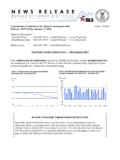
Transcription of Industrial production-January 2022
1 Press Office tel. +39 06 January 2022 Industrial PRODUCTION The index measures the monthly evolution of the volume of Industrial production (excluding construction). From January 2022 the indices are calculated as annual chain-linked indices instead of fixed base indices. The weighting reference is now year 2021 while the reference base is still the year 2015. Indices are produced according to Ateco 2007 classification (Italian edition of Nace Rev. 2). In January 2022 the seasonally adjusted Industrial production index decreased by compared with the previous month. The change of the average of the last three months with respect to the previous three months was The calendar adjusted Industrial production index decreased by compared with January 2021 (calendar working days being 20 versus 19 days in January 2021).
2 The unadjusted Industrial production index increased by compared with January 2021. CHART 1. Industrial PRODUCTION, SEASONALLY ADJUSTED INDEX AND THREE-MONTH MOVING AVERAGE January 2017 January 2022 (index, 2015=100) 9 March 2022 | 2 Industrial PRODUCTION CHART 2. Industrial PRODUCTION, MONTH ON SAME MONTH A YEAR AGO PERCENTAGE CHANGES January 2018 January 2022, calendar adjusted data (index, 2015=100) TABLE 1. Industrial PRODUCTION INDICES (a), MONTHS ON PREVIOUS MONTHS AND ON SAME MONTHS A YEAR AGO PERCENTAGE CHANGES January 2022 (b) (index, 2015=100) INDICES Index (2015=100) Months on previous months Months on same months a year ago Jan 22 Dec 21 Nov 21-Jan 22 Aug 21-Oct 21 Jan 22 Jan 21 Industrial production seasonally adjusted - Industrial production calendar adjusted - - Industrial production non seasonally adjusted - - + Calendar working days 20 (a) Excluding construction.
3 (b) Data are provisional and subject to revisions. The first revision takes place with the dissemination of the following month and takes into account additional information received from enterprises. Since 2022 data undergo also an annual revision of the previous year. | 3 Industrial PRODUCTION CHART 3. YEAR-ON-YEAR GROWTH RATE BY Industrial GROUPINGS January 2022, calendar adjusted (index, 2015=100) | 4 Industrial PRODUCTION Table 2 shows the results of the annual revision carried out with reference to the year 2021, aiming at improving the quality of already published estimates on the basis of additional information received from enterprises and the update of the productivity coefficients for sectors whose production is estimated on the basis of hours worked. For the year 2021 the annual rate of change of the calendar adjusted total Industrial production index has been revised upward by percentage points (from + to + ).
4 TABLE 2. Industrial PRODUCTION BY MAIN Industrial GROUPINGS CALENDAR ADJUSTED DATA COMPARISON BETWEEN PREVIOUSLY RELEASED DATA AND REVISED DATA. Percentage changes compared to corresponding period (base 2015=100) YEARS Industrial Production Index Durable consumer goods Non-durable consumer goods Capital goods Intermediate goods Energy Previously released data Revised data Previously released data Revised data Previously released data a Revised data Previously released data Revised data Previously released data Revised data Previously released data Revised data 2021 + + + + + + + + + + + + | 5 Industrial PRODUCTION Consumer durables: examples of consumer durables include household appliances, furniture, motorcycles and audio and video equipment. Consumer non-durables: examples of consumer non-durables include food and beverages processing and preservation, several kinds of textile manufacturing and pharmaceutical manufacturing.
5 Intermediate goods: examples of intermediate goods include chemical industry, metal fabrication, metal products and electrical appliances manufacturing, wood industry and textiles processing. Capital goods: examples include production of machinery and manufacturing equipment, measuring and test equipment and vehicles. Survey sample: subset of statistical units selected from a larger population in order to conduct a survey. In short-term statistics, a theoretical sample is defined when rebasing the indices every five year to obtain longitudinal or panel data, considering the actual corporate changes over time. Calendar adjusted data: calendar adjusted data refer to the correction for calendar effect in a reference period (month or quarter) that may vary from year to year. This method allows a reconciliation of asymmetries for calendar differences such as the number of working days, the week days distribution in the reference period and the occurrence of public holidays (including moving holidays like Easter) and of a leap year.
6 Working day adjusted data permit to better compare year-on-year growth rate and average annual growth rate. Seasonal adjusted data: seasonal adjusted data refer to the statistical technique designed to remove fluctuations related to seasonal factors (such as weather conditions, administrative measures, ) and calendar effects when relevant. Seasonal adjustment provides a clearer view for a trend analysis of a short-term index. Energy: examples of energy industries include extraction of raw materials (petroleum, natural gas, coal) and refining processes and electricity, gas, steam and air conditioning supply. Working days: calendar days of the month, not including Saturdays, Sundays, religious and secular public holidays. Industrial production index: Industrial production index measures the monthly evolution of physical volume of production made by Industrial establishments (excluding construction).
7 Main Industrial groupings: consumer durables, consumer non-durables, intermediate goods and energy. Commision Regulation (EC) No 656/2007 defines, for the whole European Community, the Main Industrial Groupings (MIGS): each Industrial group and Industrial activity division head to a different category of this aggregate classification. Istat also releases the Consumer Goods Index, calculated as the weighted average of the durable and non-durable components. Economic activities sections: according to classification ANA/ISIC A38. The statistical classification of economic activities in the European Community (NACE Rev. 2) from which Ateco classification derives do not include subsections in the structure of the aggregates. Month on month growth rate: short-term growth rate compares a period (typically a month or quarter) with the previous period, measuring the percentage change.
8 Year-on-year growth rate: Y-o-Y compares a period (typically a month or quarter) with the same period from the previous year, measuring the percentage change. | 6 Industrial PRODUCTION Sources and Regulatory framework The Industrial production index measures the change of the volume of goods produced over time by industry (excluding construction). The legal basis for the STS indicators are the Regulation (EU) 2019/2152 of the European Parliament and of the Council on European business statistics, repealing 10 legal acts in the field of business statistics (EBS-Regulation) and the Commission Implementing Regulation 2020/1197 laying down technical specifications and arrangements pursuant to Regulation (EU) 2019/2152 (General Implementing Act). The survey is provided by the current National Statistical Programme in force, accessible on the Istat internet site at (Italian only).
9 Population, analysis and survey units The Industrial production index is based on the results of a sample statistical survey, conducted among enterprises (survey units), that measures the volume of production of the goods included in a representative basket of products (analysis units). This allows the calculation of indices for product line items that, in turn, are grouped by business activity according to the Laspeyres formula and using a weighting structure that reflects the sector distribution of the Industrial value added in the year set as the reference period, which now is 2021. The reference list for identification of the enterprises that take part in the sample is made up from the Statistical Archive of Active Companies (Asia), while the selection is made upon the results of the annual PRODCOM1 survey. Survey design and data collection The monthly survey of Industrial production is conducted directly on a panel of approximately 5,400 companies, which provides the data concerning less 9,900 monthly production flows, generally defined in terms of physical quantity.
10 Further statistical sources are used for the estimating production trends of specific Industrial sectors. Amongst others, the survey on livestock slaughtered for red and white meat, conducted by Istat; the information provided by the National Offices for Mineral Resources, Hydrocarbons and Geothermal Energy of the Ministry of Productive Activities; the data of electrical energy production surveyed by TERNA (National Electric Network). For the purposes of maintaining the significance of the index and in order to consider potential changes in quality of Industrial products over time, the survey requests the amount of hours worked for specific products (whose weight within total index is ); the elementary indices of products are then calculated using coefficients of productivity estimated using aggregates of short-term statistics (turnover index and hours worked).