Transcription of Informal Reading Inventory - Dyslexic Advantage
1 Copyright The McGraw-Hill Companies, and Diagnostic AssessmentInformal Reading InventoryProgram: Core ReadingVendor: AptaraComponent: PDA_IRIG rade: 1-6 PDF Page 163 16/01/12 8:28 PM Page 163 16/01/12 8:28 PM s-019/Volumes/101/GO00975_PDA/CORE_READI NG_2014/ANCILLARY/PLACEMENT_AND_DIAGNOST IC_ASSESSMENT/0021142424//Volumes/101/GO 00975_PDA/CORE_READING_2014/ANCILLARY/PL ACEMENT_AND_DIAGNOSTIC_ASSESSMENT/00211P rinter P DF Copyright The McGraw-Hill Companies, Inc. Informal Reading Inventory Grades 1 6 IRI OverviewThe Informal Reading Inventory (IRI) is an individually-administered diagnostic tool that assesses a student s Reading comprehension and Reading accuracy. The IRI measures three Reading levels: independent, instructional and frustrational. The independent Reading level is the level at which a student reads without help from the teacher. To be independent, the student should accurately decode at least 95% of the words and comprehend 90% of the material.
2 The instructional Reading level is reached when a student accurately decodes at least 90% of the words and comprehends at least 60% of the material. Below that, a text would be considered to be at a frustrational level: the student decodes 89% or less of the words and can comprehend only 50% of the each grade level, there are two fiction and two non-fiction Reading passages. These passages alternate between oral Reading and silent Reading as an IRI tests for both oral and silent Reading comprehension. To assess the student s comprehension, there are three literal (L) questions, one vocabulary (V) question, and one interpretive (I) question per passage. On the teacher recording sheet, there is a table for each oral Reading passage to help identify the student s Reading level. This level is based on a combined score of comprehension points and word recognition errors. For each silent Reading passage, the total number of comprehension points is used to determine a Reading Reading InventoryThe IRI consists of Reading passages, teacher recording sheets, and graded word lists for Grades 1 6.
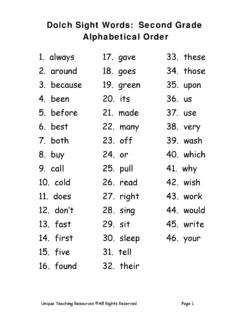
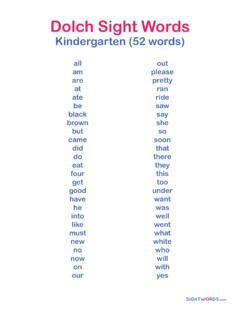
3 The Reading passages appear on a reproducible student page. Each passage is ten sentences long and consists of dolch words in Grades 1 3 and Harris-Jacobson words in Grades 4 6. The Reading difficulty of the passages is near the midpoint of each grade level. There is a teacher recording sheet following each student passage that includes the passage, five questions, and a table to determine the appropriate Reading to Use the IRID etermine Reading levels for both oral and silent Reading comprehension. Before a student reads a passage, administer the graded word lists to determine the appropriate grade level. These lists span Grades 1 6 and consist of dolch words, story words, and words that contain appropriate sound-spelling sequences for that level. Teachers should start administering the lists with Grade 1 to obtain a general estimate of the student s independent, instructional, and frustrational Reading levels. 164 Placement and Diagnostic Assessment IRI OverviewProgram: Core ReadingVendor: AptaraComponent: PDA_IRIG rade: 1-6 PDF Page 164 16/01/12 8:28 PM Page 164 16/01/12 8:28 PM s-019/Volumes/101/GO00975_PDA/CORE_READI NG_2014/ANCILLARY/PLACEMENT_AND_DIAGNOST IC_ASSESSMENT/0021142424//Volumes/101/GO 00975_PDA/CORE_READING_2014/ANCILLARY/PL ACEMENT_AND_DIAGNOSTIC_ASSESSMENT/00211P rinter P DF Copyright The McGraw-Hill Companies, Reading Inventory Grades 1 6 The correct instructional level is the level at which the student makes one error.
4 Students who make two errors should go back to the previous list and start Reading at that level. Use this grade level to start administering the oral and silent Reading passages, and as a quick assessment of basic sight word knowledge and phonics and structural analysis the IRIThe IRI is organized by grade level. To administer the IRI efficiently, you should be familiar with Procedures, directions, passages, and questions. 1. Make a copy of all of the graded word Place the Grade 1 word list in front of the student and say, Here are some words I would like you to read aloud. Try to read them all, even if you are not sure what some of the words are. Let s begin by Reading the words on this list. 3. If the student is able to easily read these words, this early success may build the student s confi dence. If you feel certain that a third-grade student can read above a third-grade level, then begin with a higher list. On the other hand, if a fi rst-grade student misses two words on the fi rst-grade word list, then stop.
5 You should then read the passage aloud and have the student answer the comprehension questions. This activity turns into a listening comprehension Inventory . Use the scoring table for the silent Reading comprehension passage to determine a Reading level for listening Record words pronounced correctly with a ( ) mark on the recording sheet that shows each graded word list (p. 171). Write incorrect responses on the line next to the Have the student continue Reading higher-level lists until one error is After the student misses two words, stop the testing, collect the test sheets, and complete the results in the graded word list section on the Follow these directions to score the graded word list. The highest level at which the student misses zero words is the student s independent Reading level. The highest level at which the student misses one word is the student s instructional Reading level. The highest level at which the student misses two words is the student s frustrational Reading level.
6 If the student scores independent, instructional, or frustrational at more than one level, assign the score to the highest and Diagnostic Assessment IRI Overview 165 Program: Core ReadingVendor: AptaraComponent: PDA_IRIG rade: 1-6 PDF Page 165 16/01/12 8:28 PM Page 165 16/01/12 8:28 PM s-019/Volumes/101/GO00975_PDA/CORE_READI NG_2014/ANCILLARY/PLACEMENT_AND_DIAGNOST IC_ASSESSMENT/0021142424//Volumes/101/GO 00975_PDA/CORE_READING_2014/ANCILLARY/PL ACEMENT_AND_DIAGNOSTIC_ASSESSMENT/00211P rinter P DF Copyright The McGraw-Hill Companies, Inc. Informal Reading Inventory Grades 1 68. Select the fi rst passage for the student to read orally. Make a copy of the teacher recording sheet for that passage. Have the student start Reading on the instructional level determined by the graded word Begin by saying, I have some passages for you to read. Read the fi rst one aloud. If you fi nd a hard word, try to read it as best you can and continue Reading .
7 It is important to remember what you read so you can answer questions at the end. 10. While the student reads out loud, code the errors or miscues on the scoring sheet. Do not provide any prompting if a student hesitates over a word. If a student hesitates longer than fi ve seconds, simply tell the word to the When the student has completed the passage or story, take it away. The student cannot refer to it while answering the Ask the student the comprehension questions as shown on the teacher recording sheet for the passage. Mark correct answers with a point value on the line provided. The point value is in parentheses at the end of each question. A perfect score is 10 points. Interpretive questions are given four points. Vocabulary questions are given three points. Literal questions are given one point. The total number of points that a student earns is the comprehension score. (Instructions for scoring word accuracy and comprehension questions will be provided on page 169.)
8 At this point, you will have the student shift from oral to silent Give the student the B passage next. If the student began with the 1A oral passage, then continue with the 1B silent Say, Read this passage to yourself and try to remember what you read so that you can answer questions at the end. 15. When the student has fi nished Reading the passage, ask the questions on the teacher recording sheet for the passage. Mark the point values that the student earned on the lines provided, and total the number of points earned at the bottom of the After giving the fi rst oral and silent Reading passages, use the Scoring Table to determine whether the student has been able to read them at an independent level. If both the oral and silent passages were at the student s independent Reading level, continue with the next higher oral Reading passage. Then follow with the corresponding silent passage until the frustration level is reached. In many cases, a student will reach frustration level on either oral or silent Reading but not both.
9 In these instances, continue with either the oral or silent Reading passages until the student reaches frustration level on Placement and Diagnostic Assessment IRI OverviewProgram: Core ReadingVendor: AptaraComponent: PDA_IRIG rade: 1-6 PDF Page 166 16/01/12 8:28 PM Page 166 16/01/12 8:28 PM s-019/Volumes/101/GO00975_PDA/CORE_READI NG_2014/ANCILLARY/PLACEMENT_AND_DIAGNOST IC_ASSESSMENT/0021142424//Volumes/101/GO 00975_PDA/CORE_READING_2014/ANCILLARY/PL ACEMENT_AND_DIAGNOSTIC_ASSESSMENT/00211P rinter P DF Copyright The McGraw-Hill Companies, Reading Inventory Grades 1 617. If the student is not Reading at the independent level on either or both passages, give an easier oral and silent passage until both oral and silent frustration levels are reached. The goal is that a student should have an independent, instructional and frustrational Reading level for both oral and silent for Marking Word Recognition ErrorsEach word recognition error is counted as one error.
10 Never count more than one error on any one Word Recognition Errors The baby cried1. Put a check mark over words read correctly. My friend went2. Circle omissions. eats He ate the pie3. Draw a line above words that are read with substitutions. Write the substitution above the line. T Why are you4. Place a T above a word that you need to tell student. eating R dinner5. Place an R next to a word the student repeats. See/Sa kind person. She6. Place the student s initial response and an S above a word that is self corrected. Note: Do not score as an error. an (red) apple7. Use parentheses ( ) to enclose a word that is and Diagnostic Assessment IRI Overview 167 Program: Core ReadingVendor: AptaraComponent: PDA_IRIG rade: 1-6 PDF Page 167 16/01/12 8:28 PM Page 167 16/01/12 8:28 PM s-019/Volumes/101/GO00975_PDA/CORE_READI NG_2014/ANCILLARY/PLACEMENT_AND_DIAGNOST IC_ASSESSMENT/0021142424//Volumes/101/GO 00975_PDA/CORE_READING_2014/ANCILLARY/PL ACEMENT_AND_DIAGNOSTIC_ASSESSMENT/00211P rinter P DF Copyright The McGraw-Hill Companies, Inc.