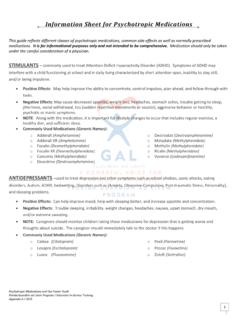
Transcription of Information Sheet for Psychotropic Medications
1 Information Sheet for Psychotropic Medications This guide reflects different classes of Psychotropic Medications , common side effects as well as normally prescribed Medications . It is for informational purposes only and not intended to be comprehensive. medication should only be taken under the careful consideration of a physician. STIMULANTS commonly used to treat Attention-Deficit Hyperactivity Disorder (ADHD). Symptoms of ADHD may interfere with a child functioning at school and in daily living characterized by short attention span, inability to stay still, and/or being impulsive. Positive Effects: May help improve the ability to concentrate, control impulses, plan ahead, and follow through with tasks. Negative Effects: May cause decreased appetite, weight loss, headaches, stomach aches, trouble getting to sleep, jitteriness, social withdrawal, tics (sudden repetitive movements or sounds), aggressive behavior or hostility, psychotic or manic symptoms.
2 NOTE: Along with the medication , it is important for lifestyle changes to occur that includes regular exercise, a healthy diet, and sufficient sleep. Commonly Used Medications (Generic Names): o Adderall (Amphetamine) o Dextrostat (Dextroamphetamine). o Adderall XR (Amphetamine) o Metadate (Methylphenidate). o Focalin (Dexmethylphenidate) o Methylin (Methylphenidate). o Focalin XR (Dexmethylphenidate) o Ritalin (Methylphenidate). o Concerta (Methylphenidate) o Vyvance (Lisdexamfetamine). o Dexedrine (Dextroamphetamine). ANTIDEPRESSANTS used to treat depression and other symptoms such as school phobias, panic attacks, eating disorders, Autism, ADHD, bedwetting, Disorders such as (Anxiety, Obsessive-Compulsive, Post-traumatic Stress, Personality), and sleeping problems. Positive Effects: Can help improve mood, help with sleeping better, and increase appetite and concentration. Negative Effects: Trouble sleeping, irritability, weight changes, headaches, nausea, upset stomach, dry mouth, and/or extreme sweating.
3 NOTE: Caregivers should monitor children taking these Medications for depression that is getting worse and thoughts about suicide. The caregiver should immediately talk to the doctor if this happens. Commonly Used Medications (Generic Names): o Celexa (Citalopram) o Paxil (Paroxetine). o Lexapro (Escitalopram) o Prozac (Fluoxetine). o Luvox (Fluvoxamine) o Zoloft (Sertraline). Psychotropic Medications and Our Foster Youth Florida Guardian ad Litem Program / Volunteer In-Service Training Appendix A / 2015. 1. Antipsychotics used to treat a number of conditions in children, such as Psychosis, Bipolar disorder, Schizophrenia, Autism, Tourette's syndrome or severe aggression. Positive Effects: Antipsychotic Medications are not a cure for mental illness but can be an effective part of treatment. They help to restore the brain's natural chemical balance to reduce or get rid of the psychotic symptoms.
4 Negative Effects: May cause sleepiness or tiredness, dizziness, constipation, dry mouth, blurred vision, difficulty urinating, sensitivity to lights, weight gain, change in menstrual cycle. NOTE: A person should begin to feel better within six weeks of starting to take antipsychotic medication . However, it can take several months before they feel the full benefits. Commonly Used Medications (Generic Names): o Abilify (Aripiprazole) * o Geodon (Ziprasidone). o Seroquel (Quetiapine) * o Invega (Paliperidone). o Zyprexa (Olanzapine) o Fanapt (Iloperidone). o Risperdal (Risperidone) o Saphris (Asenapine). o Clozaril (Clozapine) * o Latuda (Lurasidone). o Fazaclo (Clozapine) *. * Abilify, Seroquel, and Clozapine come with Black Box Warnings by the Food and Drug Administration. This means the medication can cause serious undesirable effects (such as a fatal, life-threatening or permanently disabling adverse reaction) to the potential benefit from the drug.
5 Or a serious adverse reaction can be prevented, reduced in frequency, or reduced in severity by proper use of the drug. Mood Stabilizers are used to treat children with mood disorders, such as bipolar disorder. Children with bipolar disorder have extreme mood swings (manic or depressed states). In the "manic" state, they may be very active, talk too much, have a lot of energy, and sleep very little. They may also be angry, irritable, or feel overly self-important. Children in the "depressed" state may feel hopeless or helpless, have a loss of energy, have changes in appetite, gain or lose weight, not enjoy activities they used to enjoy, or have thoughts of suicide. Positive Effects: Mood stabilizers may be used to treat sudden manic episodes. Continued use can eliminate extreme mood swings of depression and mania and improve a child's quality of life. A physician may prescribe mood stabilizers with other medicines (such as antipsychotics) for more effective reduction of mood swings.
6 Negative Effects: Lamictal can cause dizziness, problems sleeping, drowsiness, blurred vision, vomiting, constipation or stomach aches. Depakote may cause indigestion, nausea/vomiting, drowsiness, hair loss, weight changes, changes in menstrual cycles or constipation. Tegretol may cause dizziness, drowsiness, nausea, unsteadiness or vomiting and Lithium may cause fatigue, muscle weakness, nausea, stomach cramps, weight gain, urinating more often, slight hand tremor, thirst, low blood sugar, lower thyroid function, and hair loss. NOTE: Some Medications used to treat mood disorders are also used to treat seizure disorders. If used to treat seizures, it is not considered a Psychotropic medication . Commonly Used Medications (Generic Names): o Carbatrol (Carbamazepine) o Lamictal (Lamotrigine). o Depakote (Divalproex) * o Lithobid (Lithium) *. o Eskalith or Eskalith CR (Lithium) * o Tegretol or Tegretol XR (Carbamazepine) *.
7 * Children taking Tegretol, Depakote or Lithium should have routine blood work. Levels are usually checked in the morning before the medication is given to the child. Psychotropic Medications and Our Foster Youth Florida Guardian ad Litem Program / Volunteer In-Service Training Appendix A / 2015 2. Antianxiety agents (Tranquilizers) are used to treat people with severe anxiety that interferes with their daily activities. Positive Effects: Reduces panic anxiety or general anxiety symptoms. They are generally used for short term treatment. Negative Effects: Can cause dizziness, sedation, or nausea. NOTES: Ativan, Klonopin, and Xanax (known as Benzodiazepines) are addictive. Commonly Used Medications (Generic Names): o Ativan (Lorazepam). o Buspar (Buspirone). o Klonopin (Clonazepam). o Xanax (Alprazolam). Resources: Guide to Psychiatric Medications for Children and Adolescents by Glenn S.
8 Hirsch, Psychotropic Medications and Our Foster Youth Florida Guardian ad Litem Program / Volunteer In-Service Training Appendix A / 2015. 3.