Transcription of INSTALLATION, OPERATION AND MAINTENANCE …
1 installation , OPERATION AND MAINTENANCE FOR SERIES 500 K-FLO BUTTERFLY VALVESPO Box 411 Berwick PA !NOTE:The valve disc must be in the closed or nearly closed position beforeinstallation of the valve in the pipeline. This is to protect the disc seating edge. Thevalve may be installed with the flow in either direction; but, seat adjustmentis facilitated when the flat side of the disc is positioned downstream (see Figure 1).Product Introduction -- K-FLO Series 500: 3 -20 IntroductionK-Flo Series 500 Butterfly Valves are heavy-duty, rubber seated butterfly valves in full compliancewith AWWA-C504 for use in municipal water treatment, power generation, and industrial instructions are intended for personnel who are responsible for the installation , OPERATION andmaintenance of your K-FLO AWWA butterfly label(s) on the product indicate hazards that can cause equipment damage, personal injury orMessagesdeath.
2 If a safety label becomes obscured or has been removed, contact Crispin involved in the installation or MAINTENANCE of valves should be constantly alert to thepotential emission of process material and take appropriate safety precautions. Always wear suit-able protection when dealing with hazardous process materials. Handle valves which have beenremoved from service with the assumption that process material could be present within the AWWA butterfly valve has been packed to provide protection during shipment. Inspect theunit for damage upon arrival and file a carrier claim if damage is parts from your local sales representative, or directly from Crispin ValveCrispin service personnel are available to install, maintain and repair Crispin Valves and also offers customized training programs and consultation services.
3 For more information,contact your local Crispin/K-FLO Valve sales representative or visit AWWA Butterfly Valves are heavy-duty, rubber seated in body butterfly valves in full compliance with AWWA C-504 for use in municipal water treatment, power generation, and indus-trial applications. They utilize bearings that are of the self-lubricating type which provide strengthand low friction for easy OPERATION and lifetime service. No special periodic MAINTENANCE is Butterfly Valves are designed for installation between ANSI Class 125# flat faced Requirementsflanges. Mechanical joint valves are designed for use with AWWA C111 end connections. MJaccessories for the pipe used must be supplied by the installing contractor.
4 Class 250 valves can beordered with either ANSI 250# drilling, ANSI 125# drilling or AWWA C111 MJ Failure to lift the valve properly may cause damage. The valve should be lifted only by non-metallic slings attached to the valve mounting plate or the valve flange holes. Never lift the valve by its actuator or by the valve body opening. Adjacent piping must be posi-tioned so that minimal piping stresses are transmitted to the flanges during and after valve shaft axis may be either vertical or horizontal. If possible, the valve should be located atleast six pipe diameters downstream of all pumps, elbows, or tees (see Figure 2).A!!WARNING:Moving Parts from accidental OPERATION of a power actuator can cause personal injury or equipment damage.
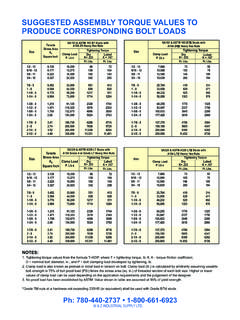
5 Disconnect and lock out power to actuator before :The valve is a pressure vessel. Goodmaintenance and practice dictates that the valve must be depressurized prior to performing MAINTENANCE . Isolate the valve in the pipeline by closing the valve that is just upstream, and then the valve that is just downstream (in that order) prior to performing 1: Disc torque Plug ValuesValve Size torque , , 4 306 , 8 21010 32012 38014 , 16 50018 62020 740 IntroductionIt is possible that after many years of service, the rubber components of the K-Flo Series 500valve may show signs of wear. The valve stem packing is a replaceable component. In theunlikely event that the valve seat is severely worn, contact your K-Flo representative.
6 If valvepacking leakage should occur, the following procedures should be followed:Packing Removal1. Remove packing retainer which is attached to the slot on the valve shaft.(With actuator2. After the packing retainer is removed, pull and remove the spacer and its )3. Repeat the same procedures for removing the lower packing, except first remove the bottomcover plate prior to removing the lower Assembly 1. Press both upper and lower bearings into the valve Install lower stem packing and lower spacer. Install cover plate with cap screws and Install upper bushing, upper packing, and upper spacer into valve body top stem Install packing retaining ring onto groove on valve Install disc into valve seat.
7 This will require that a lubricant such as silicone oil or grease be applied to the stem hub areas of both the disc and Install stem into valve body top stem hole (operator top plate side). The stem should beinstalled so that its milled flat aligns with the disc torque plug torque the plug down through the disc and against the milled flat on the stem to the valvesas listed in Table 1 on page Series 500-- MAINTENANCE and RepairBFigure 1--Flow DirectionFigure 2--Valve LocationFigure 3--PartsCValve opens only a few degrees andstops (it will not open to the full angledesired)Improper installation . The valve isimproperly pipe internal diameter or otherobstruction is interfering with not properly installedLoosen the flange bolts.
8 Realign valvewith flanges, and retighten flange boltsto correct torque per ANSI does not meet standards and spacers may be required. Any pipelineor disc obstruction must be to actuator adjustment past the flange faceFlange bolts are not evenly flangesImproper flange gasketsLoosen flange bolts and tighten flange boltsto correct torque per ANSI to Flange Requirements on page face flange gaskets in the closed position (leakage in the pipeline)The disc is not closing fully: Actuator is not properly valve seatLine pressure exceeds valve s workingpressureDamaged valve discRefer to actuator line pressure to valve valve to factory for disc/stem at the valve stemPacking failure1.
9 Fully open and close the valve 3 Refer to Packing Removal and Valve Assembly steps 2-4 on pg. hammerThe valve is closing too actuator high torque to operate valveObstruction in the pipelineValve shaft or disc bentScale buildup on shaft or seatRemove valve from pipeline and valve to factory for disc/shaftreplacement (check for water hammeror freezing of line material).Open and close the valve several the valve at least once a the valve seat for CAUSE SUGGESTED REMEDYK-FLO Series 500--TroubleshootingRecommended Storage ProceduresIdeal storage is in a heated building, palletized and covered. If ideal storage is not possible, following a few simple procedures will assure optimum performance Valves should be stored laying flat, fully closed, but must be kept off the ground and highenough to avoid standing Support valve weight on flange faces only and verify weight before blocking.
10 3. Cover completely with tarpaulin and support on wooden cross ribs underneath to preventwater If valve is electric motor operated, follow the motor manufacturer s procedures for storageto prevent condensation Verify at the time of storage, and at removal from storage, that actuator lubricant levels are asrequired by the manufacturer. Lubricant leakage can occur during prolonged horizontal storage.!NOTE:The stem holes through the disc must be properly aligned with the stem holes in the valve seat to allow installation of the valve stem.