Transcription of Interbond 2340UPC - AkzoNobel
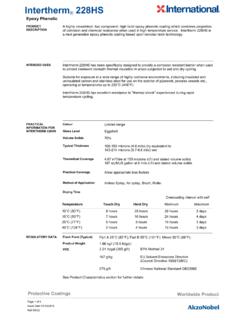
1 A high temperature pipe coating providing corrosion resistance in accordance with the ISO 12944-9 standard at ambient temperatures delivering productivity savings compared to inorganic zinc silicate and traditional epoxy phenolic based systems. Based on alkylated amine epoxy technology , Interbond 2340 UPC is a next generation epoxy phenolic coating for high temperature applications. PRODUCT DESCRIPTIONE xternal protection for process pipes, valves and vessels operating between the temperatures of-321 F (-196 C) and 446 F (230 C). Suitable for use on both carbon and stainless steel in insulated or uninsulated conditions, as well as cryogenic service. Due to its superior high DFT tolerance, Interbond 2340 UPC significantly reduces the risk of thick film cracking when compared to traditional epoxy phenolic coatings.
2 Interbond 2340 UPC eliminates the temperature and humidity requirements associated with inorganic zinc coatings resulting in better quality and productivity in all climates. INTENDED USESGray, Pink, Olive GraySemi Gloss60%4-8 mils (100-200 microns) dry equivalent to mils (167-333 microns) wet120 gallon at 8 mils and stated volume solids3 m /liter at 200 microns and stated volume solidsAllow appropriate loss factorsAirless Spray, Brush, RollerPRACTICAL INFORMATION FOR Interbond 2340 UPCC olorGloss LevelVolume SolidsTypical ThicknessTheoretical CoveragePractical CoverageMethod of ApplicationDrying TimeTemperature Touch DryHard DryMinimumMaximumOvercoating interval with self23 F (-5 C) 7 hours10 hours14 hours14 days50 F (10 C) 5 hours8 hours10 hours14 days68 F (20 C) 4 hours6 hours7 hours14 days95 F (35 C)
3 2 hours4 hours4 hours10 daysPart A 82 F (28 C); Part B 79 F (26 C); Mixed 82 F (28 C) Ib/gal ( kg/l)REGULATORY DATAF lash Point (Typical)Product WeightVOCSee Product Characteristics section for further lb/gal (390 g/lt) EPA Method 24 318 g/kg EU Solvent Emissions Directive(Council Directive 1999/13/EC) Interbond 2340 UPCU niversal Pipe CoatingPage 1 of 4 Ref:10233 Issue Date:10/26/2018 Protective CoatingsInterbond 2340 UPCU niversal Pipe CoatingAll surfaces to be coated should be clean, dry and free from contamination. Prior to application, all surfaces should be assessed and treated in accordance with ISO 8504 Oil or grease should be removed in accordance with SSPC-SP1 solvent cleaning.
4 Abrasive Blast CleaningThis product must only be applied to surfaces prepared by abrasive blast cleaning to a minimum SSPC-SP10 or Sa2 (ISO 8501-1:2007). A sharp, angular surface profile of 2-3 mils (50-75 microns) is recommended. Interbond 2340 UPC must be applied before oxidation of the steel occurs. If oxidation does occur the entire oxidized area should be reblasted to the standard specified above. Surface defects revealed by the blast cleaning process should be ground, filled, or treated in the appropriate manner. Power Tool Cleaning (Small Areas Only)For small areas of touch up repair and welds, power tool cleaning to SSPC SP11 is suitable. Optimum performance will be achieved with a minimum surface profile of 2 mils (50 microns).
5 Austenitic Stainless SteelEnsure surface is clean, dry and free from metal corrosion products prior to application. Abrasive blast with non-metallic and chloride free abrasive ( aluminum oxide or garnet) to obtain an average anchor profile of mils (35 microns). SURFACE PREPARATIONM aterial is supplied in two containers as a unit. Always mix a complete unit in the proportions supplied. Once the unit has been mixed, it must be used within the working pot life specified.(1) Agitate Base (Part A) with a power agitator.(2) Combine entire contents of Curing Agent (Part B) with Base(Part A) and mix thoroughly with power part(s) : 1 part(s) by volumeNot recommendedSuitable - Small areas onlyTypically mils (50-75 microns) can be achievedSuitable - Small areas onlyTypically mils (50-75 microns) can be achievedInternational GTA822 or International GTA220Do not allow material to remain in hoses, gun or spray equipment.
6 Thoroughly flush all equipment with International GTA220. Once units of paint have been mixed they should not be resealed and it is advised that after prolonged stoppages work recommences with freshly mixed all equipment immediately after use with International GTA822. It is good working practice to periodically clean equipment during the course of the working day. Frequency of cleaning will depend upon amount used, temperature and elapsed time, including any delays. All surplus materials and empty containers should be disposed of in accordance with appropriate regional normally requiredRecommendedTip Range 19-24 thou ( mm)Total output fluid pressure at spray tip not less than 3000 psi (211 kg/cm )APPLICATIONM ixingMix RatioWorking Pot LifeAirless SprayAir Spray(Pressure Pot)BrushRollerThinnerCleanerWork StoppagesClean Up23 F (-5 C) 50 F (10 C) 68 F (20 C) 95 F (35 C) 6 hours3 hours1 hourPage 2 of 4 Interbond 2340 UPCU niversal Pipe CoatingThis product must only be thinned using International thinners.
7 The use of alternative thinners, particularly those containing ketones, can severely inhibit the curing mechanism of the coating. Apply by airless spray only. Application by other methods, brush, roller, may require more then one coat and should only be used for small areas or touch-up work. When applying Interbond 2340 UPC by brush or roller, it may be necessary to apply multiple coats to achieve the total specified system dry film thickness. Steel surface temperature must always be a minimum of 5 F (3 C) above dew point. After the last coat has cured hard, the coating system dry film thickness should be measured using a suitable non-destructive magnetic gauge to verify the average total applied system thickness.
8 The coating system should be free of all pinholes or other holidays. The cured film should be essentially free of runs, sags, drips, inclusions or other defects. All deficiencies and defects should be corrected. In common with all epoxies Interbond 2340 UPC will chalk and "yellow" on exterior exposure. Interbond 2340 UPC will also show a marked color change when exposed to higher temperatures. However, these phenomena are not detrimental to anti-corrosive performance provided recommended temperature limits are not exceeded. Interbond 2340 UPC is suitable for protection of insulated steelwork, which may cycle between wet and dry conditions, and is operating at continuous in-service temperatures ranging from -321 F(-196 C) to 401 F (205 C), with intermittent surges up to 446 F (230 C).
9 When applying Interbond 2340 UPC in confined spaces, ensure adequate ventilation. Note: VOC values are typical and are provided for guidance purpose only. These may be subject to variation depending on factors such as differences in color and normal manufacturing tolerances. Low molecular weight reactive additives, which will form part of the film during normal ambient cure conditions, will also affect VOC values determined using EPA Method 24. PRODUCT CHARACTERISTICSI nterbond 2340 UPC is normally applied direct to metal and is compatible with a number of topcoats. Suitable topcoats are: Interthane 870 Interthane 990 Intertherm 875 For advice on topcoat compatibility and overcoating windows please consult International Paint.
10 The maximum temperature resistance of the coating scheme may be limited by the COMPATIBILITYPage 3 of 4 Interbond 2340 UPCU niversal Pipe CoatingRect TopRect BottomDetail TopFurther information regarding industry standards, terms and abbreviations used in this data sheet can be found in the following documents available at : Definitions & Abbreviations Surface Preparation Paint Application Theoretical & Practical Coverage Individual copies of these information sections are available upon request. ADDITIONAL INFORMATIONThis product is intended for use only by professional applicators in industrial situations in accordance with the advice given on this sheet, the Safety Data Sheet and the container(s), and should not be used without reference to the Safety Data Sheet (SDS).