Transcription of International Clinical Practice Guidelines for the ...
1 IDSA GUIDELINESI nternational Clinical Practice Guidelines for theTreatment of acute Uncomplicated Cystitis andPyelonephritis in Women: A 2010 Update by theInfectious Diseases Society of America and theEuropean Society for Microbiology andInfectious DiseasesKalpana Gupta,1 Thomas M. Hooton,2 Kurt G. Naber,9 Bjo rn Wullt,10 Richard Colgan,3 Loren G. Miller,4 Gregory J. Moran,5 Lindsay E. Nicolle,8 Raul Raz,11 Anthony J. Schaeffer,6and David E. Soper71 Department of Medicine, Veterans Affairs Boston Health Care System and Boston University School of Medicine, Boston, Massachusetts;2 Department ofMedicine, University of Miami Miller School of Medicine, University of Miami, Miami Florida;3 Department of Family and Community Medicine, Universityof Maryland, Baltimore, Maryland,4 Division of Infectious Diseases, Harbor-UCLA Medical Center, Torrance, and5 Department of Emergency Medicine andDivision of Infectious Diseases Olive View-UCLA Medical Center, Slymar, California;6 Deptartment of urology, Northwestern University, Chicago, Illinois; and7 Departments of Obstetrics and Gynecology and Medicine, Medical University of South Carolina, Charleston, South Carolina;8 Department of InternalMedicine and Department of Medical Mirobiology University of Manitoba, Winnipeg, Canada;9 Technical University of Munich, Munich, Germany;10 LundUniversity Hospital, Lund, Sweden.
2 And11 Infectious Diseases Unit, Ha'Emek Medical Center, Afula, and Rappaport Faculty of Medicine, Technion, Haifa, IsraelA Panel of International Experts was convened by the Infectious Diseases Society of America (IDSA) incollaboration with the European Society for Microbiology and Infectious Diseases (ESCMID) to update the1999 Uncomplicated Urinary Tract Infection Guidelines by the IDSA. Co-sponsoring organizations include theAmerican Congress of Obstetricians and Gynecologists, American Urological Association, Association ofMedical Microbiology and Infectious Diseases Canada, and the Society for Academic Emergency focus of this work is treatment of women with acute uncomplicated cystitis and pyelonephritis, diagnoseslimited in these Guidelines to premenopausal, non-pregnant women with no known urological abnormalitiesor co-morbidities. The issues of in vitro resistance prevalence and the ecological adverse effects ofantimicrobial therapy (collateral damage) were considered as important factors in making optimal treatmentchoices and thus are reflected in the rankings of SUMMARYBACKGROUNDA cute uncomplicated cystitis remains one of the mostcommon indications for prescribing of antimicrobials tootherwise healthy community-dwelling women.
3 Despitepublished Guidelines for the optimal selection of anantimicrobial agent and duration of therapy, studiesdemonstrate a wide variation in prescribing practices[1 6]. The Infectious Diseases Society of America (ID-SA) published a Clinical Practice guideline on thetreatment of women with acute uncomplicated cystitisand pyelonephritis in 1999 [1]. Since then, antimicrobialresistance among uropathogens causing uncomplicatedcystitis has increased, appreciation of the importance ofReceived 10 December 2010; accepted 17 December process for evaluating the evidence was based on the IDSA Handbook onClinical Practice Guideline Development and involved a systematic weighting ofthe quality of the evidence and the grade of recommendation (Table 1) [31]It is important to realize that Guidelines cannot always account for individualvariation among patients. They are not intended to supplant physician judgmentwith respect to particular patients or special Clinical situations.
4 The IDSA considersadherence to these Guidelines to be voluntary, with the ultimate determinationregarding their application to be made by the physician in the light of eachpatient's individual : Kalpana Gupta, MD, VA Boston HCS, 1400 VFW Pkwy, 111 Med, West Roxbury, MA 02132 Infectious Diseases 2011;52(5):e103 e120 The Author 2011. Published by Oxford University Press on behalf of theInfectious Diseases Society of America. All rights reserved. For Permissions,please e-mail: Practice GuidelinesdCID 2011:52 (1 March)de103 at IDSA on August 14, from the ecological adverse effects of antimicrobial therapy (collateraldamage) has increased, newer agents and different durations oftherapy have been studied, and Clinical outcomes have in-creasingly been reported. In addition, women with uropath-ogens resistant to the treatment drug have been included insome studies, allowing for estimations of expected response ratesin a real-life Clinical setting in which empirical therapy isprescribed either without a urine culture and susceptibilitytesting or before such results are known.
5 In light of these de-velopments, an update of the Guidelines was focus of this guideline is treatment of women with acuteuncomplicated cystitis and pyelonephritis, diagnoses limitedin these Guidelines to premenopausal, nonpregnant womenwith no known urological abnormalities or comorbidities. Itshould be noted that women who are postmenopausal or havewell-controlled diabetes without urological sequelae may beconsidered by some experts to have uncomplicated urinarytract infection (UTI), but a discussion of specific managementof these groups is outside the scope of this guideline. In ad-dition, management of recurrent cystitis and of UTI inpregnant women, prevention of UTI, and diagnosis of UTI areall important issues that are not addressed in this issues of in vitro resistance prevalence and the potentialfor collateral damage were considered as important factors inmaking optimal treatment choices and thus are reflected inthe rankings of below are the recommendations made in the2010 guideline update.
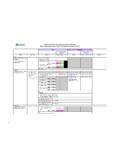
6 The Panel followed a process used in thedevelopment of other IDSA Guidelines which included a sys-tematic weighting of the quality of the evidence and the grade ofrecommendation [32] (Table 1). A detailed description of themethods, background, and evidence summaries that supportPrescribe a recommended antimicrobial Consider alternate diagnosis (such as pyelonephritis or complicated UTI) & treat accordingly (see text)Yes Woman with acute uncomplicated cystitis Absence of fever, flank pain, or other suspicion for pyelonephritis Able to take oral medication NoFluoroquinolones (resistance prevalence high in some areas) OR -lactams (avoid ampicillin or amoxicillin alone; lower efficacy than other available agents; requires close follow-up) NoCan one of the recommended antimicrobials* below be used considering: Availability Allergy history Tolerance Nitrofurantoin monohydrate/macrocrystals 100 mg bid X 5 days (avoid if early pyelonephritis suspected) OR Trimethoprim-sulfamethoxazole 160/800 mg (one DS tablet) bid X 3 days (avoid if resistance prevalence is known to exceed 20 or if used for UTI in previous 3 months) OR Fosfomycin trometamol 3 gm single dose (lower efficacy than some other recommended agents; avoid if early pyelonephritis suspected) OR Pivmecillinam 400 mg bid x 5 days (lower efficacy than some other recommended agents.)
7 Avoid if early pyelonephritis suspected) Yes *The choice between these agents should be individualized and based on patient allergy and compliance history, local Practice patterns, local community resistance prevalence, availability, cost, and patient and provider threshold for failure (see Table 4) Figure to choosing an optimal antimicrobial agent for empirical treatment of acute uncomplicated cystitis. DS, double-strength; UTI,urinary tract 2011:52 (1 March)dGupta et al at IDSA on August 14, from each of the recommendations can be found in the full text of Is the Optimal Treatment for acute UncomplicatedCystitis?Recommendations(Fi gure 1). monohydrate/macrocrystals (100 mg twicedaily for 5 days) is an appropriate choice for therapy due tominimal resistance and propensity for collateral damage(defined above) and efficacy comparable to 3 days oftrimethoprim-sulfamethoxazole (A-I).
8 (160/800 mg [1 double-strength tablet] twice-daily for 3 days) is an appropriate choicefor therapy, given its efficacy as assessed in numerous clinicaltrials, if local resistance rates of uropathogens causing acuteuncomplicated cystitis do not exceed 20% or if the infectingstrain is known to be susceptible (A-I).i. The threshold of 20% as the resistance prevalence at whichthe agent is no longer recommended for empirical treatment ofacute cystitis is based on expert opinion derived from Clinical ,in vitro, and mathematical modeling studies (B-III).ii. In some countries and regions, trimethoprim (100 mg twicedaily for 3 days) is the preferred agent and is consideredequivalent to trimethoprim-sulfamethoxazole on the basis ofdata presented in the original guideline (A-III) [1].iii. Data are insufficient to make a recommendation forothercystitisantimicrobialsastowhatre sistanceprevalenceshould be used to preclude their use for empirical treatment ofacute trometamol (3 g in a single dose) is anappropriate choice for therapy where it is available due tominimal resistance and propensity for collateral damage, but itappears to have inferior efficacy compared with standard short-course regimens according to data submitted to the US Foodand Drug Administration (FDA) and summarized in theMedical Letter (A-I) [7].
9 (400 mg bid for 3 7 days) is anappropriate choice for therapy in regions where it is available(availability limited to some European countries; not licensedand/or available for use in North America), because ofminimal resistance and propensity for collateral damage, butit may have inferior efficacy compared with other availabletherapies (A-I). fluoroquinolones, ofloxacin, ciprofloxacin, andlevofloxacin, are highly efficacious in 3-day regimens (A-I)but have a propensity for collateral damage and should bereserved for important uses other than acute cystitis and thusshould be considered alternative antimicrobials for acutecystitis (A-III). ,includingamoxicillin-clavulanate,cefdin ir, cefaclor, and cefpodoxime-proxetil, in 3 7-dayregimens are appropriate choices for therapy when otherrecommended agents cannot be used (B-I).
10 Otherb-lactams,such as cephalexin, are less well studied but may also beappropriate in certain settings (B-III). Theb-lactams generallyhave inferior efficacy and more adverse effects, compared withother UTI antimicrobials (B-I). For these reasons,b-lactamsother than pivmecillinam should be used with caution foruncomplicated or ampicillin shouldnot be used forempirical treatment given the relatively poor efficacy, asdiscussed in the 1999 Guidelines [1] and the very highprevalenceofantimicrobialresistancet otheseagentsworldwide [8 11] (A-III). Is the Treatment for acute Pyelonephritis? patients suspected of having pyelonephritis, a urineculture and susceptibility test should always be performed, andinitial empirical therapy should be tailored appropriately onthe basis of the infecting uropathogen (A-III). ciprofloxacin (500 mg twice daily) for 7 days, with orwithout an initial 400-mg dose ofintravenous ciprofloxacin, isan appropriate choice for therapy in patients not requiringhospitalization where the prevalence of resistance of communityuropathogens to fluoroquinolones is not known to exceed 10%(A-I).