Transcription of Interzinc - AkzoNobel
1 Part of the Interzinc 22 Series of products. A two component, rapid recoat, fast curing solvent based inorganic zinc rich ethyl silicate primer, containing 85% zinc by weight in the dry film. Conforms to SSPC Paint 20 Level 1. Available in ASTM D520, Type II (low lead) zinc dust version as standard PRODUCT DESCRIPTIONA zinc rich primer suitable for use with a wide range of high performance systems and topcoats in both maintenance and new construction of bridges, tanks, pipework, offshore structures and structural steelwork. Interzinc 22 can also be used as tank coating suitable for the carriage of different chemical cargoes ( styrene) according to International Paint s chemical resistance guide. Provides excellent corrosion protection for correctly prepared steel substrates, up to temperatures of 1004 F (540 C) when suitably topcoated. Fast curing primer capable of application in a wide range of climatic conditions.
2 INTENDED USESG reen GrayMatte63%2-3 mils (50-75 microns) dry equivalent to mils (79-119 microns) wet337 gallon at 3 mils and stated volume m /liter at 75 microns and stated volume solidsAllow appropriate loss factorsAirless Spray, Air SprayPRACTICAL INFORMATION FOR Interzinc 22 ColorGloss LevelVolume SolidsTypical ThicknessTheoretical CoveragePractical CoverageMethod of ApplicationDrying TimeTemperature Touch DryHard DryMinimumMaximum See International Protective Coatings Definitions & AbbreviationsThe drying times quoted have been determined at the quoted temperature and 55% relative humidity. The 41 F (5 C) time was determined at 60% relative humidity. Prior to overcoating, verify a value of 4 via ASTM D4752 MEK rub test. See Product Characteristics section for more details on overcoating. Overcoating Interval withrecommended topcoats41 F (5 C) 30 minutes3 hours18 hours Extended 59 F (15 C) 20 minutes90 minutes9 hours Extended 77 F (25 C) 10 minutes1 hours Extended 104 F (40 C) 5 minutes30 hours Extended Part A 66 F (19 C); Mixed 66 F (19 C) Ib/gal ( kg/l) REGULATORY DATAF lash Point (Typical)Product WeightVOCSee Product Characteristics section for further lb/gal (470 g/lt) EPA Method 24216 g/kg EU Solvent Emissions Directive(Council Directive 1999/13/EC) Interzinc 22 inorganic zinc -Rich SilicatePage 1 of 4 Ref:4518 Issue Date:11/23/2016 Protective CoatingsWorldwide ProductInterzinc 22 inorganic zinc -Rich SilicateAll surfaces to be coated should be clean, dry and free from contamination.
3 Prior to paint application, all surfaces should be assessed and treated in accordance with ISO 8504:2000. Oil or grease should be removed in accordance with SSPC-SP1 solvent cleaning. Abrasive Blast CleaningAbrasive blast clean to a minimum of SSPC-SP6 or Sa2 (ISO 8501-1:2007), (or SSPC-SP10 for optimum performance). If oxidation has occurred between blasting and application of Interzinc 22, the surface should be reblasted to the specified visual standard. Surface defects revealed by the blast cleaning process, should be ground, filled, or treated in the appropriate manner. A surface profile of mils (40-75 microns) is recommended. Shop Primed SteelworkInterzinc 22 is suitable for application to unweathered steelwork freshly coated with zinc silicate shop primers. If the zinc shop primer shows extensive or widely scattered breakdown, or excessive zinc corrosion products, overall sweep blasting will be necessary. Other types of shop primer are not suitable for overcoating and will require complete removal by abrasive blast cleaning.
4 Weld seams and damaged areas should be blast cleaned to SSPC-SP6 or Sa2 (ISO 8501-1:2007). Damaged/Repair AreasAll damaged areas should ideally be blast cleaned to SSPC SP6 or Sa2 (ISO 8501:2007). However, it is acceptable that small areas can be power tool cleaned to SSPC SP11 or Pt3 (JSRA SPSS:1984), provided the area is not polished. Repair of the damaged area can then be carried out using a recommended zinc epoxy primer - consult International Protective Coatings for specific PREPARATIONI nterzinc 22 is supplied in two parts, a liquid Binder base component QHA285 (Part A) and a Powder component (Part B). The Powder (Part B) should be slowly added to the liquid Binder (Part A) whilst stirring with a mechanical agitator. DO NOT ADD LIQUID TO POWDER. Material should be filtered prior to application and should be constantly agitated in the pot during spraying. Once the unit has been mixed it should be used within the working pot life part(s) : 1 part(s) by volumeMix ratio is given for advice; always mix the product in the proportions supplied.
5 RecommendedTypical pump Graco X-Treme 40:1 or similarGun DeVilbiss MBC-510/JGA-510 (Binks 2100)Air Cap 704 or 765 (Binks 66SD or 68PB)Fluid Tip E ( or D ( ) or Binks 66,67 Suitable - Small areas onlyTypically mils (25-50 microns) can be achievedNot recommendedInternational GTA803,International GTA415 or International GTA138 International GTA803, International GTA138 or International GTA415Do not allow material to remain in hoses, guns or spray equipment. Thoroughly flush all equipment with International GTA803/International GTA415 /International GTA138. Once units of paint have been mixed they should not be resealed and it is advised that after prolonged stoppages work recommences with freshly mixed units. Clean all equipment immediately after use with International GTA803/International GTA415/International GTA138. It is good working practice to periodically flush out spray equipment during the course of the working day.)
6 Frequency of cleaning will depend upon amount sprayed, temperature and elapsed time, including any delays. All surplus materials and empty containers should be disposed of in accordance with appropriate regional regionally available. Do not thin more than allowed by local environmental legislationAs regionally Range 15-21 thou ( mm)Total output fluid pressure at spray tip not less than 1593 psi (112 kg/cm )APPLICATIONM ixingMix RatioWorking Pot LifeAirless SprayAir Spray(Pressure Pot)BrushRollerThinnerCleanerWork StoppagesClean Up41 F (5 C) 59 F (15 C) 77 F (25 C) 104 F (40 C) 12 hours8 hours4 hours2 hoursPage 2 of 4 Interzinc 22 inorganic zinc -Rich SilicatePrior to overcoating, Interzinc 22 must be clean, dry and free from both soluble salts and excessive zinc corrosion products. Surface temperature must always be a minimum of 5 F (3 C) above dew point. When applying Interzinc 22 in confined spaces, ensure adequate ventilation.
7 The minimum overcoating interval is dependent upon the relative humidity during cure. If thinning is required to assist spray application in warmer climates, (typically >82 F (28 C)), it is recommended that International GTA803 thinners are used. It is recommended that prior to overcoating a solvent rub test to ASTM D4752 should be undertaken. A value of 4 indicates a satisfactory degree of cure for overcoating purposes. At relative humidities below 55%, curing will be retarded. Humidity may be increased by the use of steam or water spraying. However, cure at relative humidities below 55% is more effectively achieved by incorporating the Low Humidity Cure Accelerator*; some example overcoating times at 59 F (15 C) are detailed below; Relative Humidity (%)20 30 40 Minimum Overcoating Interval24 hours 10 hours 10 hours The Interzinc 22 Application Guidelines contain further information on expected cure times at lower relative humidities.
8 Excessive film thickness and/or over-application of Interzinc 22 can lead to mudcracking, which will require complete removal of the affected areas by abrasive blasting and re-application in accordance with the original specification. Care should be exercised to avoid the application of dry film thicknesses in excess of mils (125 microns). For high temperature systems the thickness of Interzinc 22 should be restricted to 2 mils (50 microns) Continuous dry temperature resistance of Interzinc 22 is 752 F (400 C) if left untopcoated, however, if this product is used as a primer for Intertherm 50, the dry temperature resistance will be 1004 F (540 C). Untopcoated Interzinc 22 is not suitable for exposure in acid or alkaline conditions or continuous water immersion. This product has the following specification approvals: AISC Specification 348-04 Research Council for Structural Connections Class B Coating UNE 48293 (Spain) Note: VOC values are typical and are provided for guidance purpose only.
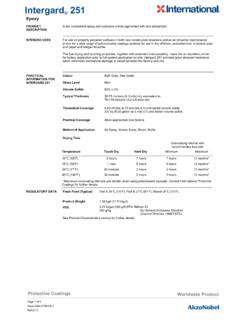
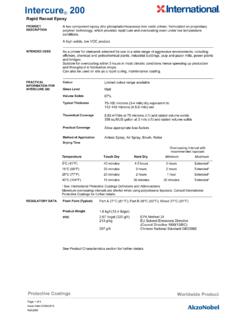
9 These may be subject to variation depending on factors such as differences in color and normal manufacturing tolerances. Low molecular weight reactive additives, which will form part of the film during normal ambient cure conditions, will also affect VOC values determined using EPA Method 24. *Only available in Europe, China, Middle East, Africa and CHARACTERISTICSWhen it is necessary for Interzinc 22 is to be overcoated by itself due to low dry film thickness the coating surface must be fresh and unweathered. A minimum of 2 mils (50 microns) of any subsequent coat of Interzinc 22 is needed to ensure good film formation. Before overcoating with recommended topcoats ensure the Interzinc 22 is fully cured (see above) and if weathering has occurred all zinc salts should be removed from the surface by fresh water washing, and if necessary scrubbing with bristle brushes. Typical topcoats and intermediates are: Intercure 200 Intergard 475 HSIntercure 420 Intertherm 50 Intergard 251 Interseal 670 HSIntergard 269 Intertherm 715 Intergard 345 In some cases it may be necessary to apply a mist coat of suitable viscosity to minimize bubbling.
10 This will depend upon the age of the Interzinc 22, surface roughness and ambient conditions during curing and application. Alternatively, an epoxy sealer coat, such as Intergard 269, can be used to reduce bubbling problems. For other suitable topcoats/intermediates, consult International Protective COMPATIBILITYPage 3 of 4 Interzinc 22 inorganic zinc -Rich SilicateRect TopRect BottomDetail TopFurther information regarding industry standards, terms and abbreviations used in this data sheet can be found in the following documents available at : Definitions & Abbreviations Surface Preparation Paint Application Theoretical & Practical Coverage Interzinc 22 Application Guidelines Individual copies of these information sections are available upon request. ADDITIONAL INFORMATIONThis product is intended for use only by professional applicators in industrial situations in accordance with the advice given on this sheet, the Material Safety Data Sheet and the container(s), and should not be used without reference to the Material Safety Data Sheet (MSDS) which International Protective Coatings has provided to its customers.