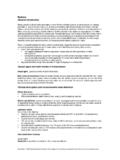
Transcription of INTRAVENOUS IMMUNOGLOBULIN (IVIG) …
1 Starship Children's Health Clinical Guideline Note: The electronic version of this guideline is the version currently in use. Any printed version can not be assumed to be current. Please remember to read our disclaimer. INTRAVENOUS IMMUNOGLOBULIN ( ivig ) THERAPY. PRACTICAL ASPECTS. Introduction Premedication Indications for ivig Infusion Preparations Adverse Effects Dosage Monitoring Consent References Introduction Concentrates of human globulin have been used to prevent infectious diseases for more than 50. years. Purified preparations of gammaglobulin are available for INTRAVENOUS use ( ivig ). ivig has been used in a multitude of clinical scenarios, and the range of disorders in which it has positive therapeutic impact is likely to continue to increase. Indications for ivig . 1. Immune deficiency with antibody deficiency 2.
2 Idiopathic Thrombocytopenic Purpura (see ITP guidelines in this manual). 3. Kawasaki's disease 4. Other Preparations Preparations In New Zealand the available INTRAVENOUS preperation is Intragam P, in a 6% solution. Intragam P is made using serum from New Zealand blood donors at the Commonwealth Serum Laboratory in Melbourne. Dosage The replacement dose for immunodeficiency patients is generally 400-600 mg/kg each 3 - 4. weeks. Assessment of dose adequacy will be made clinically and by measuring the trough IgG, which will generally be kept >7g/l. Immunomodulation ( in treatment of ITP or Kawasaki's) will require higher doses of ivig . In treatment of other conditions ( haemolytic anaemia) very high doses have been used. Consent Prior to the first infusion informed consent needs to be obtained.
3 There is a patient information leaflet on Intragam P from the Blood Transfusion Service. Author: Dr Jan Sinclair Service: Immunology Editor: Dr Raewyn Gavin Date Issued: Reviewed: June 2007. INTRAVENOUS IMMUNOGLOBULIN ( ivig ) Therapy Practical Aspects Page: 1 of 3. Starship Children's Health Clinical Guideline Note: The electronic version of this guideline is the version currently in use. Any printed version can not be assumed to be current. Please remember to read our disclaimer. INTRAVENOUS IMMUNOGLOBULIN ( ivig ) THERAPY. PRACTICAL ASPECTS. Premedication Premedication is sometimes but not always required. Paracetamol and antihistamines can be useful; rarely patients may require premedication with corticosteroids. Infusion Infusion can be given via a butterfly, angiocath or central access. The Intragam P should be allowed to reach room temperature.
4 ivig is given undiluted, and can be directly connected to the infusion giving set. It should not be used after its expiry date Vital signs (HR, RR, BP and temperature) should be monitored prior to the infusion and then each 30 minutes until the infusion is complete. Infusions should be commenced at low rates and increased as tolerated. This is to minimise the chance of adverse reactions to infusion. The Intragma P product information suggests an intitial rate of 1ml/minute, increasing after 15 minutes in increments to a maximum of 3-4ml/minute. For the first infusion an even slower initial rate should be used ( ). Rates of infusion in children should be appropriate for their weight with starting rates of 1ml/kg/hr (or for first infusion). Using this calculation the following table gives an indication of rate for weight.
5 For children on regular infusions the maximum rate can at times be increased further. Weight Rates infusion (ml / hr). First 15 minutes * Next 15 Next 15 Until finished minutes minutes 5kg 3 6 12 25. 10kg 6 12 25 50. 15kg 10 20 40 75. 20kg 12 25 50 100. 25kg 15 30 60 125. 30kg plus 20 40 80 150. * slow starting rate for 1st infusion only In some situations ( Kawasaki's) the rate may need to be slower if there is concern about cardiac function or fluid overload. The rate may also need to be slower in the presence of active infection. Adverse Effects 1. Dose related: including flushing, chest tightness, fever, nausea and vomiting, and hypotension. These are seen more often in immune deficient patients receiving their first infusion. If the infusion is slowed or stopped it is usually possible to complete the infusion after the symptoms have resolved.
6 Author: Dr Jan Sinclair Service: Immunology Editor: Dr Raewyn Gavin Date Issued: Reviewed: June 2007. INTRAVENOUS IMMUNOGLOBULIN ( ivig ) Therapy Practical Aspects Page: 2 of 3. Starship Children's Health Clinical Guideline Note: The electronic version of this guideline is the version currently in use. Any printed version can not be assumed to be current. Please remember to read our disclaimer. INTRAVENOUS IMMUNOGLOBULIN ( ivig ) THERAPY. PRACTICAL ASPECTS. 2. Anaphylaxis: Anaphylaxis to ivig is rare and has been suggested to be due to anti-IgA. antibodies in the recipient. If an individual has absent IgA they may make IgE or IgG against IgA, and hence react with the small amounts of IgA in ivig preparations. The infusion should be stopped and appropriate resuscitation commenced (refer to the anaphylaxis guideline).
7 3. Headache: Mild headaches are not uncommon and may respond to reduction in rate, or simple analgesia. There have been cases of aseptic meningitis occurring after ivig . 4. Transmission of Infection: Hepatitis B has not been found to be transmitted by ivig . To date HIV has not been transmitted by ivig . There were several outbreaks of hepatitis (subsequently identified as Hepatitis C) in the late 1980's and early 1990's. Current preparations of ivig have a manufacturing step which inactivates Hepatitis C. To date there have been no cases of CJD. known to be transmitted by ivig , however this remains a theoretical risk. 5. Other: cases of haemolysis, thrombosis with stroke, renal insufficiency, and alopecia in association have been reported. Monitoring and Documentation Immunoglobulins Immunodeficient patients should have IgG (+/- IgA and IgM) checked regularly.
8 The trough IgG is a factor in determining whether a dose is adequate, but the clinical status of the patient is also important. After a change in ivig dose it will take 3 - 5 half lives to reach a new steady state. The half-life of ivig is 25 - 32 days in immunodeficient patients. Consider checking serum immunoglobulins in patients about to receive ivig for other indications, as immunodeficiency can be associated with, for example, haemolytic anemia or thrombocytopaenia. Liver enzymes Should be monitored each 3-4 months. Records Should be kept of the amount of ivig given, condition of the patient and observations during infusion. The sticker from the bottle with the batch number of the ivig should be placed in the patient's chart. This is important in case of reaction to the ivig or should the need arise to trace recipients of particular batches.
9 References Adverse effects of INTRAVENOUS IMMUNOGLOBULIN therapy. Ryan ME et al. Clinical Pediatrics, Jan 1996, p23. Indications for the use of INTRAVENOUS IMMUNOGLOBULIN . Keller T et al. Med J Aust, Aug 1993, p204. Indications for the use of INTRAVENOUS gammaglobulin. Schiff R. Ann All, June 1992, p447. Therapy of immunologic disease. Polmar SH, Sorensen RU. In Clinical Immunology Rich et al, Mosby, 1996. Data sheet: Intragam P. Author: Dr Jan Sinclair Service: Immunology Editor: Dr Raewyn Gavin Date Issued: Reviewed: June 2007. INTRAVENOUS IMMUNOGLOBULIN ( ivig ) Therapy Practical Aspects Page: 3 of 3.