Transcription of INTRODUCTION TO THE FIVE FACTOR MODEL AND THE …
1 INTRODUCTION TOTHE FIVE FACTOR MODEL AND THE WORKPLACE BIG FIVE PROFILE INTRODUCTIONAt Paradigm Personality Labs, we believe understanding people is the key to unlocking business success. The WorkPlace Big Five Profile , our premiere personality assessment, is widely leveraged for human capital performance on nearly every global corporations to private consulting firms, the WorkPlace Big Five Profile offers in-depth personality insights that help people thrive in any to as the gold standard of personality measurement by psychologists and researchers, the Five FACTOR MODEL (FFM) is the core of the WorkPlace Big Five Profile.
2 This MODEL defines personality through five distinct dimensions, and has been heavily researched and validated over time. A pure FFM tool, our assessment is one of the most psychometrically valid and reliable assessments in the industry. It is appropriate for all Human Resources and Organizational Development this INTRODUCTION , you will learn about:The Five FACTOR ModelThe Big Five personality dimensionsPopular applications of the WorkPlace Big Five Profile We hope this document provides you with a stronger understanding of the underpinnings of the WorkPlace Big Five Profile , and has you ready to unlock business success through your people.
3 There are a variety of different perspectives in the field of However, the most commonly used and accepted is the Five- FACTOR MODEL . Piers Steel, Joseph Schmidt, & Jonas Shultz (2008)THE FIVE- FACTOR MODELFIVE FACTOR MODEL INTRODUCTIONThe terms Big Five and Five- FACTOR MODEL are interchangeable. This empirically-based MODEL provides researchers with common language to identify and describe the individual traits that determine human behavior. Psychologists and personality researchers are using it as the primary means of understanding and interpreting personality.
4 Language as the DifferentiatorPersonality theories, or models, are metaphors for describing something nearly indescribable -- the human personality. Some metaphors are vaguer than others for example, a PET brain scan is less vague than a pencil and paper test. Through this logic, the study of personality has been one of minimizing vagueness. It is from language itself and not theories, that we extract the source metaphor for describing Components of the Five- FACTOR MODEL Personality has 5 dimensionsScores on dimensionsPersonality is best described by individual traits rather than type groupings.
5 Strength of individual scores indicates personality preferences. People scoring in the midrange prefer a balance of the two extremes for that of the 5 dimensions, or traits reflects these physiological activity of an underlying arousal system. For each behavioral arousal system, a unique type of stimulus triggers the arousal system into a new, different, or increased Francis Galton proposed an idea of a lexical hypothesis- that language descriptors could provide input for a framework for reduced these terms to 171 by eliminating synonyms and discovered 16 clusters of personality and Odert explored this hypothesis and found 4,504 descriptive personality terms in the most comprehensive English dictionary at the time.
6 1954-1961 These studies propelled Air Force personnel researchers Tupes & Christal to conduct exhaustive computer-harnessed lexical studies, establishing the five factors we know today. Unfortunately, their work was published in an obscure Air Force publication. The Five FACTOR MODEL evolved over close to a century. Because it is an empirical MODEL , wide-scale validation of the MODEL was not possible until the advent and availability of computers. The timeline below traces the of Five FACTOR MODEL Development1884 The FFM is used as a common language, human development and research tool in business and academic applications.
7 Businesses apply the MODEL to best align leaders, teams and employees with their roles and with business objectives. Warren Miller, at the University of Michigan, learned of Tupesand Christal s work and replicated the study and confirmed the five- FACTOR structure for trait taxonomy. These five factors are what we now know today as theFive FACTOR MODEL (or Big Five). 1980 sWidely accessiblecomputing allowed personality researchers to exhaustively explore the in FFM Research and Application Over the past 3 decades there has been exponential growth in the research and application focused on the Five- FACTOR MODEL of Personality.
8 A sampling of applications and topics includes:Uncovering physiological basis of traitsCorrelating traits to effective leadershipBig Five Traits as the basis for estimating person-environment fitThe Big Five as a universal language for describing individual differences (cross-cultural acceptance)The Big Five as the new basis of consumer behaviorThe Big Five as the basis of learning design (classroom, coaching, teambuilding, relationships, etc.)The WorkPlace Big Five Profile measures the five dimensions of the FFM and applies them to the workplace.
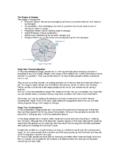
9 We call these five dimensions Super Traits. Each Super Trait is much like a container, holding multiple Subtraits that define the Super ForStability(N)Accommodation(A)(E)Extrav ersion(O)OriginalityConsolidation(C)SUPE R TRAITSEach of the Super Traits, including their respective Subtraits, are described in detail on the following WorkPlace Big Five DimensionsNeed for Stability (N) refers to the how a person responds to stress. More resilient persons tend to handle stressful workplace situations in a calm, steady, and secure way.
10 More reactive persons tend to respond in an alert, concerned, attentive, or excitable way, thus creating the opportunity to experience more workplace stress than others. Biological Basis: The arousal system involved with Need for Stability (N) is the autonomic nervous system. The stimulus that triggers it is a stressor, which elicits the general adaptation syndrome, better known as the fight-or-flight response. NNeed For Stability (N)Resilient (N-)On the low end of the continuum are the Resilients (N-).