Transcription of Kindergarten: (Reading Literary, Informational, Foundational)
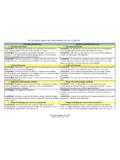
1 *With support, ask and answer key details in literary (fiction) and informational texts *Recognize and name upper and lower case letters *Blend and segment word parts ( , t op, m-op, h-op)* Count, pronounce, blend and segment syllables *Isolate and pronounce initial sound, middle vowel sound and final sound in (CVC) consonant-vowel-consonant words ( , /c/ /a/ /t/)*With support, retell familiar stories in literary (fiction) texts; retell key details in informational texts *Read high frequency words ( , my, can, they, this)*Demonstrate basic knowledge of long and short vowels*With support, describe the relationship between pictures and textGeorgia Standards of Excellence / English Language Arts kindergarten : ( reading literary , informational , Foundational) Activities to Support Academic Growth at Home Standard (What Students Need to Know) Sample Activities (What You Can Do to Support Growth) With support, ask and answer key details in literary (fiction) and informational texts Read with your child each day Ask questions about important details in the text (who, what, when, where, why and how) Invite your child to ask questions, to predict, and to make inferences (use clues from the text and what they know to draw conclusions) Count, pronounce, blend, and segment syllables in words Encourage your child to clap and count the syllables in their names and in a variety of multiple-syllable words found in story books and poetry ( , the name A-dri-an-na, the word Oc-to-ber) Invite your child to put words together and pull them a part ( , football/foot and ball, classroom/class and room)
2 With support, describe the relationship between pictures and text in the story Show your child the cover of a book and read the title. Ask them to predict what they think the story will be about based on the cover illustrations. Continue with each page of the story. Challenge their thinking by asking what in the illustration caused them to draw that conclusion. After reading , ask what changes they would make if they were the illustrator and how would their new illustrations help the reader understand the story. *The visual and selected standards for reading highlight the increase in complexity over the course of the year Beginning of kindergarten End of kindergarten *Using a combination of drawing, dictating, and writing to compose narratives (stories), opinion, and expository ( informational ) pieces*With guidance and support respond to questions and suggestions from peers to add details to writing*With guidance and support, participate in shared research and writing projects Georgia Standards of Excellence / English Language Arts kindergarten : Writing kindergarten .
3 reading (Foundational, literary , informational ) Activities to Support Academic Growth at Home Standard (What Students Need to Know) Sample Activities (What You Can Do to Support Growth) Using a combination of drawing, dictating, and writing to create narratives (stories), opinion, and expository ( informational ) pieces Ask your child to retell a story in words and/or pictures With guidance and support, respond to questions and suggestions from peers to add details to writing Ask your child questions so s/he can add details to his/her writing or drawing ( , What time of day does the story take place? or What color was the family s car?) With guidance and support, participate in shared research and writing projects Engage your child in a family journal, where you and your child write about events, experiences, thoughts, and opinions Invite your child to write messages, grocery lists, letters, notes, and other household texts *The visual and selected standards for listening and speaking highlight the increase in complexity over the course of the year Beginning of kindergarten End of kindergarten *Continue a conversation through multiple exchanges*Ask and answer questions to seek help, get information or to clarify something *Add drawings to descriptions *Ask and answer questions about key details in books read orally or information presented orally*Describe familiar people, places, things, and events and, with prompting and support, provide additional details*Speak audibly (clearly with proper volume)
4 And express thoughts, feelings, and ideas clearlyGeorgia Standards of Excellence / English Language Arts kindergarten : Speaking and Listening kindergarten : reading (Foundational, literary , informational ) Activities to Support Academic Growth at Home Standard (What Students Need to Know) Sample Activities (What You Can Do to Support Growth) Continue a conversation through multiple exchanges Engage your child in a conversation when in the car, walking the neighborhood, or at the store Ask your child to share feelings and emotions Ask and answer questions about key details in books read orally or information presented orally Invite your child to ask and answer questions about something heard Speak audibly (clearly with proper volume) and express thoughts, feelings, and ideas clearly Encourage your child to speak loudly and clearly so others will understand *The visual and selected standards for listening and speaking highlight the increase in complexity over the course of the year Beginning of kindergarten End of kindergarten *Form plural nouns when speaking ( , dog, dogs)* Understand and use question words ( , who, what, when, where, how)* Print many upper-and lower-case letters*Write a letter or letters for many of the consonant and short vowel sounds *Identify new meanings of familiar words ( , duck, duck)*Produce and expand complete sentences in shared language activities (speaking and writing)*Demonstrate understanding of frequently occurring verbs and adjectives by relating them to their opposites *Begin to distinguish shades of meaning among verbs describing the same action ( , walk, strut, prance)
5 By acting them out*Use words and phrases acquired through conversations, independent reading and being read toGeorgia Standards of Excellence / English Language Arts kindergarten : Language Activities to Support Academic Growth at Home Standard (What Students Need to Know) Sample Activities (What You Can Do to Support Growth) Print many upper- and lower-case letters Invite your child to practice writing letters and words Engage your child in a matching activity to match upper and lower case letters correctly Identify new meanings of familiar words When reading with your child, point out examples of multiple meaning words in the story ( , The duck is in the water. My dad is tall so he had to duck under the doorway.) Use words and phrases acquired through conversations, independent reading and being read to Introduce new words to your child to support vocabulary development Encourage your child to use language to express ideas, opinions, wonderings *The visual and selected standards for language highlight the increase in complexity over the course of the year Beginning of kindergarten End of kindergarten