Transcription of l Electrolyte Replacement Guidelines - SORT
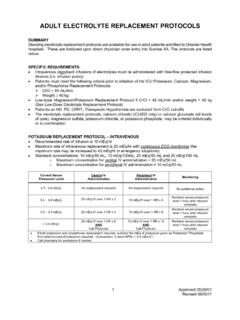
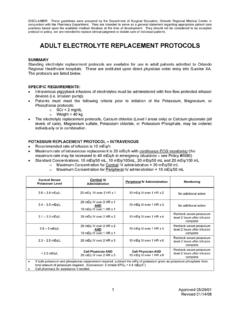
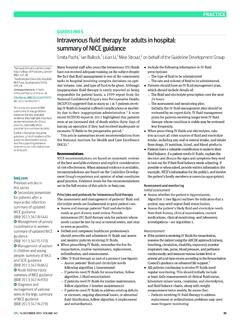
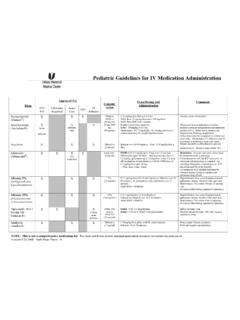
1 L PROBLEM Electrolyte Replacement Guidelines TREATMENT Hypokalaemia Mild( mmol/L) Moderate( mmol/L) and asymptomatic Prescribe oral supplementation if tolerated. Oral potassium chloride: twice daily initially, adjusted to requirements. Available as: Kay-Cee-L liquid (1mmol/ml); Sando-K soluble tablets (12mmol per tablet); Slow K slow release (8mmol per tablet). If oral supplementation is not possible, use potassium containing maintenance fluids (ready mixed) 10mmol/20mmol potassium chloride in 500ml sodium chloride 5% Hypokalaemia Severe (< ), and/or symptomatic Prescribe intravenous potassium Replacement . Ensure hypomagnesaemia is also corrected as this will assist in the retention of potassium Symptoms of hypokalaemia: ECG changes include flattening of the T wave, appearance of U waves CENTRAL INTRAVENOUS ADMINISTRATION SHOULD ONLY OCCUR IN AN INTENSIVE CARE SETTING AND AFTER DISCUSSION WITH A SORT CONSULTANT ONLY USE ready mixed solutions for Intravenous administration 20mmol potassium chloride in 500ml sodium chloride 20mmol potassium chloride in 500ml sodium chloride 5% Maximum infusion concentration/rate: Peripheral: 20mmoL potassium in 500ml.
2 Maximum rate of infusion is 5ml/kg/hr = without ECG monitoring. Maximum rate of infusion is = with ECG monitoring in HIGH CARE areas only PROBLEM TREATMENT LOW MAGNESIUM Mild ( mmol/L) Prescribe oral supplementation if tolerated. Oral magnesium: mmol/kg every 8 hours (over 40kg, max dose = 8 mmol) Magnesium glycerophosphate 4 mmol tablets, or 2mmol capsules Magnesium oxide 4 mmol capsules. In hyperphosphataemia use magnesium oxide. Caution: oral magnesium is poorly absorbed and can cause diarrhoea. LOW MAGNESIUM Severe(< ) or symptomatic Prescribe intravenous Replacement . Symptoms of hypomagnesaemia: Lethargy, confusion, tremor, ataxia, nystagmus, tetany, seizures, ECG changes (prolonged PR & QT intervals) Hypomagnesaemia may contribute to hypokalaemia and hypocalcaemia. Intravenous magnesium sulphate: mmol/kg over 2 hours Doses may be given more rapidly over at least 20 minutes BUT ONLY AFTER DISCUSSION WITH SORT CONSULTANT Available as 10% magnesium sulphate (contains ) which may be given either peripherally or centrally.
3 May be used undiluted, or diluted with sodium chloride or glucose 5%. IF using 50% magnesium solution, dilute each ml up to 5mls with either NaCl or 5% glucose PRIOR to administration Caution: may cause vasodilation and hypotension. Monitor blood pressure during and after infusion Electrolyte Replacement Guidelines SORT May 2018 Review 2021 PROBLEM TREATMENT LOW PHOSPHATE Severe (< mmol/L) Symptoms: Muscle weakness, paraesthesia, cranial nerve palsy, reduced deep tendon reflexes. In severe cases haemolytic anaemia or rhabdomyolysis can occur. Intravenous sodium glycerophosphate Available as injection containing 1 mmol phosphate and 2 mmol sodium per ml Neonate 1month 2 years 2-8 years 9-17 years : 1 mmol/kg : mmol/kg : mmol/kg : 10 mmol (NOT per kg) All replacements should be given over 12 hours. Dilute prior to administration with glucose 5% or sodium chloride For peripheral use dilute to mmol/ml. For central administration, may be diluted to mmol/ml.
4 Do not y-site with any other drugs or infusions Caution: administration of intravenous phosphate to hypercalcaemic patients may result in precipitation of calcium phosphate OTHER hospitals may use different formulations and different precautions may apply Electrolyte Replacement Guidelines PROBLEM TREATMENT Hypocalcaemia Ionised Ca2+ < mmol/L Aim for mmol/L Prescribe oral supplementation if tolerated. Oral Calcium 0-4 years mmol/kg four times a day 5-12 years mmol/kg four times a day 12-18 years 10 mmol four times a day Intravenous Dose For rapid correction of hypocalcaemia Dose of 10% Calcium Gluconate - maximum of 20ml. (DO NOT use Calcium Chloride. Calcium Gluconate provides less available calcium than Calcium Chloride and is thus safer to use.) Preparation of solution Use as a neat solution. If dilution is required, add to 5% Glucose or Sodium Chloride to a concentration of mmol/ml (20mg/ml). Mix well. Label clearly.
5 Remove prescribed dose from syringe and label. Route ONLY via central line with no other infusions in progress. Rate of administration Normal maximum rate over 30 minutes. It may be given more rapidly (over 5-10 minutes) in an emergency situation, but only with a doctor in attendance. Intravenous Dose When calcium is required as an inotrope infusion via central or I/O line only Dose - 0-1 month of 10% Calcium Gluconate 1 month 18 years of 10% Calcium Gluconate SORT May 2018 Review 2021