Transcription of LACE Scoring - Quick Reference Guide - Neurotone …
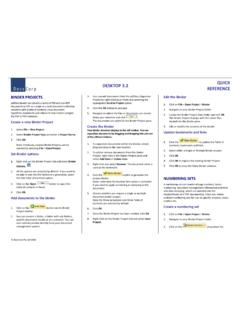
1 LACE Scoring - Quick Reference GuideIt is important to remember that the difficulty of the training increases as the patient improves. The patient will always get about half of the presentations incorrect, no matter how much improvement they have made. The training is finding the threshold for these tasks (like in a hearing test). All improvement will be seen in the scores, not in the number of correct presentations. Scores may fluctuate depending on the subject matter, general interest of the content, and the attentiveness of the important measure is the overall trend of the TaskScoring Trends To Look ForPatient Counseling NotesOther ConsiderationsSpeech-In-Noise A decrease in score indicates an improvement. The average patient has about a point decrease in score during normal hearing listener will have a score of about 2 dB SNR or less, with good speakers.
2 High scores may indicate the need for directional microphones or assistive the ability to follow speech in a noisy background. It can be affected by hearing loss and the ability to block out background noises (this ability decreases in normal healthy aging).Rapid Speech An increase in score indicates an improvement. The average patient has about a increase in score during training. A score of means the patient can only follow speech at slow conversational speeds. A score of means that the patient can follow speech at 2 times the rate of slow conversational the ability to follow fast speech with some of the speech information removed. It can be affected by hearing loss and by the effects of normal aging (slower processing speed).Word MemoryAn increase in score indicates an improvement. The lowest score possible is a and the highest score possible is a A low score (lower than 3) indicates either significant difficulty remembering spoken information or difficulty understanding speech in a quiet background.
3 Reflects the ability to understand and remember specific speech information (auditory memory). It can be affected by normal aging (working memory skills) and by hearing SpeakerA decrease in score indicates an improvement. The average patient has about a 3 point decrease in score during normal hearing listener will have a score of about 1 dB SNR or less, with good speakers. High scores may indicate the need for directional microphones or assistive the ability to block out a single speaker and focus on another. It can be affected by hearing loss and by the ability to block out unwanted signals.