Transcription of Lake Chad Basin Complex Emergency Fact Sheet …
1 1 KEY DEVELOPMENTS On June 17, more than 800 people arrived in Nigeria s Banki town, located in Borno State s Bama Local Government Area (LGA), from Cameroon s Minawao refugee camp, according to the Office of the UN High Commissioner for refugees (UNHCR). Borno State officials and relief agencies are establishing a new internally displaced person (IDP) site in Bama and considering an additional site in nearby Gwoza LGA to alleviate overcrowding, as population influxes from Cameroon into Nigeria in recent months have strained already limited resources. The Government of Nigeria (GoN) National Emergency Management Agency (NEMA) provided Emergency food assistance to approximately 12,700 households in Borno in mid-June, under the recently launched GoN Special Relief Initiative in the Northeast.
2 The new initiative aims to deliver 30,000 metric tons (MT) of food assistance to displaced households in Adamawa, Bauchi, Borno, Gombe, Taraba, and Yobe states. Since early January, health actors in Niger have recorded nearly 900 suspected or confirmed cases of hepatitis E, of which approximately 60 percent occurred in conflict-affected Diffa Region. The onset of the rainy season has exacerbated the spread of hepatitis E in neighboring Nigeria, where health agencies are also responding to a recent uptick in cases in Borno s Mobbar and Ngala LGAs. Humanitarian agencies in both countries are bolstering water, sanitation, and hygiene (WASH) services, educating communities on safe sanitation practices, and improving coordination among WASH actors and other stakeholders to prevent further spread of hepatitis E.
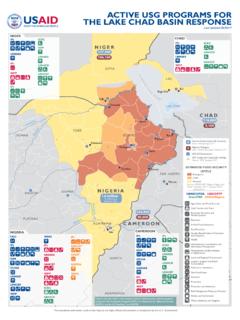
3 1 USAID s Office of Foreign Disaster Assistance (USAID/OFDA) 2 USAID s Office of Food for Peace (USAID/FFP) 3 Department of State s Bureau of Population, refugees , and Migration (State/PRM) HUMANITARIAN FUNDING FOR THE LAKE CHAD Basin RESPONSE IN FY 2016 2017 USAID/OFDA1 $137,309,106 USAID/FFP2 $254,938,366 State/PRM3 $102,862,524 USAID/Nigeria $17,036,443 $512,146,439 HIGHLIGHTS More than 800 people arrive in Nigeria s Banki town from Cameroon, bringing total returns to more than 13,000 since mid-April Nigerian officials, relief actors coordinate to expand IDP site capacity in Borno by establishing new camps to accommodate the population influx Rainy season exacerbates the spread of waterborne hepatitis E in bordering communities of Niger and Nigeria LAKE CHAD Basin - Complex Emergency FACT Sheet #18, FISCAL YEAR (FY)
4 2017 JUNE 23, 2017 NUMBERS AT A GLANCE million Population Requiring Humanitarian Assistance in Nigeria s Adamawa, Borno, and Yobe States UN June 2017 million IDPs in Adamawa, Borno, and Yobe IOM May 2017 127,300 IDPs in Niger Niger Authorities, UN April 2017 223,600 IDPs in Cameroon IOM March 2017 118,800 IDPs in Chad IOM May 2017 205,000 Nigerian refugees in Cameroon, Chad, and Niger UNHCR June 2017 2 REGIONAL On June 17, more than 800 people arrived in Nigeria s Banki town from Cameroon s Minawao refugee camp, UNHCR reports. Previously, approximately 12,500 people returned to Nigeria from Minawao camp between April and May. In a June 21 statement, UN High Commissioner for refugees Filippo Grandi expressed concern regarding the recent influx of people from Cameroon to Nigeria, highlighting inadequate shelter resources, WASH supplies, and other basic services in Banki and other areas of return.
5 High Commissioner Grandi also emphasized that population returns to northeastern Nigeria are not sustainable under present conditions, noting the need to ensure potential returnees receive accurate information about conditions in northeastern Nigeria before returning to areas of origin. NIGERIA To alleviate overcrowding at IDP sites in Bama LGA s Banki town and Gwoza LGA s Pulka town, Borno State authorities and humanitarian agencies are establishing a new IDP site in Bama and considering an additional site in Gwoza, the UN reports. As of mid-June, relief organizations and local officials were assessing available capacity to support up to 20,000 IDPs at new sites in the two LGAs. From December 2016 to June 18, 2017, health actors recorded more than 14,500 suspected cases of meningitis including 1,166 related deaths across Nigeria, including Adamawa, Borno, and Yobe states, according to the UN World Health Organization (WHO) and the GoN.
6 May marked the first month that health actors reported suspected cases of meningitis in Borno; however, overall meningitis incidence in Nigeria has decreased since mid-April. On May 27, health actors concluded the second round of a WHO-supported meningitis immunization campaign in Yobe, vaccinating nearly 136,400 people exceeding the target population in Yobe's Damaturu, Fika, Fune, and Gujba LGAs. In recent weeks, as the rainy season has set in, relief agencies in Nigeria have observed an uptick in suspected and confirmed cases of hepatitis E in Borno s Mobbar and Ngala LGAs. In response, WHO and the Health Sector Working Group the coordinating body for humanitarian health activities, comprising UN agencies, non-governmental organizations (NGOs), and other stakeholders have developed a draft hepatitis E containment plan for northeastern Nigeria, prioritizing disease surveillance, case management, and health coordination activities.
7 With support from USAID/FFP, the UN World Food Program (WFP) has reached approximately 521,000 people in northeastern Nigeria with 11,000 MT of Emergency food assistance to date in June. The UN agency has also reached more than 56,000 children younger than two years of age and 47,000 pregnant and lactating women with life-saving nutrition support. In addition, WFP is supporting efforts among food security actors to standardize food basket components, cash transfer values, and beneficiary targeting approaches to support enhanced food security analysis and coordination efforts. NEMA reports reaching nearly 12,700 households in Borno with in-kind food assistance from June 8 12 as part of the recently launched GoN Special Relief Initiative in the Northeast.
8 According to NEMA, the new initiative will provide approximately 30,000 MT of food assistance from grain reserves across the country to displaced households in Adamawa, Bauchi, Borno, Gombe, Taraba, and Yobe states. With USAID/OFDA support, the International Organization for Migration (IOM) is providing Emergency shelter and psychosocial support services to vulnerable populations in Adamawa, Borno, and Yobe. In May, IOM constructed more than 1,800 Emergency shelters for conflict-affected households in Adamawa and Borno, distributed Emergency shelter kits to more than 500 Borno households, and established shaded areas to provide temporary shelter for new arrivals to Pulka. IOM also continues to provide Emergency mental health care and psychosocial support services to IDPs in Borno and recent returnees in Banki, Gwoza, and Pulka towns.
9 In addition, IOM recently expanded its psychosocial support activities to reach conflict-affected populations in Yobe s Gujba and Gulani LGAs. In May, IOM reached more than 26,200 people in northeastern Nigeria with mental health care and psychosocial support interventions, including individual and group counseling sessions. CAMEROON In May, USAID/FFP partner WFP provided approximately 190,000 IDPs and Nigerian refugees in Cameroon s Far North Region with in-kind and cash-based Emergency food assistance. Additionally, WFP is targeting more than 3 100,000 children younger than five years of age each month with fortified foods and is collaborating with the Government of the Republic of Cameroon and the UN Children s Fund (UNICEF) to provide integrated services, including immunizations and WASH support, for children vulnerable to acute malnutrition.
10 NIGER According to the Government of Niger, approximately 157,000 people including populations residing in Diffa are at risk of flooding during the country's June-to-October rainy season. From June 13 15, heavy rains in southern and southwestern Niger including the capital city of Niamey and Maradi, Tillabery, and Zinder regions resulted in at least 14 deaths and destroyed approximately 400 houses, the UN reports. As of June 16, local authorities had identified a site in Niamey to host affected households and were mobilizing Emergency shelter supplies and relief commodities. Between early January and mid-June, health actors in Niger recorded nearly 900 suspected and confirmed cases of hepatitis E, including 33 deaths, the UN reports. More than 500 cases approximately 60 percent occurred in conflict-affected Diffa.