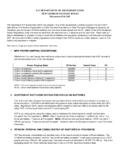
Transcription of LITHIUM-ION BATTERY MATERIAL SAFETY DATA …
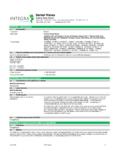
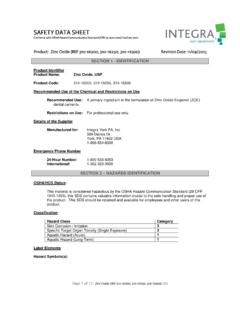
1 MATERIAL SAFETY data Sheet LITHIUM-ION BatteryEffective Date: Jan 1, 2010 LITHIUM-ION BATTERY MATERIAL SAFETY data SHEET (MSDS) SECTION I - MANUFACTURER INFORMATION Manufactured for: Miltex, Inc. 589 Davies Drive York, PA 17402 II - HAZARDOUS IN GREDIE NTS MATERI AL OR INGREDIENT PEL (OSHA) TLV (ACGIH) %/wt. Acetylene Black (CAS# 1333- 86-4) mg/m3 TWA (as carbon black) mg/m3 TWA (as carbon black) 0-2 Biphenyl (CAS# 92-52-4) 1 mg/m3 TWA ppm TWA ppm TWA 0-15 Diethyl Carbonate (CAS# 105- 58-8) None established None established0-15 Dimethyl Carbonate (CAS# 616- 38-6) None established None established0-15 Ethyl Methyl C ar bonate (CAS# 623-53-0) None established None established0-15 Ethylene Carbonate (CAS# 96-49-1) None established None established0-15 Graphite (CAS# 7782-42-5)
2 5 mg/m3 TWA (r espirable fraction) 15 mg/m3 TWA (t otal dust) 2 mg/m3 TWA (r espirable fraction)7-22 lithium Cobalt Oxide (CAS# 12190-79-3) mg/m3 TWA (as Co) mg/m3 TWA (as Co) 15-30 lithium Hexafluorophosphate (CAS# 21324-40-3) None establishedNone established 0-5 lithium Tetrafluoroborate (CAS# 14283-07-9) None establishedNone established0-5n-Methyl P yrrolidinone (CAS# 872-50-4) None establishedNone established0-1 Oxalic Acid (CAS# 144-62-7) 1 mg/m3 TWA 1 mg/m3 TWA 2 mg/m3 STEL 0-1 Propylene Carbonate (CAS# 108-32-7) None establishedNone established0-15 IMPORTANT NOTE: The BATTERY should not be opened or incinerated.
3 Exposure to the ingredients contained within or their combustion products could be harmful. SECTION III - FIRE AND EXPLOSION HAZARD data If fire or explosion occurs when batteries are on charge, shut off power to charger. In case of fire where lithium ion batteries are present, flood the area w ith water. If any batteries are burning, wat er may not extinguish them, but w ill cool the adjacent batteries and control the spread of fire. CO2, dry chemical, and foam extinguishers are preferred for small fires, but also may not e xtinguish burning lithium ion batteries.
4 Burning batteries will burn themselves out. Virtually all fires involving lithium ion batteries can be controlled with water. When water is used, however, h ydrogen gas may be evolved which can form an explosive mixture with air. LITH- X (powdered graphite) or copper powder fire extinguishers, sand, dry g round dolomite or soda ash may also be used. These mat er ials act as smothering agents. Fire fighters should wear self-contained breathing apparat us. Burning lithium ion batteries can produce toxic fumes including HF, oxides of c ar bon, aluminum, lithium , copper, and cobalt.
5 Volatile phosphorus pentafluoride may form at a temperature above 230 IV - HEALTH HAZARD data Under normal conditions of use, the BATTERY is hermetically sealed. Ingestio n: Swallowing a bat tery can be harmful. Contents of an open BATTERY can cause serious chemical burns of mouth, esophagus, and gastrointestinal tract. If BATTERY or open BATTERY is ingested, do not induce vomiting or give food or drink. Seek medical attention immediately. CALL NATIONAL BATTERY INGESTION HOTLINE for advice and follow-up (202-625-3333) collect, day o r night.
6 Inhalation: Contents of an open BATTERY can cause respiratory i rritation. Inhalation of vapors may cause irritation of the upper respiratory tract and lungs. Provide fresh air and seek medical attention. Page 1 of 3 MATERIAL SAFETY data Sheet LITHIUM-ION BatteryEffective Date: Jan 1, 2010 SECTION IV - HEALTH HAZARD data - (Continued) Skin Absorp tion: N-methyl pyrrolidinone, ethylene carbonate, ethyl methyl carbonate, dimethyl carbonate, and biphenyl may be absor bed through the skin causin g localized inflammation. Skin Contact: Contents of an open BATTERY can cause skin irritation and/or chemical burns.
7 Remove contaminated clothing and wash skin with soap and wat er. I f a chemical burn occurs or if irritat ion persists, seek medical attention. Eye Contact: Contents of an open BATTERY can cause severe irritation and chemical burns. Immediately flush eyes thoroughly with wat er for at least 15 minutes, lifting upper and lower lids, until no evidence of the chemical remains. Seek medical : Acetylene black and cobalt compounds are listed as possible carcinogens by t he International Agency for Research on Cancer (IARC). SECTION V - PRECAUTIONS FOR SAFE HANDLING AND USE Storage: The lithium ion BATTERY should be between 25% and 75% of full charge when stored for a long period of time.
8 Store in a cool, dry, well ventilated area. Elevated temperatures can result in loss of BATTERY p erformance, leakage, or rust. Do not expose the BATTERY to open Containment: Containment of this BATTERY in a manner that obstructs or defeats the SAFETY vent or electrical disconnect mechanisms designed into this BATTERY can result in fire and/or explosion and cause personal injury and device damage. T his BATTERY is not designed to be potted, enclosed in hermetic overpackaging, or sealed by any means that prevents free operation of t he designed saf et y : Do not expose the BATTERY to excessive physical shock or v ibration.
9 S hort c irc uit ing should be avoided, however, accidental short circuiting for a few s econds will not seriously affect the BATTERY . Prolonged short circuits will cause the BATTERY to rapidly lose energ y, could generate enough heat t o burn skin, and may cause the safet y release vents of t he enclosed cells t o open. S ources of short circuits include jumbled batteries in bulk c ontainers, coins, met al jewelry, met al cover ed tables, or met al belts used for assembl y of b atteries in devic es. T o minimize risk of short circuiting, t he prot ective cas e sup plied with the bat tery should be used to cover the terminals when transporting or storing the BATTERY .
10 Do not disassemble or deform the BATTERY . Should an individual cell within a BATTERY become ruptured, do not allow contact with soldering or welding to the BATTERY is required, use of tabbed batteries is recommended. Soldering directly to the cell can damage the BATTERY s af et y s eal, c ause internal damage or short circuit the cell. Charging: This BATTERY is made to be charged many times. Use an approved BATTERY charger. Never use a modified or damaged BATTERY charger. Do not charge for over 180 minutes or repeat charging without inter mittent discharging.