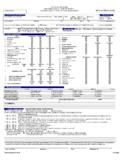
Transcription of LTC-300R Guidelines for Completion
1 LTC- 300r . Guidelines for Completion The form must be received by LOCEU within 10 days of admission. The LTC- 300r is to be completed upon admission for all residents, regardless of pay source. The completed LTC- 300r form is to be mailed to: Oklahoma Health Care Authority Attn: Level of Care Evaluation Unit 4345 N. Lincoln Blvd. Oklahoma City, OK 73105. FORM INSTRUCTIONS. A. IDENTIFYING INFORMATION. DEMOGRAPHIC DATA: Admission Date Date of admission to nursing facility. Discharge/Deceased Date Complete if resident has already been discharged from the facility, or if the resident is now deceased.
2 Client Name Enter resident name in last, first, and middle initial order. Social Security Number Make sure the resident's social security number belongs to the resident, and is listed correctly. This number should match that listed on DHS case files. Date of Birth Resident's date of birth. Race Resident's race. Hispanic Ethnicity Y/N. Sex Circle M' or F'. Medicaid/Private/VA/Medicare Select the applicable pay source(s). Facility Name/Address/Client Address Identify facility name and the Mail to' address as you indicated on your Medicaid contract.
3 Facility Provider Number Make sure the correct facility provider number is used. DHS Case Number Enter case number if applicable. RID Number Enter the Medicaid identification number, if applicable. New Admit/Interfacility Transfer/Name of Transferring Facility . Indicate the type of admission. For any resident transferring from another NF, indicate the name of the transferring facility in the space provided. County Enter the county name or number. Prior Living Arrangement Indicate the resident's living arrangement, immediately prior to NF admission, by selecting from the choices listed.
4 B. CLIENT. ASSESSMENT. RATING GUIDE FOR COMPLETING ADLs AND IADLs Definition of Answers Independent- Indicates the client is able to perform the activity without assistance from another person. Assistance with equipment to perform the activity is an independent response. This receives a 0. score. No assistance also means that the consumer can perform the activity without supervision or reminders. Needs Help-Indicates that the client requires supervision, reminder, or physical assistance from another person during part of the activity.
5 Total Assistance-Indicates that the client is completely unable to perform the activity without assistance from another person(s). NOTE: If the client is not able to answer the questions or you do not agree with the client's response, seek information from another source ( caregiver). ADLs: 1. Dressing/Grooming Dressing includes getting out of clothes, putting them on and fastening them; it also includes putting on shoes. Grooming includes combing hair, washing face, and brushing teeth. 2. Bathing Bathing includes running the water, taking the bath or shower, and washing all parts of the body including hair.
6 3. Eating Eating includes eating, drinking from a cup and cutting up food. 4. Transferring Transferring refers to the actions of getting in and out of a tub, bed, chair, sofa or vehicle. If only equipment is needed to transfer score Independent . If another person (with or without equipment) is needed, score Needs Help or Total depending on amount of assistance needed. 5. Mobility This term includes moving about even with a can or walker or using a wheelchair. Independence in walking refers to the ability to walk/or move yourself short distances.
7 Independence in walking does not include the ability to climb stairs. 6. Bowel/Bladder Function Using the toilet independently includes adjusting clothing, getting to the toilet and getting on/off of the toilet. This item also includes keeping oneself dry and clean. If an accident occurs and the client can manage it alone, he/she is considered Independent . If the client requires assistance the score is Needs Help . If the client is totally incontinent and cannot manage alone, the score is Total . IADLs: 7. Answers/Call on the Telephone This activity includes identifying the ring, picking up the phone, use of the equipment as well as ability to respond effectively to call, etc.
8 8. Shopping/Errands This activity include making lists, selecting needed items, reading labels, reaching shelves, completing purchases. This also includes shopping for food or other things needed, but does not include managing transportation. 9. Arranges Transportation Arranging for and using local transportation or to drive places beyond walking distance. The activity is arranging and using transportation regardless of how the client gets into/onto the car, bus, etc. This is not mobility. 10. Preparation of Meals Preparing meals refers to preparing food (making sandwiches, heating food etc.)
9 , not the nutritional quality of the food. 11. Laundry Doing laundry includes using detergent, putting clothes into the washing machine or dryer, starting and stopping the machine, sorting, folding, and putting away clothes. 12. Housekeeping/Cleanliness Housekeeping includes dusting, vacuuming, sweeping. Keeping their home clean. 13. Manages Money This refers to the client's ow n m oney. Handling m oney includes activities such as paying bills a nd balancing a checkbook, counting money, staying within available resources, etc. 14.
10 Manages Medication This item refers to the ability to set-up, remember, and take one's own medication, in correct doses and methods. NUTRITION: 15. Diet Regular: On no special diets. Modified: On self imposed diet. Example: Low Sodium to manage BP, Low calorie, Low Fat to loose weight. Religious restrictions. Therapeutic: Requires nutritional m anagement that includes therapeutic diets prescribed by a physician that can incl ude maintenance of hydration. Include s dietary suppl ements ordered by physician. Formula Only: Tube feedings.