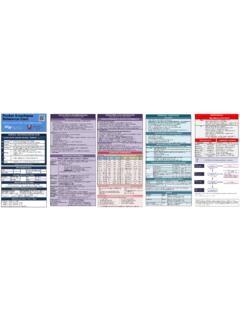
Transcription of MAINTENANCE FLUID REQUIREMENTS RESUSCITATION …
1 Peds E12-0442 Adult E12-0447 Call Resident2-0450OR front desk6-1018 Peds Preop6-1020 Peds PACU6-1035 MRI6-1071iMRI6-0466 Blood Bank6-1404 ICN3-1565 PICU3-1352 Peds CICU3-1955 TCUP4-4089 Med-Surg (5)3-1921 Heme-Onc (6)3-1631OR ## = 2 - 98## Prefixes : 353-xxxx 514-xxxx 476-xxxx 502-xxxxETT Size = (Age/4) + 4 orsize of 5th finger ETT Depth = 3 x ETT size or Age + 11 cm at lipNeonatal Rules: The Neonatal 1-2-3 / 7-8-9 RuleFor preterm + term newborns:MAP = # of weeks PCAEx: By DOL 5, MAP = # weeks PCA + 5Wt range (10-90th %)HRSBPMAPRRP reterm120-17040-6030s50-600-3 y17-5560-9580-12060-8012-20>12 y30-8655-8590-13070-80s10-16 NORMAL HEMODYNAMIC INDICESP ediatric Pocket Reference CardAgeWeight (kg)ETTETT @ lips (cm)Laryngoscope bladeLMAMaskOral AirwayNeonate< 01neonate30 Neonate2-33 0-11neonate30 Neonate>33 0-11infant401-6 mo4-63 1/Wis 22child/bubble 2/Mac 22bubble 2/Mac gum 2-33small adult80>14y> 2-34med/large adult80-90 PEDIATRIC AIRWAY EQUIPMENTMAINTENANCE FLUID REQUIREMENTS 4-2-1 Rule: Hourly FLUID MAINTENANCE rate 4 mL/kg/hr for each kg up to 10 kg+ 2 mL/kg/hr for each additional kg up to 20 kg+ 1 mL/kg/hr for each additional kg above 20 kgReplace the 1st 1/2 of the pre-op volume deficit (hourly MAINTENANCE IVF x hrs NPO + bowel prep) over the 1st hour of surgeryReplace the 2nd 1/2 of deficit over the remainder of the procedureFluid boluses.
2 10-15 mL/kg/bolus for hypovolemic patientsGLUCOSE REQUIREMENTS FOR NEONATES AND INFANTSN ormal blood glucose for newborns 40-60 mg/dL. Typical newborn basal glucose require-ment is 5-8 mg/kg/min. (D10 at 1 mL/hr = mg/kg/min of dextrose). Start at D10 1/4 NS at 3 mL/kg/hr which approximates hourly MAINTENANCE rate, leaving them slightly dry to administer IV intraop glucose administration to NPO infants under 6 months of age, especially for long procedures. Recommended for infants with:Prematurity/SGA Already on TPN or glucose (D10)Suspected inborn errors of metabolism SepsisMyochondrial myopathies Born to diabetic mothersESTIMATED BLOOD VOLUMEP remature90-100 ml/kgTerm neonate80-90 ml/kgInfant 3 months - 1 year70-80 ml/kgChild > 1 year70 ml/kgBLOOD PRODUCT TRANSFUSION GUIDELINESpRBC 10-15 mL/kg should raise Hgb 2-3 g/dL, Hct by 6-9%For > 20 mL/kg transfusion or cardiac cases, request < 5 day old or washed RBCsFFP 10-15 mL/kg should raise factor levels 15-20%Platelets 10-15 mL/kg should raise platelet count by 30-50,000 Cryoprecipitate: 1-2 units/kg should increase fibrinogen level to 60-100 mg/dLDDAVP mcg/kg given 30 min prior to procedureCriteria for irradiated blood.
3 Prematurity, fetus in utero, bone marrow transplant recipi-ent, critically ill child, patient with decreased cellular immunity, patient receive chemo that results in severe immune suppressionNeonates (< 6 months) bupivacaine/ropivacaine max dose = mg/kg/krChildren (> 6 months) bupivacaine/ropivacaine max dose = mg/kg/hrHydromorphone infusion: 20 mcg/mL, hourly rate 3 mcg/kg/hr; max 5 mcg/kg/hrTest dose mL/kg (1:200000 epi)Single shot caudal local anesthetic: 1 mL/kg ropiv/bupivacaine; max 20 mLSingle shot caudal opioids: morphine 50 mcg/kg or hydromorphone 5-10 mcg/kgLocal Anesthetic Systemic Toxicity Treatment: mL/kg 20% Intralipid followed by continuous infusion mL/kg/min up to mL/kg/min until hemodynamics restoredReduced doses of epinephrine < 1 mcg/kg for hypotensionStart CPR/PALSA void vasopressin, calcium channel blockers, beta blockersEPIDURAL INFUSION RATES & DOSAGESLOCAL ANESTHETIC MAX DOSEP lain (mg/kg)With epi 1.
4 200,000 (mg/kg) vfib and pulseless vtach2 Joules/kg ASYNCHRONOUS repeat up to 4 Joules/kgSynchronous Cardioversion unstable SVT, vtach, a Joules/kg SYNCHRONOUS repeat up to 2 Joules/kgEpinephrine1 mcg/kg to treat hypotension/bronchospasm10 ug/kg IV for cardiac arrestAtropine20 mcg/kg IV (for symptomatic bradycardia or pre-treatment) max dose 1 mg for child and 2mg for adolescentBicarbonate1-2 mEq/kg IV to be guided by blood gas analysisCalcium Chloride10-20 mg/kg IV ( mL/kg of a 10% solution)Adenosinefirst dose: 100 mcg/kg rapid IV push and flush (max 6 mg)second dose: 200 ug/kg (max 12 mg)Magnesium25-50 mg/kg IV for Torsades de Pointes (max 2 g)Amiodarone5 mg/kg IV, max 300mg for vfib and/or vtachProcainamide5-15 mg/kg IV loading dose over 30-60 min, then 20-80 ug/kg/min infusionMALIGNANT HYPERTHERMIA MH Hotline - 1-800-MH-HYPERS igns: increased EtCO2, muscle rigidity, cardiac arrest, arrhythmias, hyperthermia, acido-sis, myoglobinuria1.
5 Call for help2. Stop all triggering anesthetics, convert to TIVA, exchange anesthesia machine3. Dantrolene mg/kg IV (mix with sterile H2O)4. Hyperventilate with 100% O2 to normalize EtCO2 (2-4x patient s minute ventilation)5. Treat hyperkalemia6. Avoid calcium channel blockers for dysrhythmias7. Cool patient: NG lavage with cold water, apply ice externally, infuse cold saline Arterial line: ABG, lytes, Ca++, CPK, AST/ALT, CK, myoglobin9. Sodium bicarbonate 1-2 mEq/kg max 50 mEq to maintain pH > Maintain 2 mL/kg/hr urine output (with diuretics if necessary)ANAPHYLAXISO xygenVentilate with 100% O2 Epinephrine10 mcg/kg IM, max 300 ug1 mcg/kg IV, repeat with increasing doses every 3-5 min PRN, may need continuous infusion mcg/kg/minFluid bolus20 mg/kg isotonic fluids, repeat as necessaryAlbuterol10 puffs if bronchospasm presentHydrocortisone2-3 mg/kg IVDiphenhydramine1-2 mg/kg IV, max 50 mg/kg IV, max 50 mgHYPERKALEMIA TREATMENTS igns: Peaked T waves, Wide QRS, Cardiac ArrestRisk factors: ARF/CRF, Transfusion, Burns, Trauma, GI bleeds, hemolysisCalcium chloride 5-10 mg/kg IV until NSRH yperventilationSodium bicarb 1 mEq/kg/dose IVD50 1 mL/kg + insulin U/kg IVAlbuterol 5-20 mg via nebulizerFurosemide 1 mg/kg IV PRNK ayexalate 1-2 g/kg PO/PRENDOCARDITIS PROPHYLAXIS GUIDELINES AHA 2007At risk conditions1.
6 Presence of prosthetic valve or prosthetic material used for cardiac valve repair2. A history of endocarditis3. A heart transplant with abnormal heart valve function4. Congenital heart disease: Uncorrected or palliated cyanotic CHD, completely repaired CHD with prosthetic material or device during the first 6 months after repair procedure, repaired CHD with residual defects adjacent to prosthetic patch or deviceProcedures requiring prophylaxis in at risk patients1. Dental procedures involving manipulation of gingival tissue or perforation of oral mucosa2. Invasive procedure of respiratory tract involving incision or biopsy of respiratory mucosa3. GI or GU procedures involving contaminated or dirty/infected tissue or in patients septic due to GI or GU infection4. Procedure involving infected skin or musculoskeletal tissueRouteAntibiotic DoseOralAmoxicillin 50 mg/kg PO max 2gIV (unable to take oral)Ampicillin 50 mg/kg IV/IM max 2g orCefazolin 50 mg/kg IV/IM max 1g orCeftriaxone 50 mg/kg IV/IM max 2gAllergic to penicillin* Cephalosporins not recom-mended for PCN anaphylaxis due to cross-reactivityClindamycin 20 mg/kg IV/PO max 600 mg orCephalexin* 50 mg/kg IV/PO max 2g orCephazolin* 50 mg/kg IV/IM max 1-2gVancomycin 20mg/kg IV max 1 gMRSA+Vancomycin 20 mg/kg IV max 1gANTIBIOTICSA ntibioticPediatric DosingAdult DosingDose FreqAmpicillin25-50 mg/kg2 gQ2 HAmpicillin/Sulbactam (Unasyn) mg/kg3 gQ2 HCefotaxime50 mg/kg1 gQ3 HCefazolin (Ancef)25-50 mg/kg2 g, 3 g for > 120kgQ4 HCeftriaxone (Ro-cephin)50-75 mg/kg2 gQ12-24 HClindamycin (Cleocin)10 mg/kg5 mg/kg based on IBWQ8 HMetronidazole (Flagyl) mg/kg500 mgQ6 HNafcillin25-50 mg/kg2 gQ6 HPiperacillin/Tazobac-tam (Zosyn)
7 GQ2 HVancomycin10-15 mg/kg1 g, g for > 80kgDisclaimer: Author not responsible for any errors. It remains the responsibility of the physi-cian to evaluate the appropriateness of a particular therapy or intervention in the context of each clinical situation with consideration to their knowledge, skill and changes to the standard of practice since publication of this reference forumula to predict weight from age: < 8years: weight (kg) = 2 x age + 9>= 8 years: weight (kg) = 3 x agePREOPERATIVE SEDATIVESD iazepam (Valium)PO mg/kg Max 20mgIV: mg/kg/doseKetamineIM: 3-5 mg/kg with atropine 20 mcg/kg and PO: 4-6 mg/kg with MidazolamLorazepam (Ativan)IV/IM/PO: mg/kg/doseMidazolam (Versed)PO: mg/kg Max = 20mgRectal: mg/kg diluted to 3mL salineIntranasal: mg/kg (use nasal atomizer)IM: mg/kg (be wary of injection site pain)IV: mg/kg/dose to max of mg/kgMEDICATIONSACETAMINOPHENPO/IV: 10-15 mg/kgPR: 40 mg/kgMax: 75 mg/kg/24 mg/kg fast IV push with flush, may repeat mg/kg IV after 2 minutesALBUTEROLN ebulized.
8 Mg in 3mL every 20 min or continuousAMINOCAPROIC ACID75 mg/kg (max 5 gram) dilute IV load and in CPB prime. 30-75 mg/kg/hr infusionAMIODARONE5 mg/kg IV load (max 150 mg) over 30 minutes then 5-10 mcg/kg/minATROPINEIV: 10-20 mcg/kgIM/PO: 20-30 mcg/kgBUPIVACAINE (with 1:200,000 epi)Caudal 1st dose: mL/kgRepeat dose: 2/3 of initial dose q 90-120 minutesCALCIUM CHLORIDE5-10 mg/kg IV slowlyArrest: 10 mg/kg IVCALCIUM GLUCONATE30 mg/kg IV mg/kg IV for paralysis in 1-2 minutes, 20-40 minutes until reversibleDANTROLENEsee Malignant Hyperthermia algorithmDESMOPRESSIN DDAVPH emophilia: mcg/kg IV slowlyDiabetes Insipidus: 1-2 mcg IV/SQ q 12 hoursDEMEDETOMIDINEI nfusion: mcg/kg/hr IVLoad: -1 mcg/kg IV load (over 10 - 20 min)DEXAMETHASONEA irway edema: mg/kg IV q6 hoursICP: mg/kg IVPONV: mg/kg IVDEXTROSE (50%) g/kg = 1 mL/kg of mg/kg IV q 4-6 hours; Max 50 mcg/kg/min IV mcg/kg/min IV infusionEPINEPHRINEA rrest: 10 mcg/kg IV/ETTV asopressor: mcg/kg IVInfusion: - 1 mcg/kg/min IVEPHEDRINEIV: mg/kg prn hypotension/bradycardiaESMOLOLB olus: mg/kg IV PRNI nfusion: 50-150 mcg/kg/min IVETOMIDATEI nduction: mg/kg IVMaintenance: 5-20 mcg/kg/min IV infusionFACTOR VIIa90 mcg/kg q 2 hours until hemostasis achieved.
9 Get hema-tology consultFENTANYLA nalgesia: mcg/kg IV, 1-2 mcg/kg intranasalInfusion: 1-5 mcg/kg/hr mg/kg/dose IV/IM q 6-12 mg/kg IV; Max 1 mgGLYCOPYRROLATENMB reversal: mg/kg IVAntisialogogue: mg IV/IMHUMATE PFVIII deficiency: 40-60 U/kg IV then 20-30 U/kg IV q8h (in severe disease with major surgery)vWF deficiency: 40-80 U/kg IV then 40-60 U/kg q8h (Types 2/3) or q24h (Type 1)HYDROCORTISONES tress dose: 1-2 mg/kg IV then 150-250 mg/day (<1y = 25-150 mg/day) q6-8hHYDROMORPHONEIV: 5-10 mcg/kg IVPO/PR: 50-80 mcg/kg q3-6h prnINTRALIPIDL ocal anesthetic toxicity: mL/kg followed by infusion mL/kg/min up to mL/kg/minKETAMINEIV induction: 2-3 mg/kgIM (full) induction: 5-8 mg/kgPR induction: 5-10 mg/kgPreemptive analgesia: 4-12 mcg/ mg/kg IV/IM then mg/kg mg/kg IV increments q5-10min per mg/kg IV/ETTMAGNESIUM25-50 mg/kg/dose IV (watch hypotension) g/kg IV (typically) slowlyMaintenance: IV mg/kg PO/IM/IV/SQ; t1/2 = 18-24 hoursMETHOHEXITALIV induction: 1-3 mg/kgPR induction: 20-30 mg/kgMETHYLPREDNISOLONEA sthma 2 mg/kg IV then 2 mg/kg/day / q4-6hMILRINONELoad: 25-50 mcg/kg IV over 15 minMaintenance: mcg/kg/min mg/kg IV/PO q6h prnMORPHINEA nalgesia: mg/kg/dose IV/IMNALOXONEEnd case sleepy: mcg/kg IV prnOpioid intoxication: 10 mcg/kg IV/IM/ETTNEOSTIGMINE30-70 mcg/kg IV; Max 5mgAdd atropine 20 mcg/kg or glycopyrrolate 15 mcg/kg IVNICARDIPINEA dult loading dose: 5 mg IV over 5-10 minInfusion: mg/hr or mcg/kg/min(a t1/2 = 2-5 min, b t1/2 = 45 min) mcg/kg/min IV mcg/kg/min IV mcg/kg/min IV; Max = 2 mcg/kg/minONDANSETRONPONV: mg/kg IV; Max 4 mgOXYCODONEPO: mg/kg q3-6h mg/kg IV for full paralysis in 3 min, 60-90 min until reversible (80% renal)PHENOBARBITALS tatus epilepticus: 15-20 mg/kg SLOW IV then add 5 mg/kg q20h.
10 Max 30 mg/kg mcg/kg IV bolus PRN mcg/kg/min IV infusionPHENYTOINL oading dose: 15-20 mg/kg IV over 30 min(Do not exceed mg/kg/min IV) mEq/kg SLOW IV mg/kg PO/IM/PR/IV q6-8h; Max 10 mg/kg IV/PO/PR/IM q6-8h PRNMax 25 mg/dose (Not for kids < 2 y)PROPOFOLI nduction: 2-3 mg/kg (higher in children)Infusion 50-250 mcg/kg/minRANITIDINEIV: 1 mg/kgPO: 2 mg/kg (3o min pre-induction)REMIFENTANILIV bolus: mcg/kg IVIV infusion: mcg/kg/min mg/kg IV for paralysis in 1-2 min 20-40 min until reversible (80% hepatic)ROPIVACAINEC audal: 1st dose = mL/kgRepeat dose: 2/3 of 1st dose q 90-120 mg/kg IV; Max mgSODIUM BICARBONATE1-2 mEq/kg IVSUCCINYLCHOLINEIV: 1-2 mg/kg for full paralysis in 30 sec; < 1 year: 2-3 mg/kgIM: 3-5 mg/kg; Max 5 mL at injection siteIntralingual: 1-3 mg/kgSUFENTANILA nalgesia: mcg/kg IVTypical: 10-20 mcg/kg total doseSUGAMMADEXR eversal of rocuronium/vecuronium2 twitches on TOF: 2 mg/kg IV1-2 twitches on PTC but none on TOF: 4 mg/kg IVImmediate reversal: 16 mg/kg IVTERBUTALINE5-10 mcg/kg IV q15 min (max 250 mcg)THIOPENTAL5-8 mg/kg IV (full induction)TRANEXEMIC ACIDC raniosynostosis: 50 mg/kg load over 15 min followed by 5 mg/kg/hr (Goobie 2011)Spine surgery: 100 mg/kg load followed by 10 mg/kg/hrCardiac surgery: Variable regimensVASOPRESSINA dult VF/VT arrest: 40 U IV x 1 dosePeds infusion: milliunits/kg/min IVDiabetes Insipidus.