Transcription of MATERIAL SAFETY DATA SHEET 1 LACQUER …
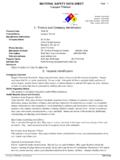
1 1 Page: LACQUER THINNERMATERIAL SAFETY data SHEET230 SpecialHealthFlammabilityInstability05/2 4/200503/15/200606/16/2005 Date Created:Revision:Supercedes Revision:10/14/2009 Printed:FLAMMABILITYHEALTHPPEGPHYSICAL Product and Company IdentificationProduct Name: LACQUER THINNERR eference # Information Company Name:W. M. Barr2105 Channel AvenueMemphis, TN 38113 Phone Number:(901)775-0100 Emergency Contact:3E 24 Hour Emergency Contact (800)451-8346 Barr Customer Service (800)398-3892 Web site Composition/Information on Ingredients200 ppm200 ppmNo Components (Chemical Name)Methanol {Methyl alcohol; Carbinol; Woodalcohol}67-56-1 CAS # %ConcentrationOSHA TWAACGIH TWAO ther Limits ppm200 ppmNo {Benzene, Methyl.}
2 Toluol}108-88-3 % ppm1000 ppmNo % glycol methyl ether acetate (PMAgylcol ether acetate)108-65-6 % ppm200 ppmNo ethyl ketone {MEK; 2-Butanone}78-93-3 % ppm400 ppmNo alcohol {sec-Propyl alcohol; IPA;2-Propanol}67-63-0 % ppmNo Components (Chemical Name)Methanol {Methyl alcohol; Carbinol; Woodalcohol}67-56-1 CAS #No STELOSHA CEILACGIH STELACGIH CEIL ppmNo {Benzene, Methyl-; Toluol}108-88-3 500 ppm/(10min) ppmNo No data .
3 Glycol methyl ether acetate (PMAgylcol ether acetate)108-65-6 No data . ppmNo ethyl ketone {MEK; 2-Butanone}78-93-3 No data . ppmNo alcohol {sec-Propyl alcohol; IPA;2-Propanol}67-63-0 No data . Hazards IdentificationDanger! Extremely flammable. Keep away from heat, sparks, flame and all other sources of ignition. Vaporsmay cause flash fire or ignite explosively. Do not smoke. Extinguish all flames and pilot lights, and turn offstoves, heaters, electric motors and all other sources of ignition during use and until all vapors are gone.
4 Bewareof static electricity that may be generated by synthetic clothing and other OverviewThis MATERIAL is classified as hazardous under OSHA Regulatory Status:Inhalation Acute Exposure Effects:Vapor harmful. May cause dizziness; headache; watering of eyes; irritation of respiratory tract; weakness;drowsiness; nausea; numbness in fingers, arms and legs; depression of central nervous system; loss of appetite;fatigue; hallucinations; light headedness; visual disturbances; giddiness and intoxication; sleepiness.
5 Cough andPotential Health Effects (Acute and Chronic)Licensed to Barr and CompanyANSI Format03/15/2006 Revision:10/14/2009 Printed: 2 Page: LACQUER THINNERMATERIAL SAFETY data SHEET06/16/2005 Supercedes Revision:dyspnea; cold, clammy extremities; diarrhea; vomiting; dilation of pupils; spotted vision. Severe overexposuremay cause convulsions; unconsciousness; coma; and death. Intentional misuse of this product by deliberatelyconcentrating and inhaling can be harmful or Contact Acute Exposure Effects:May be absorbed through the skin.
6 May cause irritation; numbness in the fingers and arms; drying of skin; anddermatitis. May cause increased severity of symptoms listed under Contact Acute Exposure Effects:This MATERIAL is an eye irritant. May cause irritation; burns; conjunctivitis of eyes; and corneal ulcerations of theeye. Vapors may irritate Acute Exposure Effects:Poison. Cannot be made non-poisonous. May be fatal or cause blindness. May cause dizziness; headache;nausea; vomiting; burning sensation in mouth, throat, and stomach; loss of coordination; depression of the centralnervous system; narcosis; stupor; gastrointestinal irritation; liver, kidney, and heart damage; diarrhea; loss ofappetite; coma and death.
7 May produce symptoms listed under Exposure Effects:Reports have associated repeated and prolonged overexposure to solvents with neurological and otherphysiological damage. Prolonged or repeated contact may cause dermatitis. Prolonged skin contact may result inabsorption of a harmful amount of this MATERIAL . May cause conjunctivitis; gastric disturbances; insomnia;dizziness; headache; weakness; fatigue; nausea; heart palpitations; skin irritation; numbness in hands and feet;permanent central nervous system changes; some loss of memory; pancreatic damage; giddness; visualimpairment or blindness; kidney or liver damage; and death.
8 May cause symptoms listed under inhalation. Primary Routes of Exposure:Inhalation, ingestion and and Symptoms Of ExposureDiseases of the skin, eyes, liver, kidneys, central nervous system and respiratory Conditions Generally Aggravated By Exposure4. First Aid MeasuresInhalation:If user experiences breathing difficulty, move to air free of vapors, Administer oxygen or artificial medicalassistance can be Contact:Wash with soap and large quantities of water and seek medical attention if irritation from contact Contact:Flush with large quantities of water for at least 15 minutes and seek immediate medical.
9 Call your local poison control center, hospital emergency room or physician immediately for instructions toinduce and First Aid ProceduresPoison. This product contains methanol. Methanol is metabolized to formaldehyde and formic acid. Thesemetabolites may cause metabolic acidosis, visual disturbances and blindness. Since metabolism is required forthese toxic symptoms, their onset may be delayed from 6 to 30 hours following ingestion. Ethanol competes forthe same metabolic pathway and has been used as an antidote.
10 Methanol is effectively removed by to PhysicianLicensed to Barr and CompanyANSI Format03/15/2006 Revision:10/14/2009 Printed: 3 Page: LACQUER THINNERMATERIAL SAFETY data SHEET06/16/2005 Supercedes Revision:Call your local poison control center for further Fire Fighting MeasuresFlammability Classification:Class IBFlash F Method Used: TAG Open CupExplosive Limits:LEL: UEL: No respiratory protection should be provided for fire fighters fighting fires in buildings or confinedareas.