Transcription of Material Safety Data Sheet Ammonium chloride, ACS
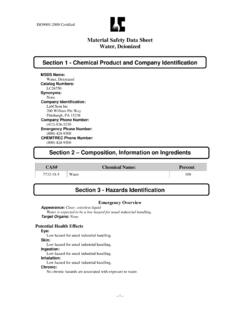
1 Material Safety Data SheetAmmonium chloride , ACS- 1 -Section 1 - Chemical Product and Company IdentificationMSDS Name: Ammonium chloride , ACSC atalog Numbers:LC10972 Synonyms: Ammonium muriate, sal ammonia, Identification: labchem , William Pitt WayPittsburgh, PA 15238 Company Phone Number:(412) 826-5230 Emergency Phone Number:(800) 424-9300 CHEMTREC Phone Number:(800) 424-9300 Section 2 - Composition, Information on Ingredients CAS# Chemical Name: Percent12125-02-9 Ammonium chloride100%Section 3 - Hazards IdentificationEmergency OverviewAppearance: white crystalline powderCaution! Causes eye irritation. May be harmful if swallowed. May cause skin andrespiratory tract irritation. Hygroscopic (absorbs moisture from air.)Target Organs: Health EffectsEye:Causes eye :May cause skin irritation.
2 May be harmful if absorbed through the :May cause irritation of the digestive tract. May cause systemic toxicity with acidosis. May beharmful if : If heated, dust or fume may cause respiratory tract irritation. May be harmful if chloride fume may cause an asthma-like allergy. Future exposure may trigger asthmaattacks with shortness of breath, wheezing, coughing, and chest :2000 CertifiedMaterial Safety Data SheetAmmonium chloride , ACS- 2 -Chronic:Prolonged or repeated skin contact may cause dermatitis. Ammonium ions may accumulate inindividuals with liver or kidney disease producing jerky respirations and periods of 4 - First Aid MeasuresEyes:Flush eyes with plenty of water for at least 15 minutes, occasionally lifting the upper and lower lidsuntil no evidence of chemical remains. Get medical aid at :Immediately flush skin with plenty of soap and water for at least 15 minutes while removingcontaminated clothing and shoes.
3 Get medical aid at :Do not induce vomiting. If victim is conscious, give 2-4 glasses of water or milk. Get medical aidat :Give artificial respiration if necessary. Move victim to fresh air. Keep victim warm and at rest. Getmedical aid at to Physician:Treat symptomatically and 5 - Fire Fighting MeasuresGeneral Information:Negligible fire and explosion hazard when exposed to heat or flame. Irritating and highly toxicgases may be generated by thermal decomposition or combustion. Move container if possible;avoid breathing vapors or dust. May polymerize explosively in a Media:For small fires, use dry chemical, carbon dioxide, water spray or alcohol-resistant Temperature:No information Point:No information Rating:Health-2; flammability-0; reactivity-0 Explosion Limits:Lower: n/a Upper: n/aSection 6 - Accidental Release MeasuresGeneral Information:Use proper personal protective equipment as indicated in Section :Vacuum or sweep up Material and place into a suitable disposal container.
4 Clean up spillsimmediately. Avoid creating airborne particles. Provide Safety Data SheetAmmonium chloride , ACS- 3 -Section 7 - Handling and StorageHandling:Wash thoroughly after handling. Avoid breathing dust, vapor, mist, or :Store capped at room temperature. Protect from heat and 8 - Exposure Controls, Personal ProtectionEngineering Controls: Facilities storing or utilizing this Material should be equipped with aneyewash facility and a Safety shower. Use adequate general or local exhaust ventilation to keepairborne concentrations below the permissible exposure Limits:Chemical Name:ACGIHNIOSHOSHAA mmonium chloride10 mg/m3 TWA (fume);20 mg/m3 STEL (fume)10 mg/m3 TWA (fume)none listedOSHA Vacated PELs: Ammonium chloride : 10 mg/m3 TWAP ersonal Protective EquipmentEyes: Do not wear contact lenses when working with chemicals.
5 An eye wash fountain should beavailable in the immediate work area. Wear appropriate protective eyeglasses or chemical safetygoggles as described in 29 CFR :Wear appropriate protective gloves to prevent skin :Wear appropriate protective clothing to prevent skin :Follow the OSHA respirator regulations found in 29 CFR Use a NIOSH/MSHA approved respirator if exposure limits are exceeded or if irritation or other symptoms 9 - Physical and Chemical PropertiesPhysical State:Crystalline powderColor:Colorless or whiteOdor: (10% solution at 25 C)Vapor Pressure:1 mm Hg @ CVapor Density:Not availableEvaporation Rate:NegligibleViscosity:Not availableBoiling Point:520 C (sublimes) Material Safety Data SheetAmmonium chloride , ACS- 4 -Freezing/Melting Point:328 CDecomposition Temperature:Not availableSolubility in at 176 FSpecific Gravity/ (Water = 1)Molecular Formula.
6 NH4 ClMolecular 10 - Stability and ReactivityChemical Stability:Stable at room temperature in closed containers under normal storage and handling ; absorbs moisture from the to Avoid:Excess heat, exposure to moist air or with Other Materials:Acids, bases, bromine trifluoride, nitrates, potassium chlorates, silver salts, carbonates, brominepentafluoride, lead Decomposition Products:Ammonia and hydrochloric acid Polymerization:May 11 - Toxicological InformationRTECS:CAS# 12125-02-9: BP4550000; BP4570000LD50/LC50:CAS# 12125-02-9: Draize test, rabbit, eye: 500 mg/24H Mild;Draize test, rabbit, eye: 100 mg Severe;Oral, mouse: LD50 = 1300 mg/Kg;Oral, rat: LD50 = 1650 :CAS# 12125-02-9: Not listed by ACGIH, IARC, NTP, or CA Proposition :No information :No information :No information :Cytogenetic analysis: hamster fibroblast, 400 :No information Safety Data SheetAmmonium chloride , ACS- 5 -Section 12 - Ecological InformationNo information 13 - Disposal ConsiderationsDispose of in accordance with Federal, State, and local 14 - Transport InformationUS DOTS hipping Name: Not regulated.
7 Hazard Class: UN Number:Packing Group:Section 15 - Regulatory InformationUS FederalTSCA:CAS# 12125-02-9 is listed on the TSCA inventory. Does not have a Significant New Use Reportable Quantities (RQ):CAS# 12125-02-9: 5000 lb. final RQ; 2270 Kg final Section 313:Not reportable under Section - Highly Hazardous:Not considered highly hazardous by StateState Right to Know:CAS# 12125-02-9 is listed on the following state right to know lists: California, New Jersey,Pennsylvania, Minnesota, Regulations:Not RegulationsCanadian DSL/NDSL:CAS# 12125-02-9 is listed on Canada s DSL Ingredient Disclosure List:CAS# 12125-02-9 is listed on the Ingredient Disclosure List at 1%. Material Safety Data SheetAmmonium chloride , ACS- 6 -Section 16 - Other InformationMSDS Creation Date: July 24, 2006 Revision Date: NoneInformation in this MSDS is from available published sources and is believed to be accurate.
8 No warranty, express or implied,is made and labchem Inc. assumes no liability resulting from the use of this MSDS. The user must determine suitability of thisinformation for his application.