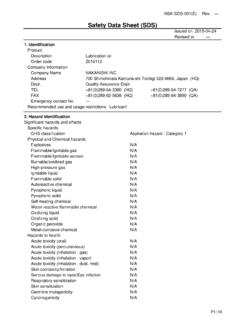
Transcription of MATERIAL SAFETY DATA SHEET
1 MATERIAL SAFETY DATASHEET1 / 3 Revised: March 8, 2013 Section 1: PRODUCT AND COMPANY IDENTIFICATION Product Name: DuPont Teflon Product Use: Lubricant. Multi-Use Dry, Wax Lubricant - Liquid Manufacturer/Supplier: Finish Line Technologies 50 Wireless Blvd Hauppauge, NY 11788 Phone Number: 631-666-7300 Emergency Phone: PROSAR: 1-800-217-5157 CHEMTREC: 1-800-424-9300 Date of Preparation: October 21, 2011 Section 2: HAZARDS IDENTIFICATION EMERGENCY OVERVIEW DANGER EXTREMELY FLAMMABLE. HARMFUL IF SWALLED. MAY CAUSE EYE IRRITATION.
2 MAY CAUSE SKIN IRRITATION. HARMFUL: MAY CAUSE LUNG DAMAGE IF SWALLOWED. Potential Health Effects: See Section 11 for more information. Likely Routes of Exposure: Skin contact, eye contact, inhalation, and ingestion. Eye: May cause eye irritation. Skin: May cause skin irritation. Ingestion: Harmful if swallowed. May cause stomach distress, nausea or vomiting. Harmful: may cause lung damage if swallowed. Inhalation: May cause respiratory tract irritation. This product may be aspirated into the lungs and cause chemical pneumonitis. Chronic Effects: Prolonged or repeated contact may dry skin and cause irritation.
3 Signs and Symptoms: Symptoms may include discomfort or pain, excess blinking and tear production, with marked redness and swelling of the conjunctiva. Symptoms may include redness, edema, drying, defatting and cracking of the skin. Vapours may cause drowsiness and dizziness. Medical Conditions Aggravated By Exposure: Because of its irritating properties, product may aggravate preexisting skin, eye, and respiratory conditions. Target Organs: Skin, eyes, gastrointestinal tract, respiratory system. This product is a "Hazardous Chemical" as defined by the OSHA Hazard Communication Standard, 29 CFR Potential Environmental Effects: May cause long-term adverse effects in the aquatic environment.
4 See Section 12 for more information. MATERIAL SAFETY DATASHEET2 / 3 Section 3: COMPOSITION / INFORMATION ON INGREDIENTS Ingredient Naphtha (petroleum), hydrotreated light CAS # 64742-49-0 Wt. % 60 - 100 Paraffin waxes (petroleum), clay treated64742-43-4 3 - 7 Fatty acids, tall-oil, compounds with 4,5-dihydro-2-nortall-oil alkyl-1H- imidazole-1-ethanol 68132-48-9 1 - 5 Fatty acids, tall-oil, polymers with adipic acid andtrimethylolpropane100930-27-6 1 - 5 Section 4: FIRST AID MEASURES Eye Contact.
5 In case of contact, immediately flush eyes with plenty of water for at least 15 minutes. If easy to do, remove contact lenses, if worn. Get medical attention immediately. Skin Contact: In case of contact, immediately flush skin with plenty of soap and water. Remove contaminated clothing and shoes. Wash clothing before reuse. Call a physician if irritation develops and persists. Inhalation: If breathed in, move person into fresh air. If not breathing, give artificial respiration. If breathing is difficult, give oxygen. Get medical attention immediately.
6 Ingestion: DO NOT induce vomiting. If victim is conscious and alert, give 2 cupfuls of water. Never give anything by mouth to an unconscious person. Seek medical attention or call poison control. General Advice: In case of accident or if you feel unwell, seek medical advice immediately (show the label or MSDS where possible). Note to Physicians: Symptoms may not appear immediately. Section 5: FIRE FIGHTING MEASURES Flammability: Extremely flammable by OSHA criteria. Means of Extinction: Suitable Extinguishing Media: Powder, water spray, foam, carbon dioxide.
7 Unsuitable Extinguishing Media: Not available. Products of Combustion: May include, and are not limited to: oxides of carbon, noxious fumes. Explosion data : Sensitivity to Mechanical Impact: Not available. Sensitivity to Static Discharge: Not available. Protection of Firefighters: Keep upwind of fire. Wear full fire fighting turn-out gear (full Bunker gear) and respiratory protection (SCBA) Section 6: ACCIDENTAL RELEASE MEASURES Personal Precautions: Use personal protection recommended in Section 8. Isolate the hazard area and deny entry to unnecessary and unprotected personnel.
8 Eliminate sources of ignition. Environmental Precautions: Keep out of drains, sewers, ditches, and waterways. Minimize use of water to prevent environmental contamination. Methods for Containment: Contain and/or absorb spill with inert MATERIAL ( sand, vermiculite), then place in a suitable container. Do not flush to sewer or allow to enter waterways. Use appropriate Personal Protective Equipment (PPE). MATERIAL SAFETY DATASHEET3 / 3 Methods for Clean-Up: Scoop up MATERIAL and place in a disposal container. Provide ventilation. Other Information: Not available.
9 Section 7: HANDLING AND STORAGE Handling: Keep away from sources of ignition. No smoking. Avoid contact with skin and eyes. Do not swallow. Do not breathe gas/fumes/vapor/spray. Use only in well-ventilated areas. Handle and open container with care. When using do not eat or drink. Wash hands before eating, drinking, or smoking. Storage: Keep out of the reach of children. Keep container in a well-ventilated place. Do not store at temperatures above 49 C / 120 F. Section 8: EXPOSURE CONTROLS / PERSONAL PROTECTION Exposure Guidelines Exposure Limits Ingredient OSHA-PEL Naphtha (petroleum), hydrotreated light Not available.
10 Paraffin waxes (petroleum), clay treated Not available. Fatty acids, tall-oil, compounds with 4,5-dihydro-2-nortall-oil alkyl-1H-imidazole-1-ethanol Not available. Fatty acids, tall-oil, polymers with adipic acid and trimethylolpropane Not available. Engineering Controls: Use ventilation adequate to keep exposures (airborne levels of dust, fume, vapor, etc.)