Transcription of MATERIAL SAFETY DATA SHEET - Diedrich …
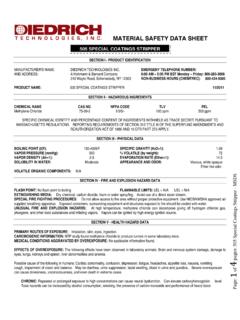
1 MATERIAL SAFETY data SHEET Page: 1 of 4 pages - 606 Extra Thick Multi-Layer paint Remover - MSDS 606 Multi-Layer paint Remover SECTION I - PRODUCT IDENTIFICATION MANUFACTURER'S NAME: Diedrich TECHNOLOGIES INC. EMERGENY TELEPHONE NUMBER: AND ADDRESS: A Hohmann & Barnard Company 8:00 AM 5:00 PM EST Monday Friday: 800-283-3888 310 Wayto Road, Schenectady, NY 12303 NON-BUSINESS HOURS (CHEMTREC): 800-424-9300 PRODUCT NAME: 606 paint REMOVER 11/2011 SECTION II - HAZARDOUS INGREDIENTS CHEMICAL NAME CAS NO. NFPA CODE TLV PEL Potassium Hydroxide 1310-58-3 3/0/0/- 2mg/m3 SPECIFIC CHEMICAL IDENTITY AND PERCENTAGE CONTENT OF INGREDIENTS WITHHELD AS TRADE SECRET PURSUANT TO MASSACHUSETTS REGULATIONS.
2 REPORTING REQUIREMENTS OF SECTION 313 TITLE III OF THE SUPERFUND AMENDMENTS AND REAUTHORIZATION ACT OF 1986 AND 10 CFR PART 373 APPLY. SECTION III - PHYSICAL data . BOILING POINT ( F): 240 F SPECIFIC GRAVITY (H2O=1): VAPOR PRESSURE (mmHg): 20-25 % VOLATILE (by weight): VAPOR DENSITY (Air=1): 1 EVAPORATION RATE (Ether=1): SOLUBILITY IN WATER: Complete APPEARANCE AND ODOR: Very viscous, brownish, Semi-paste gel. Very little odor VOLATILE ORGANIC COMPONENTS: SECTION IV - FIRE AND EXPLOSION HAZARD data FLASH POINT: None FLAMMABLE LIMITS: LEL = N/A UEL = N/A EXTINGUISHING MEDIA: N/A SPECIAL FIRE FIGHTING PROCEDURES: Use NIOSH/OSHA approved air supplied breathing apparatus.
3 Cool with water exposed containers, surrounding equipment and structures exposed to fire. UNUSUAL FIRE AND EXPLOSION HAZARDS: Contact with aluminum, magnesium, copper, zinc, tin, brass and bronze can cause a reaction generating hydrogen gas which is flammable and/or explosive if ignited. SECTION V - HEALTH HAZARD data PRIMARY ROUTES OF EXPOSURE: Inhalation, skin, eyes, ingestion. CARCINOGENIC INFORMATION: Not listed (OSHA, IARC, NTP). MEDICAL CONDITIONS AGGRAVATED BY OVEREXPOSURE: No applicable information to be found EFFECTS OF OVEREXPOSURE: Corrosive to exposed tissue, burns and deep ulcerations can frequently result. EYE CONTACT: Causes severe burns; even small quantities can result in permanent damage and/or blindness. SKIN CONTACT: Corrosive action causes burns and frequent deep ulcerations with subsequent scarring.
4 Prolonged contact destroys tissue. Mist from solutions can cause irritant dermatitis. MATERIAL SAFETY data SHEET Page: 2 of 4 pages - 606 Extra Thick Multi-Layer paint Remover - MSDS INHALATION: Inhalation of mists can cause damage to upper respiratory tract and lung tissue depending on extent of exposure. Effects can range from mild irritation of mucous membranes, severe pneumonitis, and destruction of lung tissue. INGESTION: . Ingestion can cause very serious damage to mouth, esophagus, stomach and other tissues with contact is made and can be fatal. EMERGENCY AND FIRST AID PROCEDURES: EYE CONTACT: Immediately flush eyes with plenty of water for at least 15 minutes. Hold eyelids open during this flushing. For maximum effectiveness washing must start within one minute. Seek immediate medical assistance.
5 SKIN CONTACT: Flush with water for at least 15 minutes. A slippery feeling on skin indicates caustic may still be present and cause a rash or burn. Follow immediately with a rinse of vinegar or diluted acetic acid. Apply antibiotic cream to prevent infection. Contaminated clothing must be laundered before reuse and shoes should be discarded. INHALATION: Remove to fresh air. If not breathing, give artificial respiration. If breathing is difficult, give oxygen. Call or take to a physician immediately. INGESTION: If conscious, drink large quantities of water or acidic beverages (tomato, orange juice, carbonated soft drinks). Do not induce vomiting. If vomiting occurs, keep head below hips to prevent aspiration of liquid into lungs, administer additional water. Take immediately to a hospital or physician.
6 SECTION VI - REACTIVITY data STABILITY: Stable CONDITIONS TO AVOID: Contact with acids, aluminum, zinc, tin, copper and alloys of these metals. INCOMPATIBILITY (Materials to Avoid): Mixing with acids, ammonium containing solutions and any active metal such as zinc, aluminum, copper, brass, bronze and alloys of these metals. Avoid contact with leather, wool, oxidizing agents and nitrates. HAZARDOUS/THERMAL DECOMPOSITION PRODUCTS: May produce explosive hydrogen. SECTION VII - SPILL OR LEAK PROCEDURES SPILL, LEAK AND WASTE DISPOSAL PROCEDURES: Dike areas to contain spill. Sweep or shovel spillage and return to container, reuse spill MATERIAL if possible. Neutralize remaining residue and flush area with water until slipperiness is gone. Soak up water with sweeping compound or absorbent MATERIAL and place in sealable container, or use Diedrich Neutra-Soak AC@ for caustics as diking, containment, collection and neutralization agent.
7 WASTE DISPOSAL METHODS: Neutralize alkalinity and separate floatable greases and oils for incineration or disposal at appropriate disposal site. Discharge neutralized water in accordance with federal, state and local regulations. Dispose of in a suitable chemical waste disposal site. SECTION VIII - SPECIAL PROTECTION INFORMATION RESPIRATORY PROTECTION: Use a NIOSH/MSHA approved dust/mist filter respirator for routine work purposes when exposure to mists exceed the permissible exposure limits. The respirator use limitations made by NIOSH/MSHA or the manufacturer must be observed. VENTILATION: Local exhaust sufficient to minimize exposure to mist below permissible exposure limits. PROTECTIVE CLOTHING: Protect all body parts from contact by using full chemical resistant suit with tight fitting cuffs and collar, rubber boots and full face shield.
8 MATERIAL SAFETY data SHEET Page: 3 of 4 pages - 606 Extra Thick Multi-Layer paint Remover - MSDS PROTECTIVE GLOVES: Gloves should be rubber, PVC or neoprene. EYE PROTECTION: Close fitting SAFETY chemical goggles and full face shield must be worn. OTHER PROTECTIVE EQUIPMENT: Apply Diedrich recommended skin barrier cream for additional protection. Solvent resistant boots and hardhat. SAFETY shower and eyewash or fresh running water close at hand at all times. SECTION IX - SPECIAL PRECAUTIONS PRECAUTIONS TO BE TAKEN IN HANDLING AND STORAGE: Freezes at about 32oF. Keep away from heat, sparks, and open flames. Avoid open containers. Do not store in hot areas. Add cautiously to cool water with agitation, heat is evolved. Treat empty containers as if they were full. OTHER PRECAUTIONS: Do not store in or pipe through any materials listed in Sec.
9 VI, use only approved plastic. RECOMMENDATIONS TO ASSIST IN MEETING DNR, EPA, OSHA RULINGS AND GUIDELINES ON POLLUTION PREPAREDNESS & CONTINGENCY PLAN (PPC): When removing lead based paint , the lead particles must be collected, handled and disposed of as hazardous waste. There are several ways of containing and collecting these lead particles. 1. Catch and collect all runoff (chemical, paint & water). Place in approved hazardous waste containers and dispose of per regulations at approved hazardous waste dump-site. Hay bales or sandbags my be used to channel, contain or collect/absorb residue. 2. Collect all runoff in reservoir type containment, allow water to evaporate off, then place remaining sludge, containing paint and chemical, in approved containers and dispose of per regulations.
10 Label drums ACAUTION: paint REMOVAL RESIDUE MAY CONTAIN LEAD paint 3. Scrape off sludge containing dissolved paint and chemicals and immediately place in approved containers. Then wash surface with pressured water. Follow with neutralizer if surface is wood or clean the surface with 101 Masonry Restorer if masonry. Removed sludge must be disposed of per regulations. 4. Construct a filter system at the base of the wall as shown in Diedrich Technical Brief No. 4. 5. If doing paint removal near a well supplying drinking water, runoff must be diverted away to a minimum of 50 ft. from the well opening. SECTION X SHIPPING INFORMATION Proper Shipping Name: Potassium hydroxide, solution Class: 8 UN/ID No. UN 1814 Packaging Group: II LEGENDS: 0 = LEAST 1 = SLIGHT 2 = MODERATE 3 = HIGH 4 = EXTREME = NOT DETERMINED = NOT AVAILABLE N/A = NOT APPLICABLE MATERIAL SAFETY data SHEET Page: 4 of 4 pages - 606 Extra Thick Multi-Layer paint Remover - MSDS While this company believes that the data contained herein are factual and the opinions expressed are based on tests and data believed to be reliable, it is the user's responsibility to determine the SAFETY , toxicity and suitability for his own use of the product described herein.