Transcription of Material Safety Data Sheet - Finar Chemicals Ltd.
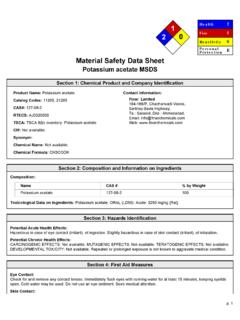
1 P. 1 2 3 2He a lt hFireRe a c t iv it yP e rs o n a lP ro t e c t io n332 JMaterial Safety data SheetLithium aluminum hydride MSDSS ection 1: Chemical Product and Company IdentificationProduct Name: Lithium aluminum hydrideCatalog Codes: 10823 CAS#: 16853-85-3 RTECS: BD0100000 TSCA: TSCA 8(b) inventory: Lithium aluminum hydrideCI#: Not : Aluminum lithium hydride; Lithium alanate;Lithium aluminohydride; Lithium aluminum tetrahydride;Lithium tetrahydroalulminate (1-)Chemical Name: Aluminate, (1-), tetrahydro-, lithiumChemical Formula: LiAlH4 Contact Information: Finar Limited184-186/P, Chacharwadi Vasna, Sarkhej-Bavla Highway, Ta.
2 : Sanand, Dist.: Ahmedabad, Email: Web: 2: Composition and Information on IngredientsComposition:NameCAS #% by WeightLithium aluminum hydride16853-85-3100 Toxicological data on Ingredients: Lithium aluminum hydride: ORAL (LD50): Acute: 85 mg/kg [Mouse].Section 3: Hazards IdentificationPotential Acute Health Effects:Very hazardous in case of skin contact (irritant), of eye contact (irritant), of ingestion, of inhalation. Slightly hazardous incase of skin contact (corrosive), of eye contact (corrosive). The amount of tissue damage depends on length of contact. Eyecontact can result in corneal damage or blindness. Skin contact can produce inflammation and blistering.
3 Inhalation of dustwill produce irritation to gastro-intestinal or respiratory tract, characterized by burning, sneezing and coughing. Severe over-exposure can produce lung damage, choking, unconsciousness or death. Inflammation of the eye is characterized by redness,watering, and itching. Skin inflammation is characterized by itching, scaling, reddening, or, occasionally, Chronic Health Effects:CARCINOGENIC EFFECTS: Not available. MUTAGENIC EFFECTS: Not available. TERATOGENIC EFFECTS: Not TOXICITY: Not available. The substance may be toxic to kidneys, lungs, upper respiratory tract, eyes,central nervous system (CNS), thyroid. Repeated or prolonged exposure to the substance can produce target organs exposure of the eyes to a low level of dust can produce eye irritation.
4 Repeated skin exposure can produce localp. 2skin destruction, or dermatitis. Repeated inhalation of dust can produce varying degree of respiratory irritation or lung exposure to a highly toxic Material may produce general deterioration of health by an accumulation in one or manyhuman 4: First Aid MeasuresEye Contact:Check for and remove any contact lenses. In case of contact, immediately flush eyes with plenty of water for at least 15minutes. Get medical attention Contact:In case of contact, immediately flush skin with plenty of water for at least 15 minutes while removing contaminated clothingand shoes. Cover the irritated skin with an emollient.
5 Wash clothing before reuse. Thoroughly clean shoes before reuse. Getmedical attention Skin Contact:Wash with a disinfectant soap and cover the contaminated skin with an anti-bacterial cream. Seek immediate :If inhaled, remove to fresh air. If not breathing, give artificial respiration. If breathing is difficult, give oxygen. Get Inhalation:Evacuate the victim to a safe area as soon as possible. Loosen tight clothing such as a collar, tie, belt or waistband. Ifbreathing is difficult, administer oxygen. If the victim is not breathing, perform mouth-to-mouth resuscitation. WARNING: It maybe hazardous to the person providing aid to give mouth-to-mouth resuscitation when the inhaled Material is toxic, infectious orcorrosive.
6 Seek immediate medical :If swallowed, do not induce vomiting unless directed to do so by medical personnel. Never give anything by mouth to anunconscious person. Loosen tight clothing such as a collar, tie, belt or waistband. Get medical attention Ingestion: Not 5: Fire and Explosion DataFlammability of the Product: Temperature: Not Points: Not Limits: Not of Combustion: Some metallic Hazards in Presence of Various Substances:Flammable in presence of open flames and sparks, of heat. Slightly flammable to flammable in presence of Hazards in Presence of Various Substances:Risks of explosion of the product in presence of mechanical impact: Not available.
7 Slightly explosive in presence of openflames and sparks, of heat, of Fighting Media and Instructions:Flammable solid. SMALL FIRE: Do not use water or foam. Use DRY chemical powder, soda ash, lime, or sand. LARGE FIRE:Dry sand, dry chemical, soda ash, or lime. Fight fire from maximum distance or use nmanned hose holders or monitor not get water inside the containers. Cool containers with flooding quantities of water until well after fire is out. Containingvessels are cooled with water in order to prevent pressure build-up, autoignition or Remarks on Fire Hazards:Water reactive and evolves hydrogen with possible ignition. May ignite spontaneously on grinding or rubbing, or from staticsparks.
8 Lithium Aluminum Hydride as the additional fire hazard when it is used in the flammable solvents Diethyl Ether, andp. 3 Tetrahydrofuran. It should not be used to dry methyl ethers, or Tetrahydrofuran. Lithium Aluminum Hydride with carbon dioxidein sodium bicarbonate at hight temperature is a fire hazard. When heated to decomposition it emits irritating and toxic fumes ofhydrogen gas, aluminum oxide, lithium hydroxide, aluminum, lithium Remarks on Explosion Hazards:Lithium Aluminum Hydride can react explosively with carbon dioxide in sodium bicarbonate at high temperatures. Hydrides canform dust clouds which can explode due to contact with flames, sparks, heat or 6: Accidental Release MeasuresSmall Spill: Use appropriate tools to put the spilled solid in a convenient waste disposal Spill:Corrosive solid.
9 Poisonous solid. Flammable solid that, in contact with water, emits flammable gases. Stop leak if withoutrisk. Do not get water inside container. Do not touch spilled Material . Cover with dry earth, sand or other non-combustiblematerial. Use water spray to reduce vapors. Prevent entry into sewers, basements or confined areas; dike if needed. Eliminateall ignition sources. Call for assistance on disposal. Be careful that the product is not present at a concentration level aboveTLV. Check TLV on the MSDS and with local 7: Handling and StoragePrecautions:Keep container dry. Keep away from heat. Keep away from sources of ignition. Ground all equipment containing Material .
10 Donot ingest. Do not breathe dust. Never add water to this product. In case of insufficient ventilation, wear suitable respiratoryequipment. If ingested, seek medical advice immediately and show the container or the label. Avoid contact with skin andeyes. Keep away from incompatibles such as oxidizing agents, acids, :Keep container tightly closed. Keep container in a cool, well-ventilated area. Keep from any possible contact with water. Donot allow water to get into container because of violent 8: Exposure Controls/Personal ProtectionEngineering Controls:Use process enclosures, local exhaust ventilation, or other engineering controls to keep airborne levels below recommendedexposure limits.