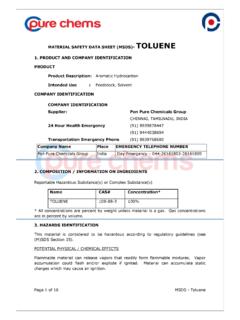
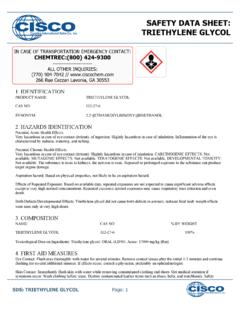
Transcription of Material Safety Data Sheet (MSDS) - ACETONE
1 Page 1 of 7 MSDS ACETONE Material Safety data Sheet (MSDS) - ACETONE 1. Product Identification Synonyms: Dimethylketone; 2-propanone; dimethylketal CAS No.: 67-64-1 Molecular Weight: Chemical Formula: (CH3)2CO COMPANY IDENTIFICATION Supplier: Pon Pure Chemicals Group CHENNAI, TAMILNADU, INDIA 24 Hour Health Emergency (91) 8939878447 (91) 9444038694 Transportation Emergency Phone (91) 8939768680 Company Name Place EMERGENCY TELEPHONE NUMBER Pon Pure Chemicals Group India Day Emergency 044-26161803-26161809 2.
2 Composition/Information on Ingredients Ingredient CAS No Percent Hazardous --------------------------------------- ------------ ------------ --------- ACETONE 67-64-1 99 - 100% Yes 3. Hazards Identification Emergency Overview ----------------------------- DANGER! EXTREMELY FLAMMABLE LIQUID AND VAPOR. VAPOR MAY CAUSE FLASH FIRE. HARMFUL IF SWALLOWED OR INHALED. CAUSES IRRITATION TO SKIN, EYES AND RESPIRATORY TRACT.
3 AFFECTS CENTRAL NERVOUS SYSTEM. ---------------------------------------- ---------------------------------------- --------------------------- Health Rating: 2 - Moderate Flammability Rating: 3 - Severe (Flammable) Reactivity Rating: 0 - None Contact Rating: 3 - Severe Lab Protective Equip: GOGGLES LAB COAT VENT HOOD; PROPER GLOVES; CLASS B EXTINGUISHER Storage Color Code: Red (Flammable) ---------------------------------------- ---------------------------------------- --------------------------- Potential Health Effects Page 2 of 7 MSDS ACETONE ---------------------------------- Inhalation: Inhalation of vapors irritates the respiratory tract.
4 May cause coughing, dizziness, dullness, and headache. Higher concentrations can produce central nervous system depression, narcosis, and unconsciousness. Ingestion: Swallowing small amounts is not likely to produce harmful effects. Ingestion of larger amounts may produce abdominal pain, nausea and vomiting. Aspiration into lungs can produce severe lung damage and is a medical emergency. Other symptoms are expected to parallel inhalation. Skin Contact: Irritating due to deflating action on skin. Causes redness, pain, drying and cracking of the skin.
5 Eye Contact: Vapors are irritating to the eyes. Splashes may cause severe irritation, with stinging, tearing, redness and pain. Chronic Exposure: Prolonged or repeated skin contact may produce severe irritation or dermatitis. Aggravation of Pre-existing Conditions: Use of alcoholic beverages enhances toxic effects. Exposure may increase the toxic potential of chlorinated hydrocarbons, such as chloroform, trichloroethane. 4. First Aid Measures Inhalation: Remove to fresh air. If not breathing, give artificial respiration.
6 If breathing is difficult, give oxygen. Get medical attention. Ingestion: Aspiration hazard. If swallowed, vomiting may occur spontaneously, but DO NOT INDUCE. If vomiting occurs, keep head below hips to prevent aspiration into lungs. Never give anything by mouth to an unconscious person. Call a physician immediately. Skin Contact: Immediately flush skin with plenty of water for at least 15 minutes. Remove contaminated clothing and shoes. Get medical attention. Wash clothing before reuse. Thoroughly clean shoes before reuse.
7 Eye Contact: Immediately flush eyes with plenty of water for at least 15 minutes, lifting upper and lower eyelids occasionally. Get medical attention. 5. Fire Fighting Measures Fire: Flash point: -20C (-4F) CC Page 3 of 7 MSDS ACETONE Auto ignition temperature: 465C (869F) Flammable limits in air % by volume: LEL: ; UEL: Extremely Flammable Liquid and Vapor! Vapor may cause flash fire. Explosion: Above flash point, vapor-air mixtures are explosive within flammable limits noted above.
8 Vapors can flow along surfaces to distant ignition source and flash back. Contact with strong oxidizers may cause fire. Sealed containers may rupture when heated. This Material may produce a floating fire hazard. Sensitive to static discharge. Fire Extinguishing Media: Dry chemical, alcohol foam or carbon dioxide. Water may be ineffective. Water spray may be used to keep fire exposed containers cool, dilute spills to nonflammable mixtures, protect personnel attempting to stop leak and disperse vapors.
9 Special Information: In the event of a fire, wear full protective clothing and NIOSH-approved self-contained breathing apparatus with full face piece operated in the pressure demand or other positive pressure mode. 6. Accidental Release Measures Ventilate area of leak or spill. Remove all sources of ignition. Wear appropriate personal protective equipment as specified in Section 8. Isolate hazard area. Keep unnecessary and unprotected personnel from entering. Contain and recover liquid when possible.
10 Use non-sparking tools and equipment. Collect liquid in an appropriate container or absorb with an inert Material (e. g., vermiculite, dry sand, earth), and place in a chemical waste container. Do not use combustible materials, such as saw dust. Do not flush to sewer! If a leak or spill has not ignited, use water spray to disperse the vapors, to protect personnel attempting to stop leak, and to flush spills away from exposures. US Regulations (CERCLA) require reporting spills and releases to soil, water and air in excess of reportable quantities.