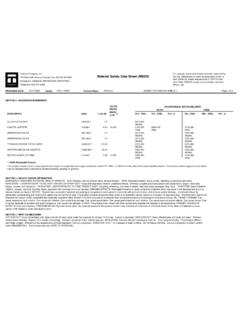
Transcription of MATERIAL SAFETY DATA SHEET (MSDS) …
1 MATERIAL SAFETY data SHEET ( msds )Potassium Hydroxide SolutionSECTION 1 - CHEMICAL PRODUCT AND COMPANY IDENTIFICATIONMSDS Name: Potassium Hydroxide SolutionCatalog Numbers: SFV/ ELE-1 Synonyms: Electrolyte Fluid for SPIRFLAME Company Identification: SAT Spirig Advanced Technology Inc., 144 Oakland Street, Springfield, information:PHONE: USA 1-866-977-4744 FAX: (1) 413 788 0490 Emergency INFOTRAC :USA 1-800-535-5053 NFPA Precautionary Label:HEALTH:3 SEVERE (POISON)FLAMMABILITY0 NONEREACTIVITY1 SLIGHTSECTION 2 - COMPOSITION, INFORMATION ON INGREDIENTSSECTION 3 - HAZARDS IDENTIFICATIONEMERGENCY OVERVIEWPOISON! DANGER! CORROSIVE. Causes severe burns to skin, eyes, respiratory tract, and gastrointestinal tract. MATERIAL is extremly destructive to all body tissues.
2 May be fatal if swallowed. harmful if (tm) Rating (Provided here for your convenience)Health Rating: 3 - Severe (poison)Flammability Rating: 0 - NoneReactivity Rating: 1 - SlightContact Rating: 4 - Extreme (Corrosive)Lab Protective Equip: Goggles Lab Coat Vent Hood; Proper GlovesStorage Color Code: White Stripe (Store Separately)POTENTIAL HEALTH EFFECTSI nhalationRespiratory tract irritant, may cause serious burns on acute contact. Severe injury is usually avoided by the self-limiting coughing and sneezing ! Corrosive to mucous membranes and may cause perforation of the esophagus and stomach. Abdominal pain, nausea, vomiting, general gastro-intestinal upset can be ContactIrritant, possibly corrosive if contact is prolonged. Soreness, redness, destruction of skin may ContactIrritant, possibly corrosive to eye tissues.
3 Tearing, redness, pain, impaired vision are ExposureDevelopment of a defatting dermatitis on prolonged contact with potassium hydroxide has been reported. Continued irritation may lead to increased susceptibility to respiratory illness. Aggravation of Pre-existing Conditions Persons with pre-existing skin disorders or eye problems, or impaired kidney or respiratory function may be more susceptible to the effects of the 4 - FIRST AID MEASURESI nhalationRemove to fresh air. If not breathing, give artificial respiration. If breathing is difficult, give oxygen. Call a # Chemical Name%EINECS# 1310-58-3 Potassium - 215-181-3 proprietaryAdditives, various< 2proprietary7732-18-5 Water Balance231-791-2file: sd2ele-1_SAT page 1111 ooooffff 4444 e-print: 11/6/2008 MATERIAL SAFETY data SHEET ( msds )Electrolyte Fluid for SPIRFLAME SFV/ ELE-1 / SFV/ELE-1-Air/SeaSAT Spirig Advanced Technology Inc.
4 , 144 Oakland Street, Springfield, Mass. 1-866-977-4744 Emergency INFOTRAC : USA 1 - 800 - 535 - 5053 IngestionDO NOT INDUCE VOMITTING. Give large quantities of water. Never give anything by mouth to an unconscious person. Call a physician contactImmediately flush eyes with plenty of water for at least 15 minutes, lifting lower and upper eyelids occasionally. Get medical attention ContactIn case of contact, immediately flush skin with plenty of water for at least 15 minutes. Remove contaminated clothing and shoes. Wash clothing before a 5 - FIRE FIGHTING MEASURESFireNot considered to be a fire considered to be an explosion Extinguishing MediaUse any means suitable for extinguishing surrounding fire. Avoid direct contact of liquid Information:In the event of a fire, wear full protective clothing and NIOSH-approved self-containedbreathing apparatus with full facepiece operated in the pressure demand or other positive pressure 6 - ACCIDENTAL RELEASE MEASURESV entilate area of leak or spill.
5 Wear appropriate personal protective equipment as specified in Section 8. Contain andrecover liquid when possible. Collect liquid in an appropriate container or absorb with an inert MATERIAL (e. , dry sand, earth), and place in a chemical waste container. Do not use combustible materials, such as saw not flush to sewer! US Regulations (CERCLA) require reporting spills and releases to soil, water and air in excessof reportable quantities. The toll free number for the US Coast Guard National Response Center is (800) 7 - HANDLING and STORAGEKeep in a tightly closed container. Store in a cool, dry, ventilated area. Protect against physical damage. Separatefrom acids and alkalis. Containers of this MATERIAL may be hazardous when empty since they retain product residues(vapors, liquid); observe all warnings and precautions listed for the product.
6 SECTION 8 - EXPOSURE CONTROLS, PERSONAL PROTECTION Airborne Exposure LimitsOSHA Permissible Exposure Limit (PEL): 2 mg/m3 Ceiling(Potassium hydroxide)ACGIH Threshold Limit value (TLV): 2 mg/m3 CeilingVentilation SystemA system of local and/or general exhaust is recommended to keep employee ex-posures below the Airborne Exposure Limits. Local exhaust ventilation is generally preferred because it can control the emissions of the contaminant at its source, preventing dispersion of it into the general work area. Please refer to the ACGIH document, Industrial Ventilation, A Manual of Recommended Practices, most recent edition, for Respirators If the exposure limit is exceeded and engineering controls are not feasible, a half (NIOSH Approved)facepiece particulate respirator (NIOSH type N95 or better filters) may be worn for up to ten times the exposure limit or the maximum use concentration specified by the appropriate regulatory agency or respirator supplier, whichever is A full-face piece particulate respirator (NIOSH type N100 filters) may be worn up to 50 times the exposure limit, or the maximum use concentration specified by the appropriate regulatory agency, or respirator supplier, whichever is lowest.
7 If oil particles ( lubricants, cutting fluids, glycerine, etc.) are present, use a NIOSH type R or P filter. For emergencies or instances where the exposure levels are not known, use a full-facepiece positive-pressure, air-supplied respirator. WARNING: Air-purifying respirators do not protect workers in oxygen-deficient atmospheres. Eyes ProtectionUse chemical SAFETY goggles and/or a full face shield where splashing is possible. Maintain eye wash fountain and quick-drench facilities in work area. Skin Protection Wear impervious protective clothing, including boots, gloves, lab coat, apron or coveralls, as appropriate, to prevent skin : sd2ele-1_SAT page 2222 ooooffff 4444 e-print: 11/6/2008 MATERIAL SAFETY data SHEET ( msds )Electrolyte Fluid for SPIRFLAME SFV/ ELE-1 / SFV/ELE-1-Air/SeaSAT Spirig Advanced Technology Inc.
8 , 144 Oakland Street, Springfield, Mass. 1-866-977-4744 Emergency INFOTRAC : USA 1 - 800 - 535 - 5053 SECTION 9 - PHYSICAL AND CHEMICAL PROPERTIES AppearanceClear, colorless solutionOdorodorlessSolubilityCompletely soluble in waterSpecific ( molar solution)Vapor mm Hg @ 20 CVapor (Air = 1) cPBoiling Point10% solution 101 C (213F) 45% solution: 132 C (270F)Freezing/Melting Point10% solution -3 C (27F) 45% solution: -29 C (84F)Decomposition TemperatureNot RateNo information found (BuAc=1)SECTION 10 - STABILITY AND REACTIVITYS tabilityStable under ordinary conditions of use and storageHazardous Decomposition Products Oxides of potassiumHazardous PolymerizationWill not occurIncompatibilitiesStrong acids, aluminum, tin, zinc, chlorinated hydrocarbonsConditions to AvoidHeat, incompatiblesSECTION 11 - TOXICOLOGICAL INFORMATIONFor potassium hydroxide: Oral rat LD50: 273 mg/kg; Investigated as a mutagen.
9 Skin Irritation data (std Draize, 50mg/24 H): Human, Severe; Rabbit, Severe. Eye Irritation data (Rabbit, non-std test,1 mg/24 H, rinse): Moderate. Cancer listsNTP CarcinogenPotassium hydroxide solution: Known: No; Anticipated: No;SECTION 12 - ECOLOGICAL INFORMATIONE nvironmental Fate No information foundEnvironmental ToxicityPot. Hydroxide: TLm: 80 ppm/Mosquito Fresh waterSECTION 13 - DISPOSAL CONSIDERATIONSW hatever cannot be saved for recovery or recycling should be managed in an appropriate and approved waste faci-lity. Although not a listed RCRA hazardous waste, this MATERIAL may exhibit one or more characteristics of a hazar-dous waste and require appropriate analysis to determine specific disposal requirements. Processing, use or contami-nation of this product may change the waste management options.
10 State and local disposal regulations may differfrom federal disposal regulations. Dispose of container and unused contents in accordance with federal, state andlocal 14 - TRANSPORT INFORMATIOND omestic (Land, )Proper Shipping Name: POTASSIUM HYDROXIDE, SOLUTIONH azard Class: 8UN: UN1814 Packing Group: IIInformation reported for product/size: 19 LInternational (Water, )Proper Shipping Name: POTASSIUM HYDROXIDE, SOLUTIONH azard Class: 8UN/NA: UN1814 Packing Group: IIInformation reported for product/size: 19 LInternational (Air, )Proper Shipping Name: POTASSIUM HYDROXIDE, SOLUTIONH azard Class: 8UN/NA: UN1814file: sd2ele-1_SAT page 3333 ooooffff 4444 e-print: 11/6/2008 MATERIAL SAFETY data SHEET ( msds )Electrolyte Fluid for SPIRFLAME SFV/ ELE-1 / SFV/ELE-1-Air/SeaSAT Spirig Advanced Technology Inc.