Transcription of MATERIAL SAFETY DATA SHEET - Pfizer
1 Page 1 of 7 Revision date: 21-Feb-2007 MATERIAL SAFETY data SHEET Version: IDENTIFICATION OF THE SUBSTANCE/PREPARATION AND THE COMPANY/UNDERTAKING MATERIAL Name: Ephedrine/theophylline/hydroxyzine hydrochloride tablets Trade Name: MARAX(R) Chemical Family: Mixture Intended Use: Pharmaceutical active used as bronchospasmolytic 2. COMPOSITION/INFORMATION ON INGREDIENTS HazardousIngredientCAS NumberEU EINECS List%Hydroxyzine , carbonate471-34-1207-439-9*Sodium lauryl sulfate151-21-3205-788-1*Magnesium stearate557-04-0209-150-3* IngredientCAS NumberEU EINECS List%Alginic acid9005-32-7232-680-1*FD&C Blue no.
2 1 aluminum lake68921-42-6272-939-6* Additional Information:* Proprietary Ingredient(s) indicated as hazardous have been assessed under standards for workplace SAFETY . 3. HAZARDS IDENTIFICATION Appearance:White to off-white scored tablets Signal Word:WARNING Statement of Hazard:Harmful if swallowed. Suspected of damaging fertility or the unborn child. Additional Hazard Information: Short Term: May cause nervous system and cardiovascular system Clinical Effects: Ingestion of large amounts of this MATERIAL may cause effects similar to those seen in clinical use including irregular heart rate, fear, anxiety, restlessness, tremor, insomnia, confusion, high blood pressure, nausea, vomiting and loss of appetite.
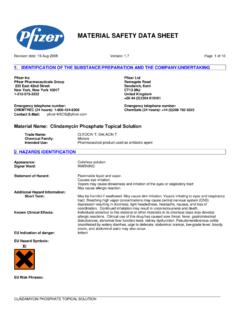
3 Emergency telephone number:CHEMTREC (24 hours): 1-800-424-9300 Emergency telephone number: ChemSafe (24 hours): +44 (0)208 762 8322 Pfizer Inc Pfizer Pharmaceuticals Group 235 East 42nd Street New York, New York 10017 1-212-573-2222 Pfizer Ltd Ramsgate Road Sandwich, Kent CT13 9NJ United Kingdom +00 44 (0)1304 616161 MATERIAL SAFETY data SHEET _____ MATERIAL Name: Ephedrine/theophylline/hydroxyzine hydrochloride tabletsRevision date: 21-Feb-2007 Page 2 of 7 Version: Indication of danger:Harmful Toxic to Reproduction; Category 3 EU Hazard Symbols: EU Risk Phrases: R22 - Harmful if swallowed. R62 - Possible risk of impaired fertility. R63 - Possible risk of harm to the unborn child.
4 Australian Hazard Classification (NOHSC):Hazardous Substance. Non-Dangerous Goods. Note: This document has been prepared in accordance with standards for workplace SAFETY , which require the inclusion of all known hazards of the active substance or its intermediates regardless of the potential risk. The precautionary statements and warnings included may not apply in all cases. Your needs may vary depending upon the potential for exposure in your workplace. 4. FIRST AID MEASURES Eye Contact:Immediately flush eyes with water for at least 15 minutes. If irritation occurs or persists, get medical attention. Skin Contact:Wash skin with soap and water. If irritation occurs or persists, get medical attention.
5 Ingestion:Never give anything by mouth to an unconscious person. Wash out mouth with water. Do not induce vomiting unless directed by medical personnel. Seek medical attention immediately. Inhalation:Remove to fresh air and keep patient at rest. Seek medical attention immediately. 5. FIRE FIGHTING MEASURES Extinguishing Media: Use carbon dioxide, dry chemical, or water spray. Hazardous Combustion Products: May include oxides of carbon, sulfur and products of chlorine. Fire Fighting Procedures: During all fire fighting activities, wear appropriate protective equipment, including self-contained breathing apparatus. Fire / Explosion Hazards: Not applicable 6. ACCIDENTAL RELEASE MEASURES Health and SAFETY Precautions: Personnel involved in clean-up should wear appropriate personal protective equipment (see Section 8).
6 Minimize exposure. Measures for Cleaning / Collecting: Contain the source of spill if it is safe to do so. Collect spilled MATERIAL by a method that controls dust generation. A damp cloth or a filtered vacuum should be used to clean spills of dry solids. Clean spill area thoroughly. Measures for Environmental Protections: Place waste in an appropriately labeled, sealed container for disposal. Care should be taken to avoid environmental release. MATERIAL SAFETY data SHEET _____ MATERIAL Name: Ephedrine/theophylline/hydroxyzine hydrochloride tabletsRevision date: 21-Feb-2007 Page 3 of 7 Version: Additional Consideration for Large Spills: Non-essential personnel should be evacuated from affected area.
7 Report emergency situations immediately. Clean up operations should only be undertaken by trained personnel. 7. HANDLING AND STORAGE General Handling: Minimize dust generation and accumulation. If tablets or capsules are crushed and/or broken, avoid breathing dust and avoid contact with eyes, skin, and clothing. When handling, use appropriate personal protective equipment (see Section 8). Wash thoroughly after handling. Storage Conditions: Store as directed by product packaging. 8. EXPOSURE CONTROLS / PERSONAL PROTECTION The exposure limit(s) listed for solid components are only relevant if dust may be generated. Analytical Method: Analytical method available for theophylline.
8 Contact Pfizer Inc for further information. Engineering Controls: Engineering controls should be used as the primary means to control exposures. General room ventilation is adequate unless the process generates dust, mist or fumes. Keep airborne contamination levels below the exposure limits listed above in this section. Personal Protective Equipment: Hands:Impervious gloves are recommended if skin contact with drug product is possible and for bulk processing operations. Eyes:Wear SAFETY glasses or goggles if eye contact is possible. Skin:Impervious protective clothing is recommended if skin contact with drug product is possible and for bulk processing operations.
9 Respiratory protection:If the applicable Occupational Exposure Limit (OEL) is exceeded, wear an appropriate respirator with a protection factor sufficient to control exposures to below the OEL. 9. PHYSICAL AND CHEMICAL PROPERTIES: ACGIH Threshold Limit Value (TWA)= 10 mg/m3 TWA except stearates of toxic metals Australia TWA = 10 mg/m3 TWA OSHA - Final PELS - TWAs:= 15 mg/m3 TWA total = 5 mg/m3 TWA Pfizer OEL TWA-8 Hr: mg/m ACGIH Threshold Limit Value (TWA)= 10 mg/m3 TWA particulate matter containing no asbestos and <1% crystalline silica ACGIH OELs - Notice of Intended Changes ListedTheophylline, anhydrous Australia TWA = 10 mg/m3 TWAS odium lauryl sulfate Pfizer OEL TWA-8 Hr: mg/m Pfizer OEL TWA-8 Hr.
10 Pfizer STEL mg/m Hydroxyzine hydrochlorideMagnesium stearateCalcium carbonate MATERIAL SAFETY data SHEET _____ MATERIAL Name: Ephedrine/theophylline/hydroxyzine hydrochloride tabletsRevision date: 21-Feb-2007 Page 4 of 7 Version: 10. STABILITY AND REACTIVITY Stability:StableConditions to Avoid:None knownIncompatible Materials:As a precautionary measure, keep away from strong oxidizers. 11. TOXICOLOGICAL INFORMATION Acute Toxicity: (Species, Route, End Point, Dose)Acute Toxicity Comments: A greater than symbol (>) indicates that the toxicity endpoint being tested was not achievable at the highest dose used in the / Sensitization: (Study Type, Species, Severity) Rat Oral LD50 840 mg/kgMolecular Formula: Mouse IP LD50 81 mg/kgMixtureRat Oral LD50 > 5 g/kgRat IP LD50 160 mg/kgMouse IV LD50 137 mg/kgCalcium carbonateRat IV LD50 45 mg/kgMolecular Weight.