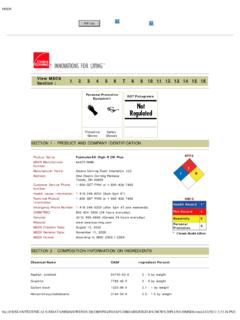
Transcription of MATERIAL SAFETY DATA SHEET RTV 4500 (SIL …
1 MATERIAL SAFETY data SHEET RTV 4500 (SIL-BOND) (CLEAR) 1. IDENTIFICATION OF THE SUBSTANCE AND OF THE COMPANY Silco Incorporated Phone: (440)-975-8886 7561 Tyler Blvd. Fax: (440)-975-8887 Unit # 6 Mentor, Oh 44060 Revision Date: 10/01/06 General Description: Silicone elastomer Physical Form: Paste Color: Colorless Odor: Acetic acid odor NFPA PROFILE: Health - 2 Flammability 1 Instability/Reactivity - 0 Note: NFPA = National Fire Protection Association 2.
2 OSHA HAZARDOUS COMPONENTS CAS Number Wt % Component Name 4253-34-3 Methyltriacetoxysilane 17689-77-9 Ethyltriacetoxysilane The above components are hazardous as defined in 29 CFR 3. EFFECTS OF OVEREXPOSURE Accute Effects: Eye: Direct contact may cause moderate irritation. Skin: May cause moderate irritation Inhalation: Irritates respiratory passages very slightly Oral: Low ingestion hazard in normal use. Prolonged / Repeated Exposure Effects Skin: No Known applicable information. Inhalation: No Known applicable information.
3 Oral: No Known applicable information. Signs and Symptoms of Overexposure No Known applicable information. Page 1 Medical Conditions Aggravated by Exposure No Known applicable information. The above listed potential effects of overexposure are based on actual data , results of studies performed upon similar compositions, component data and / or expert review of the product. Please refer to Section 11 for the detailed toxicology information. 4. FIRST AID MEASURES Eye: Immediately flush with water for 15 minutes.
4 Get medical attention. Skin: Remove from skin and wash thoroughly with soap and water or waterless cleanser. Get medical attention if irritation or other ill effects develop or persist. Inhalation: No first aid should be needed. Oral: No first aid is needed. Comments: Treat according to persons condition and specifics of exposure. 5. FIRE FIGHTING MEASURES Flash Point: Not applicable Autoignition Temperature: Not determined Flammability Limits in Air: Not determined Extinguishing Media: On large scale fires us dry chemical foam or water spray.
5 On small fires use carbon dioxide (CO2), dry chemical or water spray. Water can be used to to cool fire exposed containers. Fire Fighting Measures: Self contained breathing apparatus and protective clothing should be worn in fighting large fires involving chemicals. Determine the need to evacuate or isolate the area according to your local emergency plan. Use water spray to keep fire exposed containers cool.
6 Usual Fire Hazards: None. Hazardous Decomposition Products Thermal breakdown of this product during fire or very high heat conditions may evolve the following hazardous decomposition products. Carbon oxides and traces of incompletely burned carbon compounds. Formaldehyde. Silicon dioxide. 6. ACCIDENTAL RELEASE MEASURES Containment / Clean up: Observe all personal protection equipment recommendations described in section 5 and 8. Wipe up or scrape up and contain for salvage or disposal. Clean area as appropriate since some silicone materials, even in small quantities, may present a slip hazard.
7 Final cleaning may require use of steam, solvents or detergents. Dispose of saturated absorbent or cleaning materials appropriately, since spontaneous heating may occur. Local, state, and federal laws and regulations may apply to releases and disposal of this MATERIAL , as well as those materials and items employed in the cleanup of releases. You will need to determine which federal, state, and local laws and regulations are applicable. Section 13 and 15 of this MSDS provide information regarding certain federal and state requirements.
8 Page 2 Note: See section 8 for Personal Protective Equipment for Spills. Call Silco Incorporated at (440)-975-8886, if additional information is required. 7. HANDLING AND STORAGE Use with adequate ventilation. Product evolves acetic acid (HOAc) when exposed to water or humid air. Provide ventilation during use to control HOAc within exposure guidelines or use respiratory protection. Avoid eye contact. Avoid skin contact. Use reasonable care and store away from oxidizing materials. Keep container closed and store away from water or moisture. 8. EXPOSURE CONTROLS / PERSONAL PROTECTION Component Exposure Limits CAS Number Component Name Exposure Limits 4253-34-3 Methytriacetoxysilane See acetic acid comments 17689-77-9 Ethyltriacetoxysilane See acetic acid comments Acetic acid is formed upon contact with water or humid air.
9 Provide adequate ventilation to control exposures within guidelines of OSHA PEL: TWA 10 ppm and ACGIH TLV: TWA 10 ppm. STEL 15 ppm. Engineering Controls Local Ventilation: Recommended General Ventilation: Recommended Personal Protective Equipment for Routine Handling Eyes: Use proper protection SAFETY glasses as a minimum Skin: Wash at mealtime and end of shift. Contaminated clothing and shoes should be removed as soon as practical and thoroughly cleaned before reuse. Chemical protective gloves are recommended. Suitable Gloves: Silver Shield 4H.
10 Inhalation: No respiratory protection should be needed. Suitable Respirator: None should be needed. Personal Protective Equipment for Spills. Eyes: Use proper protection SAFETY glasses as a minimum. Skin: Wash at mealtime and end of shift. Contaminated clothing and shoes should be removed as soon as practical and thoroughly cleaned before reuse. Chemical protective gloves are recommended. Inhalation / Suitable No respiratory protection needed. Respirator: Precautionary Measures: Avoid eye contact. Avoid skin contact. Use reasonable care. Page 3 Comments: Product evolves acetic acid (HOAc) when exposed to water or humid air.